
 Search Articles


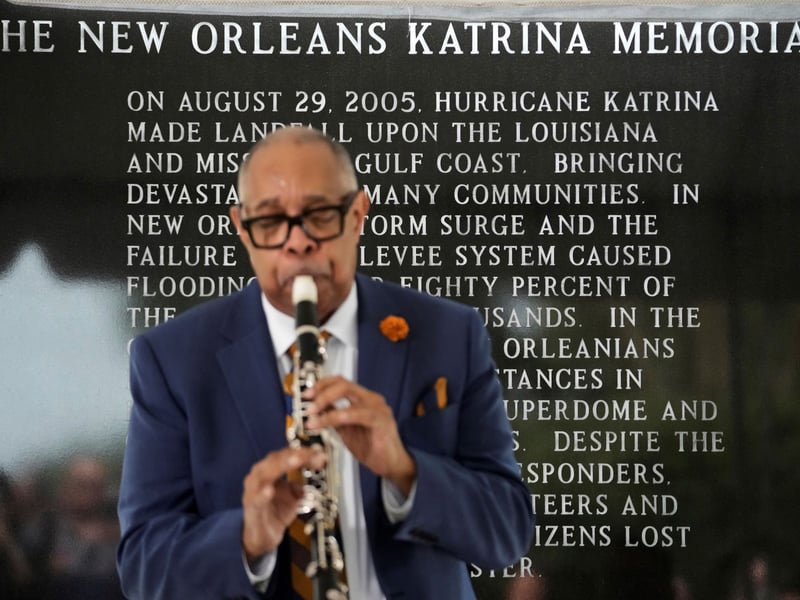
NEW ORLEANS (CN) — It took 20 minutes for water to rise from the Industrial Canal levee — breached by the storm surge from the Category 5 Hurricane Katrina — to above the first story of a place on Painter Street where Lucrece Phillips lived on the second floor.
“We call ourselves the ‘Lucky Seven’ because, when I tell you, God was on our side. Because, otherwise, there was no way," Phillips said during a phone interview.
“My daughter started writing our names on the wall in chalk, and our dates of birth, and I was like, ‘No, we’re not dying in here. We’re not going to die.’ And so, I started erasing it and telling her, ‘No, we’re not going to die. Still, I didn’t see how we was going to make it, not while we were in the house,” Phillips said.
The call for mandatory evacuation came late and none of them knew about it. By then the electricity was out.
“When the storm hit, it was a lot of rain, but the levees blew, and in 20 minutes, the water went from the very bottom at the tires on the car, at the rim, to over my neighbors’ roofs,” Phillips said.
“You’re looking at all this water rush in and you don’t have no clue when it’s going to stop. You don’t know if it’s going to go further, and if we’re going to drown inside the house,” Phillips recalled.
They stacked furniture atop a kitchen table as a makeshift ladder to escape into the attic.
“The house started teetering. The house was off its axis. So, I’m telling my daughter and my niece, ‘Stop. Stop where you are.’”
They spent hours in the attic, singing gospel hymns. The storm passed. They wondered how they would escape.
“We’re looking in the water and there’s bodies, and there’s alligators, there’s bull sharks, there’s all this stuff, and it’s like, there’s no way."
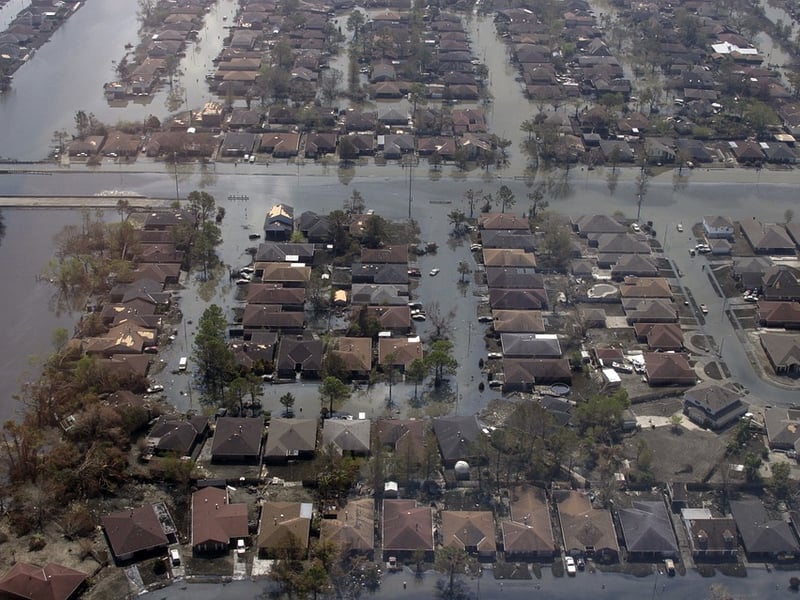
Phillips found an old cellphone and turned it on, and by some miracle there was enough power to dial 911. The police dispatcher sent a boat to rescue them from the porch.
The boat took them to an interstate bridge. There were bodies in the water, images that haunt Phillips to this day.
“I see this baby in the water. This baby’s hair looks freshly combed. It was somebody’s child. I wanted to get the baby out the water and take it to the bridge. But the guy that was in the boat, he told me, ‘We are worried about the living, not the dead’” Phillips recalled.
The boat delivered them to the bridge, and from there they rode in the back of a pickup truck to the Superdome. Phillips was shocked to see there was no flooding downtown.
“Which was mind-blowing when you come from 20-something feet of water,” she said.
A line of National Guardsmen had set up outside the Superdome. When the seven approached, guardsmen insisted on body-searching Phillips’ daughter and niece and even the two-year-old.
“I thought they were going to line us all up at one point and just shoot us. I was more afraid of them than of the hurricane.”
Soon after, they found a medical center and sheltered in a nearby hotel.
Phillips’ story is chronicled in the National Geographic documentary series Hurricane Katrina: Race Against Time.
An island in the flood
In Uptown New Orleans, Terrence Sanders-Smith, then 38, was the only person on his Magazine Street block who didn’t evacuate.
“I remember that morning when it hit, the house was shaking, and I thought for sure I was about to fucking die,” Sanders-Smith recalled in a phone interview.
But, “that next day after the storm, was like the brightest, nicest day ever,” he said, and realized he was in the small section of New Orleans that didn’t flood.
In all, 8o% of New Orleans was underwater at some point following the storm. More than 200,000 homes were damaged or lost altogether and 800,000 people were displaced.
Sanders-Smith recalled the pitch dark at night because the electricity was out, and the “lawlessness with no police around” and not having food.
“I think I was the first person in Whole Foods, like to loot it. I lived off Whole Foods the whole 11 days,” he said. “I just went through the door and just started taking anything I needed to survive.”
He delivered groceries and ice to people he knew were sheltering but were too afraid to come out.
Initially curious about what was happening around the city, his exploration came to an end after an encounter with all-white militias.
“I told them my dad’s a cop and I have a gallery on Magazine, and I’m just trying to see what’s going on,” he recalled of the encounter.
At a nearby Walmart, he saw a police officer in uniform pushing out an enormous TV. And he remembers the the sound of gunfire at night.
“The National Guard was going down the streets taking the streets back and all you would hear is this gunfire at night: ‘k-k-k-k-k; k-k-k-k-k; k-k-k-k-k,’ all fucking night.”
And he can’t forget the voices he heard on a transistor radio.
“This woman called in and she was like, ‘Baby, when are they coming? I got water up to my neck in here. I’m in my attic, and I don’t know how much longer I can hold on.’ And the people on the radio are like, ‘Hold on! They coming. They coming,’” Sanders-Smith recalled.
After 11 days, Sanders-Smith had had enough. He took a ride out of town with two Swedish reporters, returning two weeks later.
In 2011, he built a Hurricane Katrina monument on the Saratoga building in the Central Business District. The city previously had built one, but it doesn’t list the names of the dead. Sanders-Smith’s lists every name of the 1,830 who died as a result of the storm, including blank spaces for those who remain unidentified.
A sense of community
Brice White — a radio and club DJ who hosts the weekly Block Party radio show on WWOZ New Orleans 90.7 and is known as DJ Brice Nice — was at a Kinkos with his friends printing out fake press badges so they could get back into the city after evacuating.
After the storm, White, then 29, spent time in several places alongside 15 to 20 friends from New Orleans.
“Right before the storm we had a collective of folks who had just decided to buy this warehouse. We were exploring all these ways to do housing,” White said by phone. “It was a radical space, and we were in a really fun moment of time."
The building, in Mid-City on Jane Place was “pretty well messed up” when they returned to it. All of White’s electronics had been stolen and the building had been flooded.
“There was a terrible smell, everywhere you went,” he remembered. “The ‘Katrina smell’.”
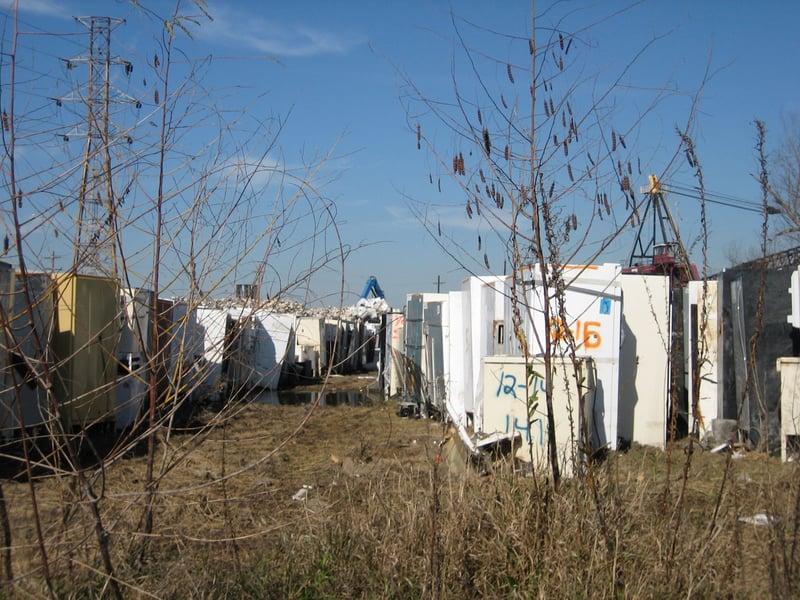
The houses themselves were sealed up, but the refrigerators hadn’t been emptied and all the food inside had begun to rot.
Many of White’s memories revolve around community, in how people came together to help one another, tarping roofs and making repairs.
He recalled a great experience he had at a gathering for displaced New Orleanians in Atlanta where people came together to talk about equitable rebuilding and for which White DJ’d.
“It was a crazy party and an important moment for all of us to come together and dance together,” White recalled.
The spirit of New Orleans
“I went through the whole gamut of it — me being alright and knowing that so many other people weren’t,” Kenneth Bazile, now 60, said of the days and even years that followed Katrina.
Bazile returned to New Orleans after evacuation, then went on to Oakland, California. While there, he worked as a liaison for Katrina evacuees for a few years before going on to work on juvenile justice programs for California Governor Gavin Newsom, at the time the mayor of San Francisco.
“It really was my therapy to be a blessing to others, to get them back on their feet,” Bazile said in a phone interview. “I went through everything that everybody else went through, right? But my saving grace and my resilience factors are just different. I had support. Even though it was terrible, I knew that I was going to be OK.”
When he remembers Katrina, Bazile most recalls the resilience and patience and joy that is ever present in the spirit of New Orleans.
“No one ever talks about the five days that we patiently waited, in front of the Superdome or wherever we sheltered,” Bazile said. “There was not anarchy from day one to day 10 like they tried to paint it out to be. It really wasn’t that, and nobody ever talked about the notion of how much more resilient can you be than to come from a near-death experience and still have joy in your spirit.
There’s just something special about the people of New Orleans that people just underestimate."
 Follow @SabrinaCanfiel2
Subscribe to our free newsletters
Our weekly newsletter Closing Arguments offers the latest about ongoing trials, major litigation and rulings in courthouses around the U.S. and the world, while the monthly Under the Lights dishes the legal dirt from Hollywood, sports, Big Tech and the arts.