
 Search Articles


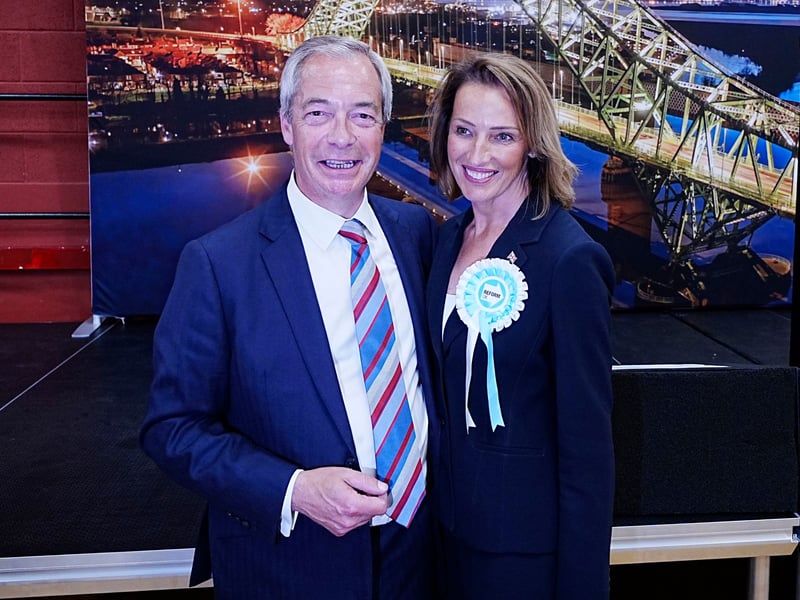
MANCHESTER, England (CN) — Nigel Farage’s right-wing populist party, Reform UK, made sweeping gains in local elections in England, wiping away Tory-held seats and presenting the biggest challenge to the Labour government since coming to power in 2024.
Voters across England selected over 1,600 local councilors and six regional mayors in elections that have rewritten the local political landscape.
Reform UK gained more than 600 councilors, taking control of several councils, as the Conservatives’ control was wiped out. The Liberal Democrats picked up almost 400 councilors, winning control of a handful of councils, while Labour lost almost 200 seats. The Greens gained just under 100 seats.
Local councils are responsible for public services such as social care, education, road maintenance, housing and waste collection. They are funded through a mix of central government grants and local taxes.
While their powers are limited compared to national government, they play a central role in the daily life of local communities.
Reform UK also secured one of the closest parliamentary by-election victories in modern history, taking the Runcorn and Helsby seat by just six votes following a recount — in what was a formerly safe Labour seat — taking their seats in Parliament to five.
Combined with widespread gains in local councils, the results amplify Reform’s national voice. Having never held local political power before, Reform also won two of the six mayoral contests, with Labour holding three and the Conservatives one.
Speaking in Runcorn, Farage said: “We’ve dug very deep into the Labour vote, and in other parts of England, we’ve dug deep into the Conservative vote. After tonight, there’s no question, in most of the country, we are now the main opposition party to this government.”
Reform UK, which was founded as the Brexit Party, has focused on immigration, cost-of-living concerns and dissatisfaction with Westminster.
The party has faced persistent allegations of racism and extremism, with several candidates being suspended over offensive and racist comments.
The two-party system under strain
Ahead of the election, the Conservatives held more than half of the contested council seats, reflecting their strong showing in the 2021 local elections during Boris Johnson’s post-vaccine bounce.
Labour held 17%, the Liberal Democrats 13%, and the Greens and Reform shared the rest.
That balance has now shifted, with the Conservatives having one of their worst-ever local election performances.
Labour, while avoiding collapse, lost key ground in areas it had hoped to win from the Conservatives. Instead, those areas shifted further to the right.
Prime Minister Keir Starmer responded to the by-election loss by acknowledging the government needs to move “further and faster” on delivering change.
The independent MP and former Labour shadow chancellor John McDonnell criticised the government, saying that Labour risks losing touch with its base.
“I don’t think they’ve understood the depth of emotion that there has been on the doorstep,” said McDonnell. “People feel as though the Labour government has turned their backs on them, they’re not listening to them anymore.”
Labour won by a landslide last summer, winning 411 seats in Parliament yet only securing 30% of the national vote — a sign that beneath its broad majority is a thin layer of national support.
The public, as well as many of its voters, has been disappointed by its policy choices and unclear about what Starmer stands for.
Since coming to power, the Labour government has carried out welfare cuts, funding national defense through the foreign aid budget, dropping the winter fuel allowance for pensioners and keeping the child benefit cap.
The collapse of the Conservatives
For the Conservative Party, the hundreds of council seats lost follow its worst-ever general election performance last year, when it lost 251 seats in Parliament as its vote more than halved to 6.8 million.
“These were always going to be a very difficult set of elections coming off the high of 2021,” party leader Kemi Badenoch said. “The renewal of our party has only just begun.”
Former Tory minister Jacob Rees-Mogg suggested closer cooperation between the Conservatives and Reform. “We need to be looking very carefully at areas we agree on, and what we can do between now and the general election to reunite the right.”
He added that, “In terms of policy, there’s very little difference between the Conservative party and Reform. It’s basically a matter of personality.”
The local results strengthen the national political winds. Reform UK’s surge continues to fracture the two-party system, as support for Labour and the Conservatives slides.
As Reform UK gains political power for the first time, the question now is whether they can handle the pressure of governance — and the closer scrutiny that comes with it.
 Follow @jayfranklinlive
Subscribe to our free newsletters
Our weekly newsletter Closing Arguments offers the latest about ongoing trials, major litigation and rulings in courthouses around the U.S. and the world, while the monthly Under the Lights dishes the legal dirt from Hollywood, sports, Big Tech and the arts.