
 Search Articles


AIX-EN-PROVENCE, France (CN) — On a recent Thursday in the quiet and breezy Provençal city of Aix-en-Provence, swarms of people crowded outside the entryway of the Musée Granet to see a new exhibit that has attracted worldwide attention.
“Cézanne at Jas de Bouffan” honors local artist Paul Cézanne and a major source of solace and inspiration for him: his family home here, known as Bastide du Jas de Bouffan.
Cézanne — a key figure in European art history — spent much of his life in Aix-en-Provence, an idyllic and pastel-colored town outside of Marseille in the Provence region. He was born and died here. Musée Granet was once an art school where he attended free drawing classes.
City officials in Aix-en-Provence have declared 2025 the Year of Cézanne. The highlight is this exhibition, which launched in June and runs through October. The museum has amassed more than 100 Cézanne paintings from New York to Tokyo. All were created at Jas de Bouffan between 1860 and 1899.
The Year of Cézanne is projected to be a big success — maybe even too big.
In a city that already struggles with overtourism, Aix-en-Provence is expected to welcome up to 400,000 additional tourists this year. That’s more than double the city’s population of around 150,000. Musée Granet has had to implement new measures, including security screenings and mandatory reservations. Among the VIPs who have visited for the show is Christine Lagarde, president of the European Central Bank.
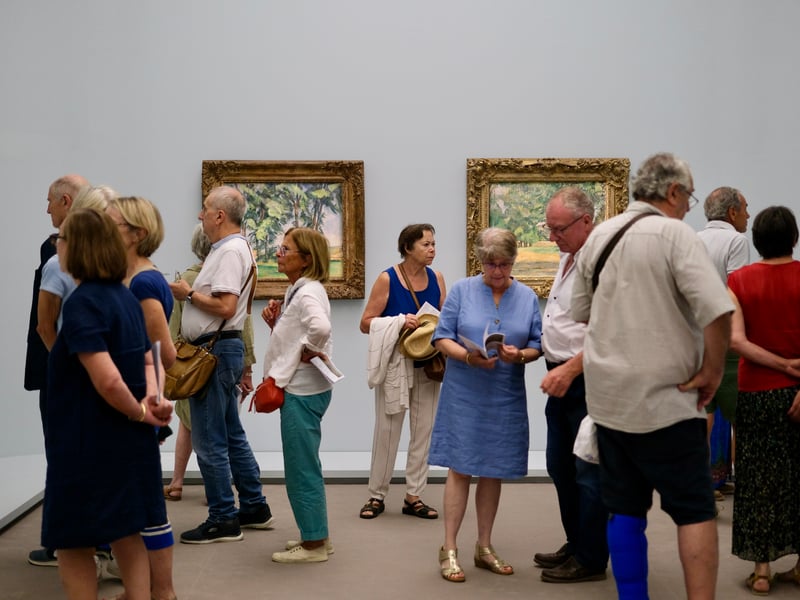
Then there are the lines and crowds. When Courthouse News visited on July 10, groups continuously blocked the halls and entryways.
Outside, the sun was pounding — and people were impatient to get in.
As a mist machine spritzed water overhead, two women tried their luck with the security guards, waving printed tickets in their faces. They pleaded with the guards to understand that they had reserved a time slot and that their time was now.
“Everyone in line has the same as you,” a guard replied, sending them back to the end of the line.
If the exhibit seemed to be a victim of its own success, the first room quickly revealed what all the fuss was about.
“It was in these ground-floor rooms that Cézanne first learned to paint and draw” from 1857 to 1862, a placard explained. Imagination took over, and one could almost picture a young Cézanne sitting here, drawing the sights of Provence. The hallways wrapped around a grassy, tree-lined courtyard. Sheer curtains fluttered in the wind.
Cézanne was born in this city in 1839. His elementary school was roughly 10 minutes by foot from the museum. As a child, he forged a deep friendship with classmate Émile Zola, who later became a famous novelist.
When he turned 18, Cézanne enrolled in art classes, which were free and sponsored by the city. He also enrolled in law school; his banker father wasn’t initially thrilled by his son’s career goals. But success in the arts came quickly for Cézanne: At 20, he won a prize for a painted study of a face. Now, Cézanne’s sketches and drawings line the same walls that once enclosed desks and easels.
Paul Cézanne, who died in 1906, has come to be recognized as both a father of modern art and one of the last of the Old Masters. His work has been described as Post-Impressionist and sometimes as ahead-of-its-time Expressionism.
But the acclaim and appreciation didn’t happen overnight. “He was aware that he needed to learn because he wasn’t very skillful [or] very dexterous,” Jacky Chabert, a painter, lecturer and specialist on Cézanne, said over the phone. “It’s often said that he didn’t know how to draw.”
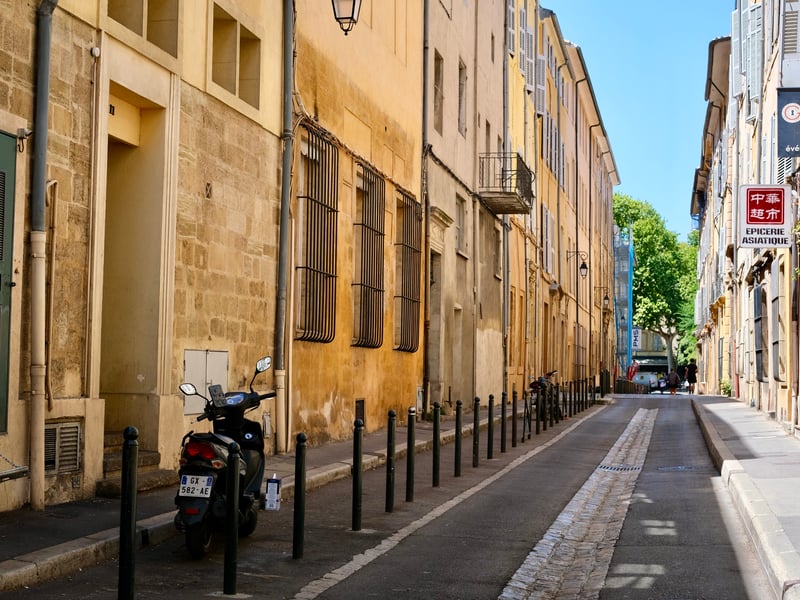
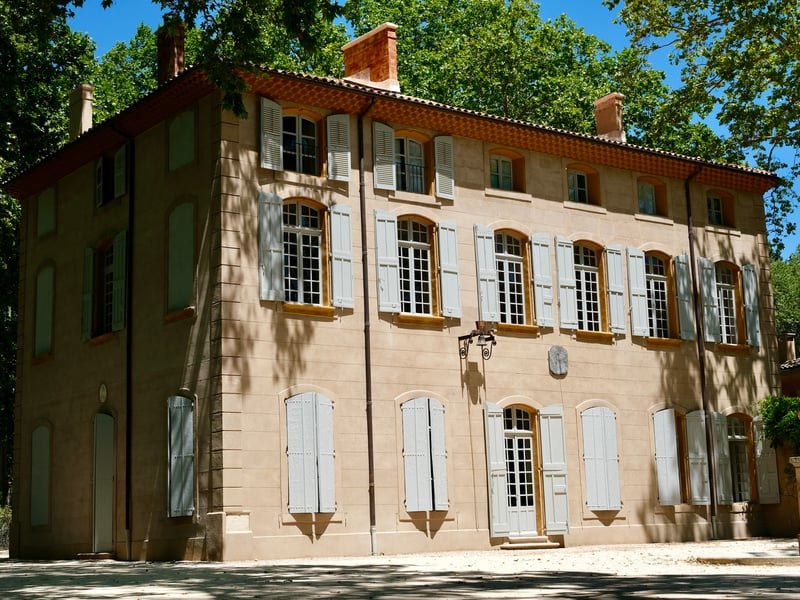
One focal point of the Year of Cézanne — the actual estate at Jas de Bouffan — is about a 30-minute walk from the museum. There are glimpses of it in Cézanne’s paintings: window shutters in robin-egg blue and slivers of its facade peeking through the trees.
For the first time in 30 years, Jas de Bouffan is open to the public. It’s here, at Cézanne’s family home, where visitors can get a glimpse at the artist’s life and process. His old studio is upstairs, with gray walls to minimize the visual effects of reflected light. A large window centers the room, an important feature in a time before electricity.
Cézanne spent most of his adult life torn between the landscapes of Provence and the action of Paris, the heart of France’s art scene.
He was a man always on the move, said Bruno Ely, director and curator at the Musée Granet.
“What [strikes] me is the instability of his life,” Ely said. “When he’s in one place, he wants to be somewhere else. For example, when he’s in Provence, he often thinks of Paris. And then, when he’s in Paris, he thinks of only one thing: returning to Provence. That’s very striking about his character. Provence was fundamental to Cézanne because it was a place of refuge.”
Like the museum, Cézanne’s old home is also drawing crowds. On the grounds outside the house, tourist Kathryn Lipiecki was sitting under some trees, waiting for her tour to begin.
Visiting from California, she had planned her trip around the Cézanne exhibitions. “My parents and I were going to come here anyway, and then we realized that all of the events with Cézanne were going on,” she told Courthouse News. “We got excited and made sure we were here during this time.”
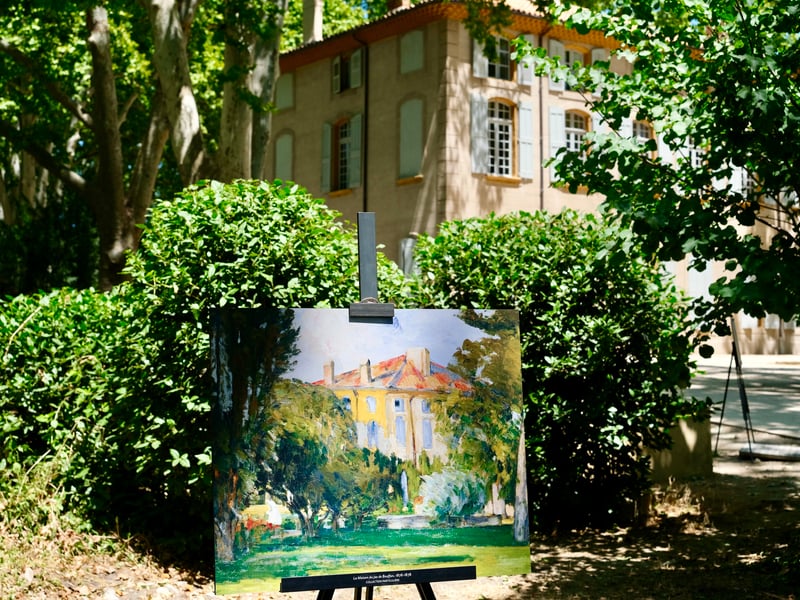
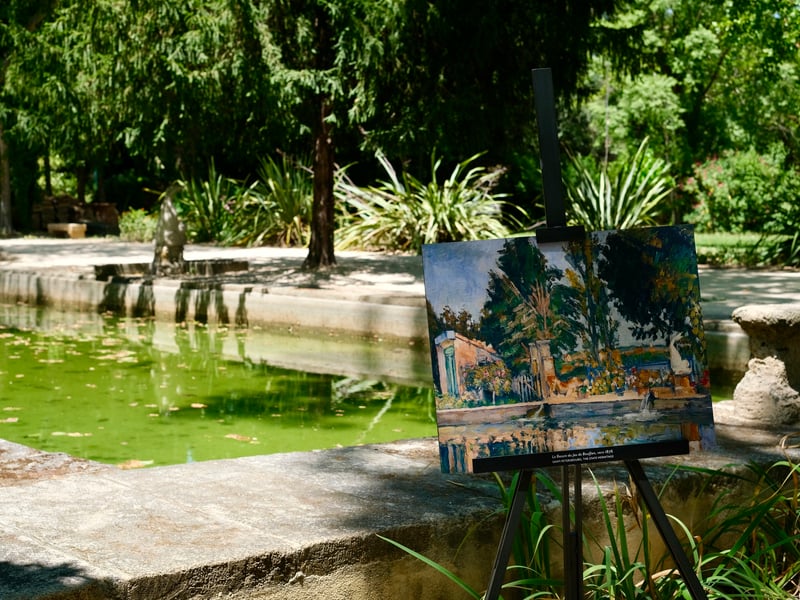
Throughout the grounds, replicas of Cézanne’s paintings are displayed on easels near where he painted them, so that visitors can compare between art and life. Lipiecki said she especially appreciated that touch. “I think that really helps you connect with the work.”
Tour guide Melodie Gogue-Meunier arrived in the courtyard. “English tour at 2:15, come with me!” she said.
An artist herself, Gogue-Meunier leads English-language tours around the home. She said she first became interested in Cézanne because of his relationship with the landscape.
Inside, in the living room, she gestured at the mostly white walls. In a show of support, Cézanne’s father gave him permission to draw on them. “He used this room to experiment,” Gogue-Meunier explained. There’s no art on these walls anymore: In the decades since Cézanne died, they faded and were painted over. Now, art historians are working to excavate what might lie beneath.
 Follow @lilyradz
Subscribe to our free newsletters
Our weekly newsletter Closing Arguments offers the latest about ongoing trials, major litigation and rulings in courthouses around the U.S. and the world, while the monthly Under the Lights dishes the legal dirt from Hollywood, sports, Big Tech and the arts.