
 Search Articles


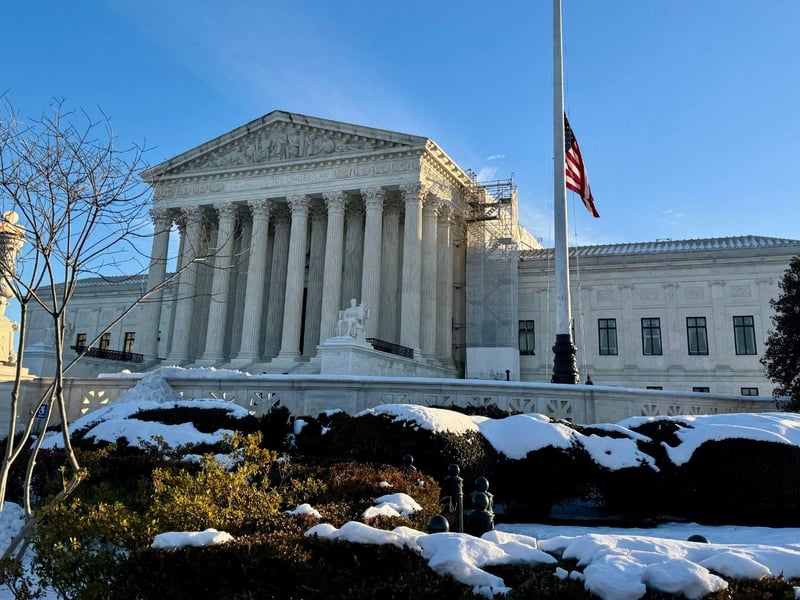
WASHINGTON (CN) — The Supreme Court seemed open Monday to allowing a disabled firefighter to bring a post-employment discrimination claim without opening the floodgates to stale employment benefits claims.
Karen Stanley’s nearly two-decade firefighting career was cut short by Parkinson’s disease. When she retired in 2018, she discovered that her health benefits ended 16 years earlier than expected.
When Stanley joined the city of Sanford, Florida’s fire department in 1999, her employment package included a $1,000 monthly health insurance subsidy. The benefit was available to current employees and qualifying retirees until they reached the age of 65.
Stanley’s Parkinson’s disease forced her to retire at 47. Instead of receiving an insurance subsidiary for the next 18 years, Stanley learned she’d only be entitled to the benefit for 24 months or until her Medicare benefits kicked in. That’s because in 2003, Sanford updated its benefits eligibility for disabled employees and under the new policy, disabled retirees had their benefits cut while others did not.
Stanley tried to file a discrimination claim under the Americans with Disabilities Act. Her effort was shortcircuited when a lower court ruled that she no longer qualified as a disabled individual for post-employment benefits.
The 11th Circuit affirmed, finding that Stanley was not a qualified individual at the time the city discontinued her subsidy payments since she was a retiree, not an employee. The appeals court said that Stanley couldn’t cite the city’s 2003 policy change in her discrimination suit because she was not disabled at the time.
Stanley pushed the justices on Monday to find that the ADA prohibitions discrimination in post-employment benefits even if the discrimination occurs only after the plaintiff is no longer employed.
“Under the city’s reading, benefits mean the least when they matter the most,” Deepack Gupta, an attorney with Gupta Wessler representing Stanley, said.
A coalition of justices appeared amenable to a much narrower ruling. Stanley suggested that she could also win if the court corrected the 11th Circuit’s error finding that she wasn’t an employee performing the essential functions of her job when the city engaged in discrimination.
Justice Elena Kagan, a Barack Obama appointee, said Stanley had a clear claim for several years of her employment before she officially retired.
The city pushed the court to rule the breadth of “qualified individuals” entitled to sue under the ADA. Kagan said it would be odd for the court to resolve an academic question when they could just rule on the facts of Stanley’s dispute instead.
“We’d be deciding based on a set of facts that are not true,” Kagan said.
The city argued that someone who can’t perform duties can’t file an ADA claim.
Justice Sonia Sotomayor, also an Obama appointee, said the city’s extreme argument would leave Stanley with no options for relief.
“You’re basically saying that if you’re retired you’re not entitled to anything,” Sotomayor said.
The court will issue an opinion later this year.
 Follow @KelseyReichmann
 Follow @kelseyreichmann.bsky.social
Subscribe to our free newsletters
Our weekly newsletter Closing Arguments offers the latest about ongoing trials, major litigation and rulings in courthouses around the U.S. and the world, while the monthly Under the Lights dishes the legal dirt from Hollywood, sports, Big Tech and the arts.