
 Search Articles


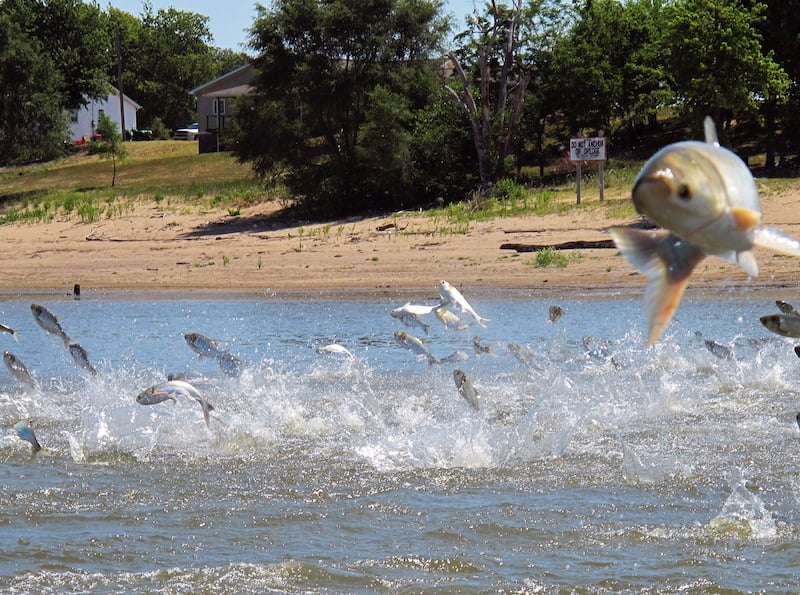
(CN) – As policymakers grapple with the potential environmental and economic impact of Asian carp expanding into the Great Lakes, a study published Monday suggests the invasive species would thrive in Lake Michigan.
Previous studies suggested that a lack of plankton would make it hard for two Asian carp species, the bighead and silver carp, to gain a foothold in Lake Michigan. But the new University of Michigan study says bighead and silver carp could survive on a diet derived from the excrement of quagga and zebra mussels.
Bighead carp live in watersheds near the Great Lakes and the findings suggest that if they found a way into the lakes, they would not starve. Their presence could impact other plankton-eating fish, including at the larval stage, and cause other negative environmental and economic impacts. If the carp thrive in Lake Michigan, they could invade other Great Lakes, which support a $7 billion fishing industry.
Peter Alsip was the study’s lead author and did the research for his master’s thesis at U-M’s School for Environment and Sustainability. The paper is titled “Lake Michigan’s suitability for bigheaded carp: The importance of diet flexibility and subsurface habitat.”
“The risk of establishment and risk of invasion is real,” Alsip said in a phone interview Monday.
According to the study, bighead and silver carp would feed on dead organic matter. The authors of the study believe that this “detritus” includes fecal matter and undigested food from quagga and zebra mussels found at the bottom of the lake. The study states that if the bighead carp is left unchecked, it “could survive, establish, and spread to favorable habitat in Lake Michigan and its tributaries despite having to travel across expansive areas.”
Alsip explores whether the fish can grow in what he described as a “plankton desert.” Previous scientific studies found that the lack of plankton was a potential deterrent to the fish.
“While there’s no comparable ecosystem to Lake Michigan, in that it’s colder, deeper and has less food than environments where these fish do exist, these fish are formidable,” he said. “If they wanted to survive in certain areas, they could find ways to do it. Our study reinforces the importance of investing in efforts to prevent the species from reaching the lake.”
Last year, the U.S. Army Corps of Engineers proposed a $778 million plan to block the carp from entering the Brandon Road Lock and Dam, 40 miles west of Lake Michigan. There is already an electrical barrier in Romeoville, Illinois. The project at Brandon Road would add another electrical barrier and take other measures to prevent the fish from getting into the lake.
In a November 2018 report, the Army Corps said that gizzard shad and yellow perch were among the larval fish at risk from Asian carp. There are also concerns they could have an economic impact on the fishing industry. Three years ago, researchers found that Asian carp could lead to declines in sport and commercial fish in Lake Erie, including walleye.
Kevin Irons, an executive with the Illinois Department of Natural Resources, says that the research was compelling and supports a strategy that prevents the fish from entering the lake.
“I don’t think this [study] is a large player in the overall policy because I think everybody recognizes the concerns,” Irons said in a phone interview.
Subscribe to our free newsletters
Our weekly newsletter Closing Arguments offers the latest about ongoing trials, major litigation and rulings in courthouses around the U.S. and the world, while the monthly Under the Lights dishes the legal dirt from Hollywood, sports, Big Tech and the arts.