
 Search Articles


LAS VEGAS (CN) — Ensuring Earth doesn’t succumb to climate change has scientists scrambling for ways to store the carbon that’s already in the atmosphere and threatening the planet. One area that most people don’t recognize as having a significant impact are buildings and structures and how they store and absorb carbon.
In fact, carbon storage could provide a solution to climate change by storing over 15 gigatons of carbon dioxide every year with supplementary materials. That includes bio-based plastics, which make up 0.2% of bioplastics used in construction projects.
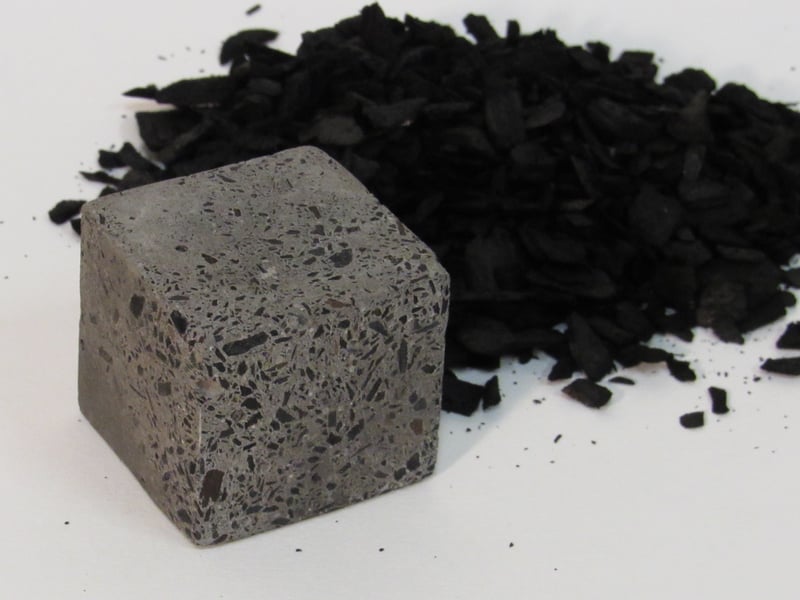
According to a study by University of California-Davis professors Elisabeth Van Roijen and Sabbie Miller, biochar cement filler and bio-based plastic stored the most carbon. Biomass fibers-based brick, carbonateable cement, and carbonate-based aggregate had the least carbon stored.
The researchers understand the potential bio-based plastic has in making buildings more climate-friendly based on its carbon storage. And they found that fully implementing replacements with bio-mass fiber and bio-based plastics by 2045 will meet the goal of holding global warming at 1.5 degrees Celsius and 2 degrees Celsius — one of the tenets of the 2015 Paris Agreement.
“Bio-based plastic has the potential to be cheaper because it’s using renewable resources,” said Van Roijen. “Plastics are less than 5% of carbon storage.”
Carbonatable concrete aggregates absorb and interact with atmospheric carbon dioxide (CO2). In turn, they form carbonate compounds, where these materials separate from natural resources. The process is done by heating or acid leaching, taking out a large amount of CO2 from the air. This results in the carbon being stored for the long-term, acting as another way to construct eco-friendly buildings and as an alternate to carbon storage.
Unfortunately, materials for carbonatable cement and carbon-based aggregates are difficult to source, found in large quantities deep beneath Earth’s surface.
“Different technologies, simply using bio-mass, and economics are some of the biggest obstacles,” said Van Roijen. “Plastic is cheap. But capturing the CO2 is the toughest challenge since we haven’t found a way to properly store carbon.”
Companies also have an important role in this study. Van Roijen believes incentivizing companies to use materials that store more carbon for their buildings is key.
“There needs to be policies which incentivize using plastics and introduce tax credits to incentivize companies to use these plastics,” said Van Roijen. “We must look into chemical recycling, which reuses the polymer with these performing like the original. That way, we can leverage that as a carbon storage mechanism.”
 Follow @IceColdWJacob
Subscribe to our free newsletters
Our weekly newsletter Closing Arguments offers the latest about ongoing trials, major litigation and rulings in courthouses around the U.S. and the world, while the monthly Under the Lights dishes the legal dirt from Hollywood, sports, Big Tech and the arts.