
 Search Articles


(CN) — Whether they are found on live specimens or on fossilized trunks, tree rings can tell more than the age of a tree. They can also capture the conditions in which the tree grew.
Was it a particularly wet period or a drought? Did the tree survive a forest fire, pests or disease? How much carbon did it capture? How did it die?
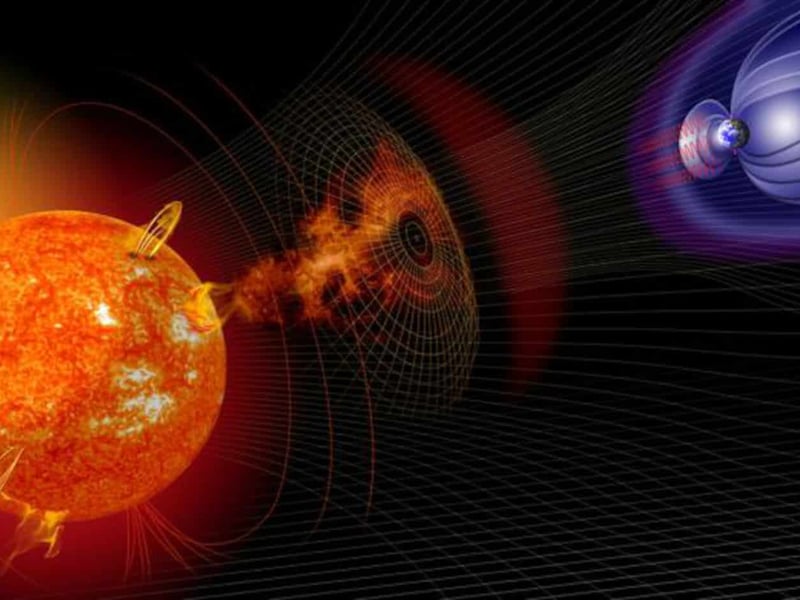
It’s a field of study known as dendrochronology, and it has provided insights into climatology, archaeology and art history, among other things. It has even been used to find evidence of ancient solar storms — disturbances on the sun that have temporarily blasted the Earth with excess radiation, much of which was absorbed by the flora and fauna of the day.
Recently, an international team of scientists used dendrochronology to analyze radiocarbon levels in a group of subfossil tree rings found in the French Alps and discovered the largest solar storm ever identified. The scientists believe a similarly intense storm today would wreak havoc on modern telecommunications systems, electrical infrastructure and satellite networks.
“Such super storms could permanently damage the transformers in our electricity grids, resulting in huge and widespread blackouts lasting months,” said Tim Heaton, professor of applied statistics in the School of Mathematics at the University of Leeds. “They could also result in permanent damage to the satellites that we all rely on for navigation and telecommunication, leaving them unusable. They would also create severe radiation risks to astronauts.”
Heaton collaborated on the project with other researchers from the Collège de France, CEREGE, IMBE and Aix-Marseille University. Their report was published Monday in “The Royal Society’s Philosophical Transactions A: Mathematical, Physical and Engineering Sciences.” The authors hope their discovery can help with preparation and resiliency efforts for future solar storms.
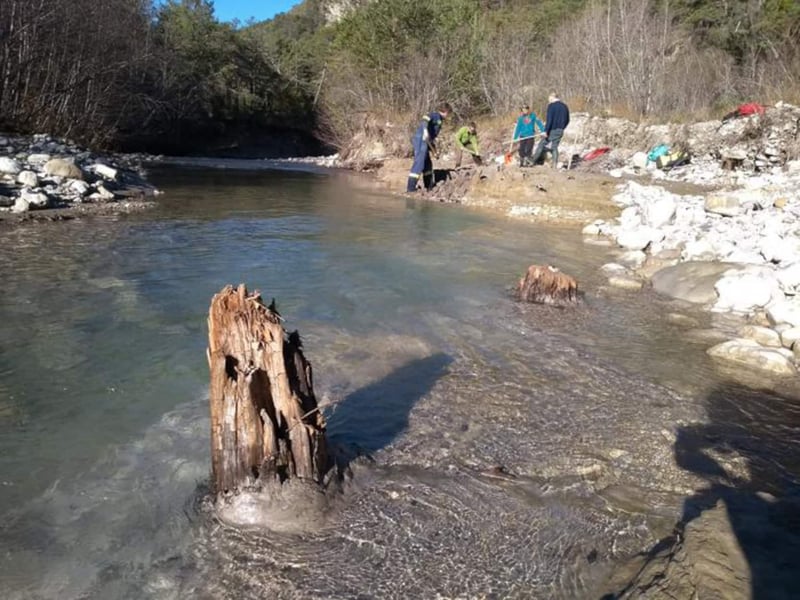
To reach their findings, the scientists identified ancient trees preserved within the eroded banks of the Drouzet River, near Gap in southeastern France. Cores of the trees were extracted and individual rings were analyzed to show an “unprecedented spike in radiocarbon levels occurring precisely 14,300 years ago.”
Then, they compared the spike to measurements of beryllium found in Greenland ice cores to propose the high level was “caused by a massive solar storm that would have ejected huge volumes of energetic particles into Earth’s atmosphere.”
Eight other notable solar storms over the past 15,000 years — known as Miyake events — have been identified using the same method. But the Gap spike was nearly twice as intense as spikes that occurred more recently, in 993 A.D. and 774 A.D.
What causes the spikes, their frequency and their intensity largely remains a mystery, as they have never been observed by modern science. But the largest, directly-observed solar storm occurred in 1859. Known as the “Carrington Event,” it caused massive disruption on Earth, “destroying telegraph machines and creating a night-time aurora so bright that birds began to sing, believing the Sun had begun to rise.”
“Radiocarbon is constantly being produced in the upper atmosphere through a chain of reactions initiated by cosmic rays,” explained Edouard Bard, the lead author of the study and professor of climate and ocean evolution at the Collège de France and CEREGE. “Recently, scientists have found that extreme solar events including solar flares and coronal mass ejections can also create short-term bursts of energetic particles which are preserved as huge spikes in radiocarbon production occurring over the course of just a single year.”
The scientists believe the Miyake events, including the newly discovered 14,300-year-old storm, “would have been a staggering entire order-of-magnitude greater in size” and warned a similar storm today would cause billions of dollars in damage worldwide.
“Radiocarbon provides a phenomenal way of studying Earth’s history and reconstructing critical events that it has experienced,” Heaton said. “A precise understanding of our past is essential if we want to accurately predict our future and mitigate potential risks.”
 Follow @gabetynes
Subscribe to our free newsletters
Our weekly newsletter Closing Arguments offers the latest about ongoing trials, major litigation and rulings in courthouses around the U.S. and the world, while the monthly Under the Lights dishes the legal dirt from Hollywood, sports, Big Tech and the arts.