
 Search Articles


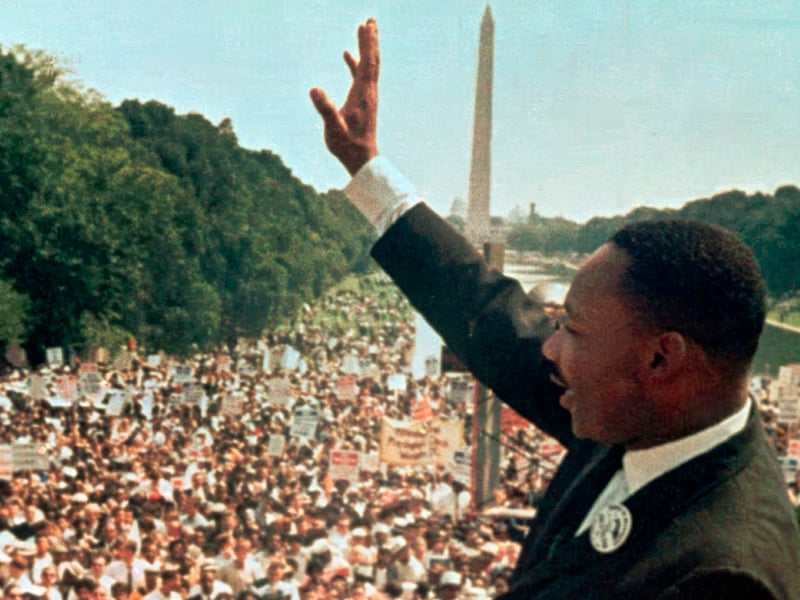
(CN) — Sixty years after Dr. Martin Luthor King Jr. addressed more than 250,000 people in Washington D.C. demanding racial equality, Americans remain split on the significance of discrimination today.
Nearly half of U.S. adults say that claiming racial discrimination where it doesn’t exist is a bigger problem than ignoring real discrimination, according to a new Pew Research report.
About 54% of adults say ignoring real discrimination is the bigger problem, while 45% say the opposite. The gap has narrowed since 2019 from a difference of 15 percentage points to a gap of merely eight.
“The only racial or ethnic group whose views have changed significantly over this period is Hispanic adults,” said Kim Parker, director of Pew’s social trend research. “The share saying the bigger problem is people seeing discrimination where it does not exist has increased from 30% to 40% over this period.
William Jones, a history professor at the University of Minnesota specializing in the Civil Rights Movement and 20th century African American labor, said the shrinking gap in viewpoints is indicative of a continued struggle with a past of racial inequality.
“And we’re going to deal with it for a long time,” he said.
Jones said he’s aware of rising sentiment that racial discrimination against Black people and other minorities no longer exists, but he’s surprised to see it in such high numbers.
“This isn’t a new problem in the United States,” he said. “This is part of our DNA. We’ve lived with this for a long time.”
Differences in opinion split largely along racial lines.
About 88% of Black respondents said ignoring racial discrimination is the biggest issue, while only 45% of white respondents said the same thing. Smaller majorities of Asian (66%) and Hispanic (58%) respondents agreed.
The trend continued as expected along party lines. About 80% of left-leaning people identified the bigger issue as ignoring discrimination while 74% of right-leaning people said claiming discrimination where it doesn’t exist is worse.
Jones said the real issue is clear.
“If we look at the treatment of people of color by police… economic measures, income, family wealth, employment, all of those show really clear signs of both racial inequality and discrimination,” he said.
Studies produced in the last few years show that Black people are 20% more likely than white people to be pulled over by police, and more than three times more likely to be killed in a police encounter.
“When they are stopped, they’re far more likely to be abused, beaten or killed than whites,” Jones added.
A history of redlining and lending discrimination, among other things, has amplified inequality and reduced opportunities for Black Americans.
The report comes from a larger study exploring Dr. King’s legacy six decades after giving his famed “I Have a Dream” speech. While a report indicates that more than 80% of Americans agree that King made a positive impact on the country, the rest of the results aren’t quite as conclusive.
The goals of the march included a comprehensive Civil Rights Bill eliminating segregation in schools and public accommodations, protections for the right to vote, a federal works program to train and place unemployed workers, and a ban of racial discrimination in employment.
While Congress responded with the Civil Rights Act of 1964 and similar laws passed throughout the 60s, and the political and racial climate has evolved since then, more than half of Americans say there hasn’t been enough racial progress in the last 60 years. More than 83% of Black people said so, while only 44% of white people said the same.
“Those are pretty striking differences,” Jones said. “They reflect pretty deep divisions in perception.”
About 58% of Hispanic and 55% of Asian people agree that not enough progress has been made.
Of those who say efforts haven’t gone far enough, about 58% say they doubt they’ll see true equality in their lifetime, and 80% say at least one of several institutions needs at least major changes if not to be completely rebuilt.
Respondents were asked about prisons, policing, the political system, health care, the courts and judicial process, and the economy. Nearly half of those who say racial progress hasn’t gone far enough think the prison system needs to be completely rebuilt, and 38% said the same about policing.
Republicans are also more likely than Democrats to believe few to no changes are required, according to the report.
 Follow @JournalistJoeAZ
Subscribe to our free newsletters
Our weekly newsletter Closing Arguments offers the latest about ongoing trials, major litigation and rulings in courthouses around the U.S. and the world, while the monthly Under the Lights dishes the legal dirt from Hollywood, sports, Big Tech and the arts.