
 Search Articles


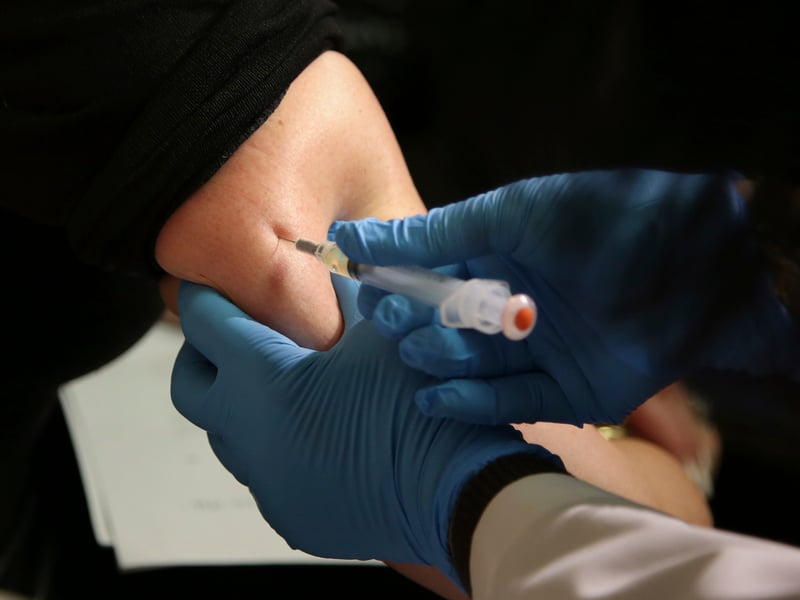
MANHATTAN (CN) — In a heated climate over vaccine mandates, the Second Circuit focused Tuesday on a measles outbreak that ripped through parts of New York before anyone in the world had even heard about the novel coronavirus.
Longstanding state law has required children to get a slew of vaccinations, including the one for measles, to attend both public and private New York schools. In 2019, when the state had most of the cases during a measles outbreak across the country, officials removed the religious exemption and tightened restrictions on the medical exemption.
With such adjustments, parents would now be required to get a physician to sign off that their child could be harmed or die if they got the measles vaccine based on conditions that fall under the guidance of the Advisory Committee on Immunization Practices under the Centers for Disease Control and Prevention.
This prompted seven families to sue the state last July on behalf of their “medically fragile” children, arguing that the restrictions surrounding medical exemptions were unconstitutional. Many of the children were granted exemption certificates by their doctors, but their schools denied the exemptions.
A federal judge dismissed the suit in February, finding the new regulations to be reasonable in the interest of public health.
Sujata Gibson, representing the families, argued before the appeals court Tuesday that parents should need approval only from their child’s physician to get the exemption.
Her argument did not appear to sway U.S. Circuit Judge Denny Chin, one of three members of a panel considering the parents’ appeal.
“Are you suggesting that if the child’s physician says so then that’s the end of it? A school can’t challenge that,” asked Chin, an Obama appointee. “Suppose the physician is wrong for whatever reason.”
Gibson disagreed, saying it is not up to the school since the state already monitors and regulates physicians.
Gibson then turned the question back to Chin, “What if the school gets it wrong?”
The attorney added that there is no evidence to suggest there is widespread exemption fraud by physicians.
U.S. Circuit Judge Pierre Leval pushed back, questioning how else the state could combat potential frauds.
“So you’re saying there’s no protection unless there is a widespread problem,” asked Leval, a Clinton appointee.
Gibson again stressed that physicians are already regulated by the state, noting that the state can see how many exemptions physicians are handing out.
Representing the state, Beezly Kiernan argued that the new regulations still provide exemptions, but parents have to have evidence, not just a physician’s signature.
“In a lot of these cases, plaintiffs allege they have certain conditions and have certifications, but that’s just not enough — there has to be evidence,” said Kiernan. “It has to be consistent with national medical standards.”
On rebuttal, Gibson noted that parents have a fundamental right to make medical decisions for their children and left the court with a looming question.
“What is going to happen to these children who have been denied schooling,” Gibson asked.
Devon Greyson, an assistant professor at the University of British Columbia, Vancouver, spoke to Courthouse News after the hearing about the decades-old dilemma when it comes to vaccine mandates.
“School vaccine mandates are associated with higher documented vaccination levels among students, which is why many favor them, especially for diseases such as measles that are easily communicable in a school setting. Mandates can help identify which students are at risk when there is an outbreak within a school community, because you have documentation of who is and isn’t vaccinated,” Greyson said in an email. “Risks to school vaccine mandates can include backlash. This is typically only from a small percent of the population, but when controversy takes off this backlash can even cause a mandate to backfire, at least temporarily. We saw this, for example, with some early HPV vaccine mandates back when HPV vaccination was primarily provided to girls. Some states that mandated HPV vaccination for adolescent girls ended up with lower vaccination rates than neighboring states that didn’t mandate the vaccine. However, over time, as boys have been added to these mandates and worries about HPV vaccination have waned, this effect seems to have lessened.”
As Covid-19 vaccine mandates become more popular, Greyson said the issue is unlikely to affect schools in the immediate future.
“I don’t expect to see school mandates extended to Covid-19 vaccination until the FDA gives at least one vaccine full approval for children. Right now vaccines for ages 5-11 and 12-15 are being given under an emergency use authorization, and imposing a mandate for a vaccine that is being given under an EUA would likely spark more lawsuits,” said Greyson. “However, once full approval is given, I do expect many or most states to eventually add Covid-19 vaccination to the list of required vaccines.”
U.S. Circuit Judge Jose Cabranes, a Clinton appointee, rounded out the panel.
Attorneys for both parties did not immediately respond to requests for comment.
Subscribe to our free newsletters
Our weekly newsletter Closing Arguments offers the latest about ongoing trials, major litigation and rulings in courthouses around the U.S. and the world, while the monthly Under the Lights dishes the legal dirt from Hollywood, sports, Big Tech and the arts.