
 Search Articles


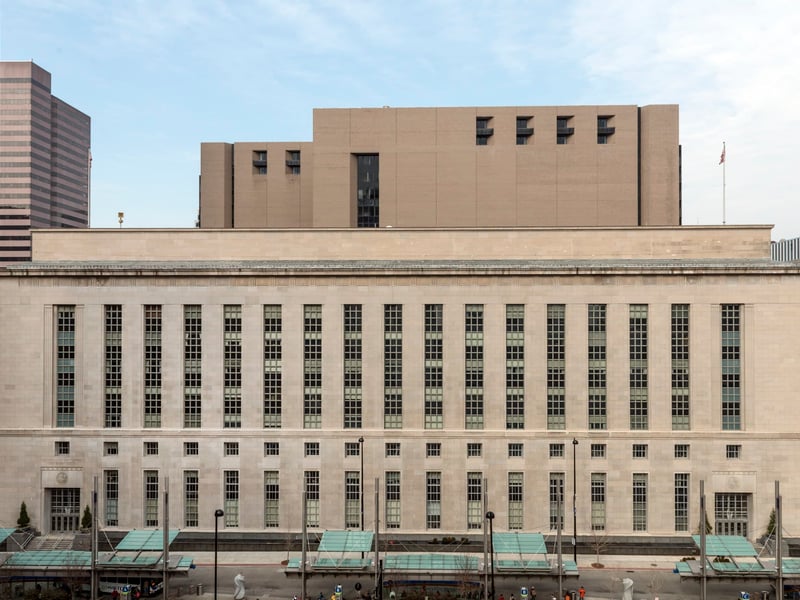
(CN) — A religious law firm asked the Sixth Circuit to renew claims it suffered reputation harm after Michigan government officials linked to a website identifying it as a hate group.
During oral arguments on Thursday, the American Freedom Law Center, a self-proclaimed Judeo-Christian public interest law firm, asked a panel of Sixth Circuit judges to reverse the District Court’s ruling dismissing its claims of reputational harm.
The 2019 lawsuit came after the Michigan Department of Civil Rights issued a press release referencing information from the Southern Poverty Law Center’s “Hate Map,” which is used to track hate and anti-government groups.
The plaintiff claims that at the time, the SPLC’s map listed its law firm as a hate group; currently, the map labels the firm as specifically “anti-Muslim.”
The press release quoted Michigan Attorney General Dana Nessel’s plan to establish a hate crimes unit in her office but made no mention of the plaintiff; however, they still filed suit against both Nessel and Agustin Arbulu, the director of the Michigan Department of Civil Rights. Arbulu left the organization in 2019 and was replaced by John Johnson.
In the lawsuit, the plaintiff claims the Michigan officials formed a partnership with the SPLC and that their policy targets certain groups simply because of political viewpoints.
U.S. District Judge Paul Maloney dismissed the lawsuit for lack of standing in 2025 and ruled the plaintiff failed to show the Michigan attorney general had a concrete policy of targeting political opponents.
“The policy or policy directive alleged in the complaint does not exist. Defendants have not forged any partnership with SPLC. The attorney general will not investigate groups identified by SPLC as a hate group simply because the group appears on SPLC’s list,” wrote Maloney, who was appointed to the court by George W. Bush.
Attorney and co-founder of the American Freedom Law Center Robert Muise appeared on behalf of his firm during oral arguments, claiming government targeting had damaged the reputation of his firm.
“Michigan attorney general and the Department of Civil Rights are weaponizing their powerful government offices and misusing government resources to target political opponents,” Muise said.
U.S. Circuit Judge Chad Readler, appointed to the court by Donald Trump, challenged Muise’s argument on free speech grounds.
“How would a ruling in your favor impact broader speech that we traditionally hear from elected officials or candidates?” asked Readler.
Muise responded by saying Nessel’s promise to combat, tackle and fight certain groups is different because of her law enforcement power.
Readler seemed skeptical of the argument, saying, “Governors use those words all the time.”
Muise was fielded a question from U.S. Circuit Judge Jane Stranch, who doubled down on the question of harm.
“I’m concerned that most of your argument assumes that you can just state the claim, and that is all you need,” said Stranch.
Muise answered by saying simple stigmatization is enough to sustain the claims.
Michigan Assistant Solicitor General Kyla Barranco appeared as co-counsel on behalf of the state officials and argued the Michigan AG’s office has never targeted the plaintiff’s firm.
“Following discovery, the American Freedom Law Center has failed to prove a single concrete injury stemming from that press release or the attorney general’s hate crime unit,” said Barranco. “It has not been investigated or prosecuted by the hate crimes unit, continues to take on clients, engage in advocacy and continue its mission uninterrupted.”
Barranco also said the press release had only been available until March 2020 at the latest.
U.S. Circuit Court Judge Rachel Bloomekatz, a Joe Biden appointee, proposed a hypothetical to Barranco, asking if it would be enough for case standing if someone claimed to have seen the news coverage and decided to stop donating to the plaintiff.
“If that were the case, that would get us to trial here,” said Barranco. “But again, that’s not what happened.”
During his rebuttal time, Muise took issue with the focus on damages, citing reputational harm as enough for the case to proceed.
“If we need damages, we can go back and get a damages expert and do that,” Muise said.
The court did not indicate when it would issue a ruling in the case.
Subscribe to our free newsletters
Our weekly newsletter Closing Arguments offers the latest about ongoing trials, major litigation and rulings in courthouses around the U.S. and the world, while the monthly Under the Lights dishes the legal dirt from Hollywood, sports, Big Tech and the arts.