
 Search Articles


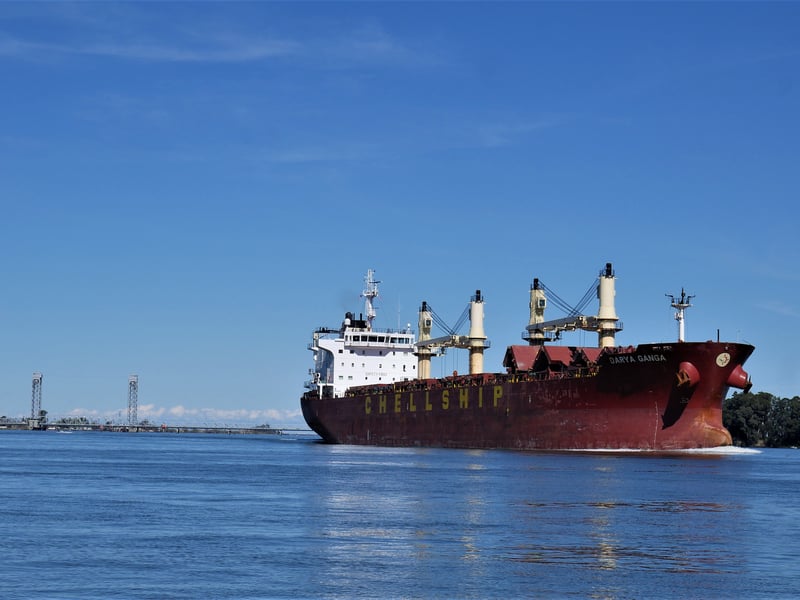
(CN) — New regulations in 2020 led to a dramatic 80% reduction in sulfur dioxide emissions from cargo ships.
It was a big win in the fight against pollution — but it may have also contributed to global warming.
The International Maritime Organization’s new standards reduced the maximum sulfur content in shipping fuel from 3.5% to 0.5%. Though well-meaning, this regulation may have “created an inadvertent geoengineering termination shock with global impact,” according to a paper published Thursday in Communications Earth & Environment.
Natural and anthropogenic aerosols can help reduce global warming by reflecting sunlight back into space.
Large volcanic eruptions, for example, can lead to significant global cooling. Researchers believed that purposely spraying sulfur into the atmosphere might have that same effect.
Along with a number of colleagues, NASA research scientist Tianle Yuan set out to measure the effect of the rules from the International Maritime Organization, an agency of the United Nations. Their paper argues that the reduction in sulfur “could lead to a doubling (or more) of the warming rate in the 2020s compared with the rate since 1980.”
“The warming effect is consistent with the recent observed strong warming in 2023 and [is] expected to make the 2020s anomalously warm,” Yuan and his team wrote. They added that such warming could be responsible for up to “80% of the measured increase in planetary heat uptake since 2020.”
The results could have significant implications for both the rate at which the planet is warming, as well as the possible solutions that humans might develop to stop it.
One direct effect of aerosols is to increase the number of droplets in clouds, making them more reflective. Some researchers believe that humans could purposely brighten marine clouds as a method of reducing global warming.
Yuan and his colleagues used satellite observations and a chemical transport model to calculate how the new shipping fuel regulations affected clouds. They found a reduction in the clouds’ water droplets, especially over the North Atlantic, the Caribbeans and the South China Sea — the regions with the biggest shipping lanes.
The results of the recent paper suggest that “marine cloud brightening may be a viable geoengineering method in temporarily cooling the climate.” Still, the authors warn that the reduction in sulfur since 2020 represents a “geoengineering termination shock.” In other words: Once you start it, stopping it could have huge consequences.
 Follow @hillelaron
Subscribe to our free newsletters
Our weekly newsletter Closing Arguments offers the latest about ongoing trials, major litigation and rulings in courthouses around the U.S. and the world, while the monthly Under the Lights dishes the legal dirt from Hollywood, sports, Big Tech and the arts.