
 Search Articles


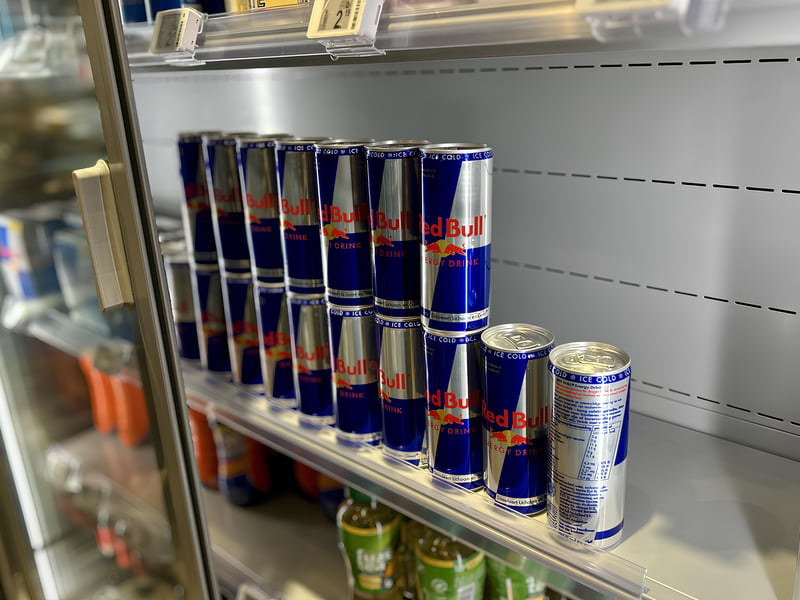
(CN) — Red Bull lost its challenge against EU dawn raids Wednesday when the bloc’s General Court said the European Commission had enough evidence to justify the surprise inspections over suspected antitrust violations.
When commission officials turned up at Red Bull’s offices in Austria, France and the Netherlands in March 2023, the company cried foul. It accused Brussels of overreach and said the dawn raids were nothing more than a “fishing expedition.”
But the judges weren’t convinced. In their ruling, the court said the inspection order was perfectly lawful and that the commission had “sufficiently serious clues” to back its decision to raid Red Bull’s offices.
It began with a 2022 complaint from one of Red Bull’s rivals, claiming the company used its market power to edge out competitors. The 80-page filing and several follow-up reports said Red Bull offered retailers and wholesalers financial rewards to drop other brands, ran a smear campaign against larger-can energy drinks and worked through the industry group Energy Drinks Europe to restrict sales of cans over 250 mL.
The complaint triggered an EU probe known inside the commission as “WINGS,” prompting unannounced inspections at Red Bull offices in several countries. Over five days, investigators reviewed emails, files and internal records to check whether the company’s business practices might have influenced prices, retailer choices or coordination with rivals.
Red Bull hit back in Luxembourg, saying the order had no clear focus and turned into a fishing expedition. Its lawyers pointed to what they called vague wording, such as “in particular” and “potentially,” arguing that this left the scope of the raid “abusively open and imprecise.”
The judges didn’t see it that way. They said the order spelled out clearly enough what the inspectors were looking for and which markets were in play. At this stage, they added, the commission didn’t need hard proof of wrongdoing — just reasonable grounds to think something might be off.
The judges said Brussels had plenty in hand before showing up at the company offices — a thick trail of emails, call logs, written statements and supporting files from the complainant.
All that, the court said, formed credible signs worth investigating, adding that “the various indications suggesting a possible infringement must not be assessed in isolation but as a whole, since they may reinforce each other.”
Red Bull also argued that the commission hadn’t made clear whether it suspected “an abusive but not secret cooperation” or “a secret cartel-style agreement” within the trade group Energy Drinks Europe. The judges brushed that off, saying EU law doesn’t demand such hair-splitting at this early inspection stage.
In the end, the judges said Brussels had every reason to act. They found the raid grounded in solid evidence, not overreach, and threw out Red Bull’s complaints that the probe was unfair or poorly justified. The inspection, they said, was fully within the commission’s powers and backed by enough concrete signs to warrant a closer look at Red Bull’s conduct.
Red Bull did not immediately respond to a request for comment on the judgment.
Eun Hye Kim, assistant professor of competition law at the University of Leeds, said the ruling “can be read as an effort to normalize the bulk copying of data at the inspection stage.” She said it shows how the court is adjusting to the digital age, making room for large-scale evidence collection while insisting that the commission keep its actions precise and proportionate. Kim added that the judgment is “an important addition to the court’s evolving jurisprudence on inspections,” marking another step in defining how far EU enforcers can go in handling digital data.
Beyond the digital angle, the case also hints at a bigger shift in how companies fight back when the commission comes knocking.
Viktoria Robertson, professor of competition law at the Vienna University of Economics and Business, said the ruling “could indicate that companies that are suspected of an antitrust infringement increasingly view contesting the dawn raid decision as a first line of defense.”
She described the court’s reasoning as “a balancing act,” making sure the commission had “sufficiently serious indicia to justify its suspicions” while keeping firms from getting hold of details that could “jeopardize the investigation.”
A commission spokesperson said that Brussels welcomes the decision, adding that it confirms the 2023 inspection decision “was well founded, based on sufficient indicia of anticompetitive behavior and neither arbitrary nor disproportionate.”
The General Court’s ruling isn’t the end of the road. Red Bull still has two months to take the fight to Europe’s top court, but only on legal grounds, not the facts. If it chooses not to, Wednesday’s decision will stand as the final word on whether Brussels played fair in its surprise raid.
The commission has not announced its findings from the probes.
Courthouse News reporter Eunseo Hong is based in the Netherlands.
Subscribe to our free newsletters
Our weekly newsletter Closing Arguments offers the latest about ongoing trials, major litigation and rulings in courthouses around the U.S. and the world, while the monthly Under the Lights dishes the legal dirt from Hollywood, sports, Big Tech and the arts.