
 Search Articles


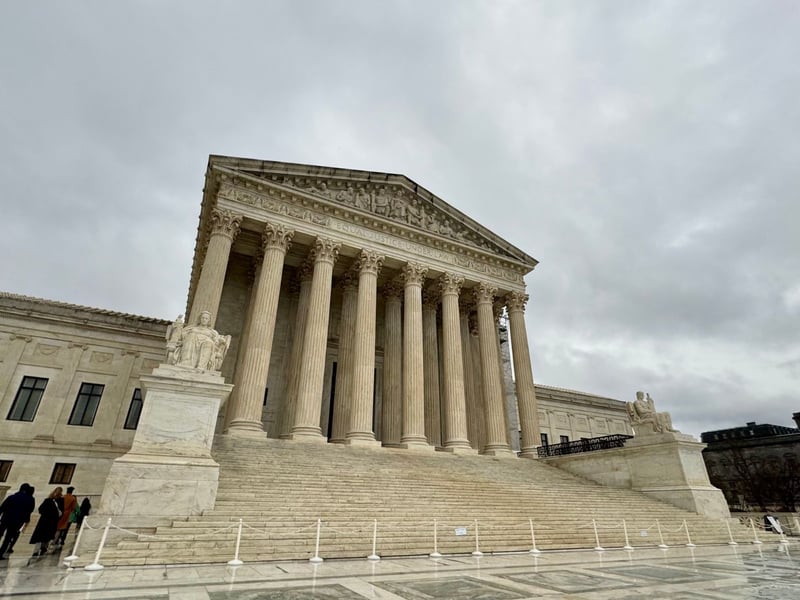
WASHINGTON (CN) — The Supreme Court agreed on Monday to review whether a devout Rastafarian man can seek damages from Louisiana prison officials he says violated his religious rights by cutting his dreadlocks.
Damon Landor had been growing out his locks for almost two decades as part of a promise known as the Nazarite Vow when guards at the Raymond Laborde Correctional Facility cut his nearly knee-length hair.
Landor provided officials with his past religious accommodations as a practicing Rastafarian and offered to call his lawyer to corroborate his beliefs. He says prison officials refused, calling it “too late” to make any accommodations. Landor was handcuffed to a chair while two guards held him down, and another shaved his head to the scalp.
Congress safeguarded religious freedom in institutional settings in the Religious Land Use and Institutionalized Persons Act, or RLUIPA. Landor sued the facilities’ warden, the secretary of Louisiana’s Department of Corrections and Public Safety and the guards who carried out his the shaving.
However, his lawsuit was dismissed by the district court because of precedent from the Fifth Circuit holding that RLUIPA cannot be used to sue individual officials for damages.
Landor argues that the appeals court’s holding conflicts with Tanzin v. Tanvir , a 2020 ruling from the Supreme Court holding that monetary damages were available for two Muslim men who claimed they were put on a no-fly list in retaliation for not becoming informants.
Tanzin stemmed from RLUIPA’s sister statute, the Religious Freedom Restoration Act of 1993, which similarly protects religious freedom against government interference.
“The ‘stark and egregious’ facts of this case vividly illustrate the importance of a damages remedy to protecting religious exercise,” Landor wrote in his petition to the court.
Landor argues that RLUIPA is an empty promise without a damages remedy.
“Congress enacted both RFRA and RLUIPA to provide meaningful protection for religious liberty — not to allow officials to ignore those protections with impunity,” Landor wrote.
Notre Dame Law School’s Lindsay and Matt Moroun Religious Liberty Clinic told the justices that without damages, prisons can strategically moot these cases before a prisoner can receive relief.
“Unburdened by the threat of damages, prisons have little incentive to improve their policies and protect prisoners from future abuse,” the clinic wrote in an amicus brief. “Allowing prisoners to seek damages would correct that distorted incentive — enabling them to vindicate their own rights and to demand that prisons fix inadequate or discriminatory policies to better respect others’ rights in the future.”
Per the court’s custom, the justices did not explain their decision to review Landor’s appeal.
 Follow @KelseyReichmann
 Follow @kelseyreichmann.bsky.social
Subscribe to our free newsletters
Our weekly newsletter Closing Arguments offers the latest about ongoing trials, major litigation and rulings in courthouses around the U.S. and the world, while the monthly Under the Lights dishes the legal dirt from Hollywood, sports, Big Tech and the arts.