
 Search Articles


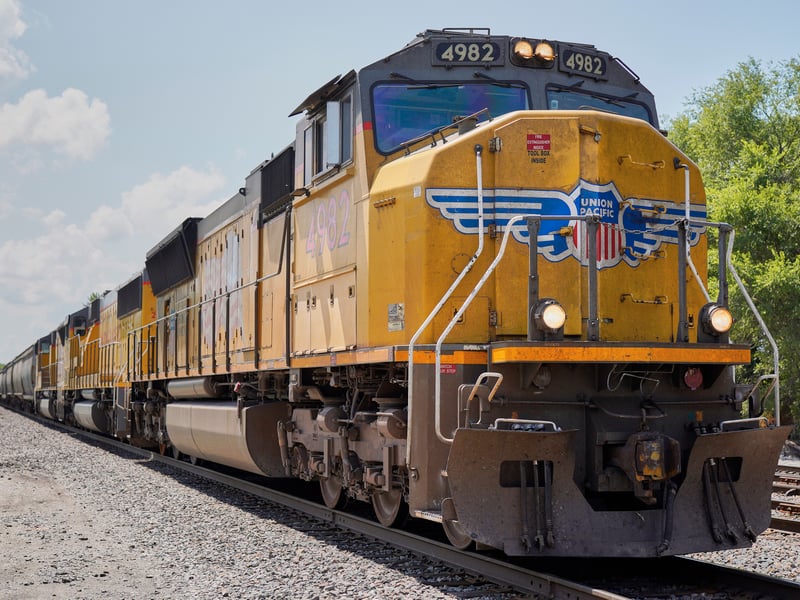
WASHINGTON (CN) — The Supreme Court ruled Tuesday for a rail worker exposed to toxic chemicals that left him with cancer, clearing a jurisdictional hurdle that stood in the way of his lawsuit against Norfolk Southern Railway Co.
“Norfolk Southern argues that the Due Process Clause entitles it to a more favorable rule, one shielding it from suits even its employees must answer,” Justice Neil Gorsuch wrote for the 5-4 majority. “We reject the company’s argument.”
Robert Mallory brought his case after battling colon cancer, which he blamed on an almost 20-year career at Norfolk Southern that involved exposure to asbestos and other toxins. Because he brought his suit against the rail company in Pennsylvania, however, the litigation appeared doomed on the basis of jurisdiction.
Norfolk Southern has around 19,000 miles of track in 22 states and the District of Columbia, and Pennsylvania, where it owns around 3,000 miles of track, is one of the states where the company is registered to do business. The problem for Mallory was that both he and Norfolk Southern are based in Virginia.
The majority resolved the issue meanwhile by imaging how the case would fare if it were tied to the railway’s recent train derailment in East Palestine, Ohio. If an Ohio resident sickened by the fumes sued the train’s conductor in Pennsylvania, Gorsuch said everyone would agree a Pennsylvania court could hear the dispute. It would not matter if the conductor was a Virginia resident.
Mallory based his argument on a provision of Pennsylvania’s corporate registration statute, which specifies that companies automatically consent to jurisdiction when they register as a foreign corporations, as Norfolk Southern did here.
His arguments were largely centered on a judicial philosophy favored by the conservative supermajority: originalism.
“As far back as 1827, states enacted laws like Pennsylvania’s, and by 1868 or shortly thereafter, every state in the union had at least one and often several consent-by-registration statutes,” Ashley Keller, an attorney with Keller Postman representing Mallory, said during oral arguments.
Keller continued, “With history, tradition and precedent on Mr. Mallory’s side, how can my friend challenge Pennsylvania law under the original meaning of due process?”
Norfolk Southern alleges this statute violates its due process rights. Carter Phillips, an attorney with Sidley Austin representing the company, said it would force companies that haven’t even done any business in the state to face lawsuits.
“Under those circumstances, you have consented to being sued on actions that have nothing to do with Pennsylvania and, indeed, in circumstances where you have not even done any business in the State of Pennsylvania,” Austin had said at oral arguments.
The majority likened Mallory’s case to precedent from 1917, Pennsylvania Fire Ins. Co. of Philadelphia v. Gold Issue Mining & Milling Co .
“To decide this case, we need not speculate whether any other statutory scheme and set of facts would suffice to establish consent to suit,” the Trump appointee wrote. “It is enough to acknowledge that the state law and facts before us fall squarely within Pennsylvania Fire ’s rule.”
Gorsuch emphasized that the case here is new, but the controversy is not.
“Not every case poses a new question,” Gorsuch wrote. “This case poses a very old question indeed — one this Court resolved more than a century ago in Pennsylvania Fire . Because that decision remains the law, the judgment of the Supreme Court of Pennsylvania is vacated, and the case is remanded.”
The dissenting justices saw the majority meanwhile as having circumvented settled rules that do not allow state courts to assert jurisdiction merely because a company does business within the state.
“Such an approach does not formally overrule our traditional contacts-based approach to jurisdiction, but it might as well,” Justice Amy Coney Barrett wrote. “By relabeling their long-arm statutes, States may now manufacture ‘consent’ to personal jurisdiction. Because I would not permit state governments to circumvent constitutional limits so easily, I respectfully dissent.”
Barrett cited other cases in the court’s repertoire that she said contradict the use of Pennsylvania Fire to govern Mallory’s suit.
“Look no further than BNSF R. Co. v. Tyrrell , a case with remarkably similar facts — and one that the Court conspicuously ignores,” the Trump appointee wrote. “There, we assessed whether Montana’s courts could exercise general jurisdiction over the BNSF railroad.”
Rejecting Montana’s jurisdiction claims over the railroad, Barrett said the court ruled having an in-state business was not enough to force general jurisdiction over claims.
“The same rule applies here,” Barrett wrote. “The Pennsylvania statute announces that registering to do business in the Commonwealth ‘shall constitute a sufficient basis’ for general jurisdiction. But as our precedent makes crystal clear, simply doing business is insufficient .”
Norfolk Southern declined to comment on the ruling. Attorneys for Mallory did not respond to requests for comment.
 Follow @KelseyReichmann
 Follow @kelseyreichmann.bsky.social
Subscribe to our free newsletters
Our weekly newsletter Closing Arguments offers the latest about ongoing trials, major litigation and rulings in courthouses around the U.S. and the world, while the monthly Under the Lights dishes the legal dirt from Hollywood, sports, Big Tech and the arts.