
 Search Articles


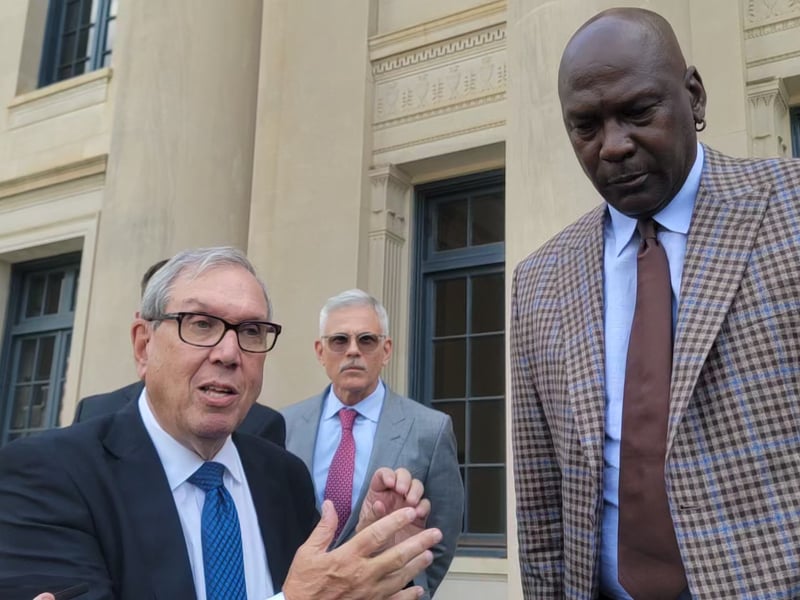
CHARLOTTE, N.C. (CN) — NASCAR and the two teams suing it appeared in Charlotte court Thursday with dueling requests for summary judgment.
Front Row Motorsports and 23XI Racing — a team partially owned by basketball legend Michael Jordan — had appeared privately with NASCAR and owner James France before U.S. District Judge Kenneth Bell Tuesday and Wednesday for a settlement conference, but left without a compromise. The teams have asked the Donald Trump appointee to settle several issues in advance of trial, which is expected to begin in December.
The teams pushed the court to dismiss NASCAR’s countersuit and also asked for a partial judgment on the definition of the relevant market and to determine if NASCAR has monopsony power over that market.
In 2024, 15 racing teams banded together to negotiate the contract renewal of their charters, a key element of NASCAR’s business strategy that guarantees a cut of revenue and race entry to teams. NASCAR has framed those conversations as a conspiracy to force it to increase the teams’ revenue cut, labeling 23XI co-owner Curtis Polk as the ringleader.
The collective teams have conducted joint negotiations since before Polk became involved with NASCAR, 23XI and Front Row said. The teams’ negotiations over the 2025 racing charter agreements were not an “unreasonable restraint of trade,” they said, nor has NASCAR shown that it suffered an antitrust injury, or that market competition has been harmed.
Polk “did nothing except help the whole sport get the best deal they possibly could,” Jeffrey Kessler, counsel for 23XI and Front Row, said Thursday, pointing to the fact that the charter agreements are all identical and any provisions have to be agreed upon by all teams.
NASCAR also defines the premium stock car racing market as the NASCAR Cup Series in its countersuit, a definition that aligns with the teams’ market definition, Kessler said. There is no dispute that NASCAR is the only buyer of stock car racing services and has been for around 50 years, he added. Kessler compared the IndyCar alternative to an MLB team moving to the “minor leagues.”
NASCAR’s counterclaims should continue, attorney Lawrence Buterman told the court, because the teams and Polk participated in “classic cartel behavior” and came together on group priorities.
“The undisputed facts are that in 2025, NASCAR made less than in 2024 and the teams made more,” Buterman said.
NASCAR’s antitrust claims require proving the industry was negatively impacted by the teams’ behavior, not just its company. Bell pushed for counsel to illustrate what that harm looked like outside of NASCAR, and seemed unconvinced that the teams are horizontal competitors who conspired together to hurt the racing industry or prevent each other from getting a more favorable contract.
“It seems to me they’re not really in competition in these negotiations,” Bell said of the teams, noting that they are not facing off against each other for better terms and will instead all end up with the same agreements. “They don’t have market power if you could tell them to take a hike and go and get 36 other teams.”
NASCAR’s request for summary judgment was also heard. NASCAR has argued that the statute of limitations on the teams’ claims has expired and that the teams are too late to challenge exclusivity contracts with racetracks. The teams claim NASCAR is snatching up viable racetracks to keep a third party from creating a Cup Series competitor.
The parties have appeared many times in court already, fighting over if the teams could race as chartered or open teams without relinquishing their legal case. Bell strongly urged the parties to reach a settlement, warning them that they are not prepared for what a Charlotte jury would look like. Both Yates and Kessler are both practicing from out of state.
The teams sued in October 2024, claiming NASCAR has a monopoly on the premium stock car racing industry and is forcing teams to sign anticompetitive contracts. The privately owned association monopolized racing to reap profits from the sport while teams struggle, they said.
NASCAR hit back with its own antitrust suit, claiming the racing teams and Polk “engaged in active threats and coercive behavior” to maintain an “illegal cartel” that pressured NASCAR for better contracts. The teams have already tried — and failed — to get the countersuit dismissed, calling it a retaliatory attempt to intimidate them and other teams.
“We think the facts are on our side, we think the law is on our side, and we have great confidence in Judge Bell, so we’ll wait to see what he decides,” Kessler said after the hearing, declining to comment on the settlement process.
Bell said he plans to issue an order within two weeks.
 Follow @SKHaulenbeek
 Follow @shaulenbeek.bsky.social
Subscribe to our free newsletters
Our weekly newsletter Closing Arguments offers the latest about ongoing trials, major litigation and rulings in courthouses around the U.S. and the world, while the monthly Under the Lights dishes the legal dirt from Hollywood, sports, Big Tech and the arts.