
 Search Articles


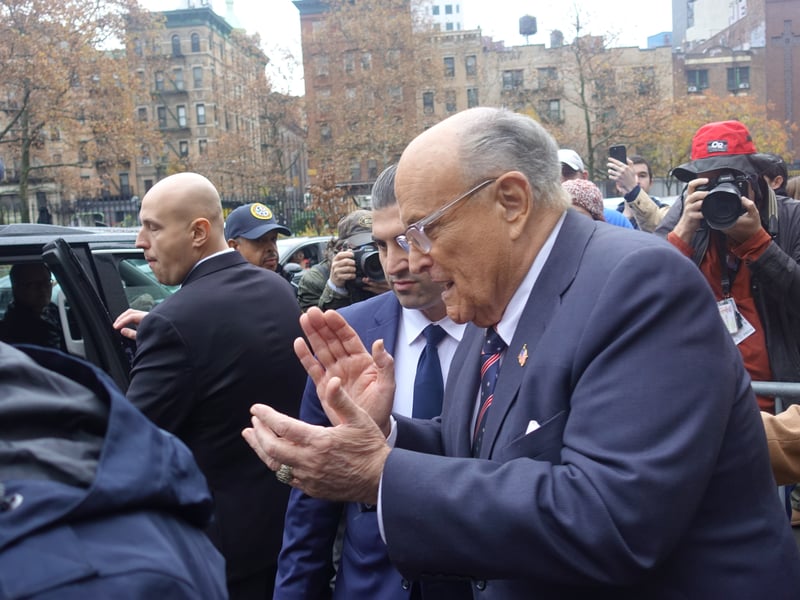
PHOENIX (CN) — After two years of litigation, state prosecutors accusing Arizona Republicans of interfering with the 2020 presidential election will have to start from scratch.
The group of politicians and party leaders, mostly allies of President Donald Trump, said prosecutors failed to present to the grand jury a century-old law it claims excuses its decision to send a slate of Republican electoral votes to Congress despite Joe Biden beating the Republican nominee. Maricopa County Judge Sam Myers agreed, sending the case back to a new grand jury to decide again whether the state can move forward with charges.
“A prosecutor has a duty to instruct the grand jury on all the law applicable to the facts of the case,” Myers wrote in an order filed Monday morning.
Known as the “fake electors,” the Grand Canyon Republicans followed orders of Trump allies like Rudy Giuliani and attorney John Eastman to gather at the state capital in December 2020 and submit documents claiming to be the duly elected presidential electors for the state. They say their votes were cast as a failsafe on the chance that the Supreme Court overturned the election results so Arizona wouldn’t be left without a vote.
But nowhere on the documents is it indicated that the votes are to be treated as alternates.
To justify the actions that state prosecutors call fraud and forgery, the “fake electors” cite the Electoral Count Act of 1887, which allows for a state to submit two slates of electoral votes in the case of a disputed outcome. Hawaii did so in 1960, and four states did so in 1876.
They argued in April that prosecutors withheld the text of the Electoral Count Act from the grand jury, keeping them from understanding the electors’ intent.
“A review of the grand jury proceedings in this matter demonstrates that the ECA was central to the defendant’s claims that they were acting lawfully and without an intent to defraud,” Myers wrote in the minute entry, dated May 16. “At the oral argument on the instant motions, the state confirmed that at the time of the grand jury proceedings, it was aware that at least some of the defendants claimed that their actions were authorized by the ECA. The ECA was discussed during the presentation of the case to the grand jury. However, the actual text and provisions of the ECA were never provided.”
The state argued in April that it wasn’t obliged to present that law because no defendant was accused of violating it. She added that the act carries no protection for fraud, so it wouldn’t be relevant anyway. But Myers disagreed.
Because of the omission, Myers said the defendants were “denied a substantial procedural right” and are now entitled to a new grand jury proceeding, in which the state would be required to present the entirety of the Electoral Count Act as well as all other applicable law.
“We vehemently disagree with the court, and we will file a special action to appeal the ruling,” spokesperson Richie Taylor said on behalf of the attorney general’s office.
The ruling is a major setback for the Democratic Attorney General Kris Mayes and her team, as the political pendulum has since swung in the Republicans’ favor while election fraud claims slowly fizzle from the collective consciousness. Having already litigated the case for two years, it’s unclear how much more time and money it would take for the case to, if ever, make its way to trial.
Attorneys for the defendants have not replied to requests for comment.
 Follow @JournalistJoeAZ
Subscribe to our free newsletters
Our weekly newsletter Closing Arguments offers the latest about ongoing trials, major litigation and rulings in courthouses around the U.S. and the world, while the monthly Under the Lights dishes the legal dirt from Hollywood, sports, Big Tech and the arts.