
 Search Articles


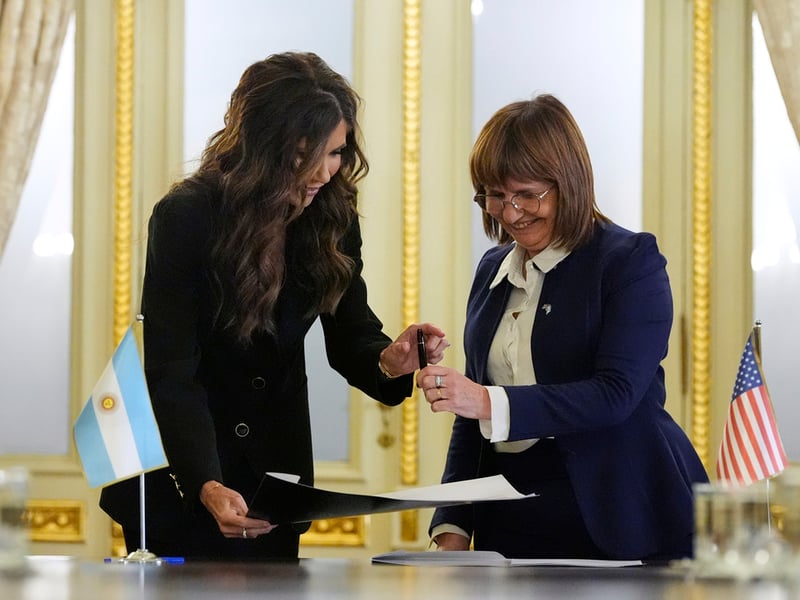
BUENOS AIRES (CNS) — Homeland Security Secretary Kristi Noem and Argentine President Javier Milei agreed to bring Argentina back into the U.S. Visa Waiver Program on Monday, a move that could allow Argentinians to travel to the U.S. for tourism or business for 90 days or less without a visa.
The jointly signed statement of intent, signed in Buenos Aires during a series of high-level meetings between Noem and Argentine officials, is one step solidifying the relationship between Argentina and the U.S. Milei has been a longtime supporter of Donald Trump and has, since his 2021 arrival in local politics, mimicked his rhetoric, communication strategies and ideas.
The two first met during the 2023 Conservative Political Action Conference, but have only been seen together in public briefly a few times since and have not held a bilateral meeting since Trump reentered the White House this year. But Milei was one of the few international leaders to attend Mar-a-Lago after Trump’s win last November, as well as his inauguration in January.
“Under President Javier Milei’s leadership, Argentina is becoming an even stronger friend to the United States,” read a statement published by the Department of Homeland Security after the signing. “This kind of diplomatic leadership, spearheaded by President Trump, will help increase the safety of both countries by fostering greater cooperation.”
Next, Argentina will formally apply for the visa waiver, a process that DHS statements indicate will “take time.” During her visit, Noem told reporters it would be very hard to secure approval within the next year. These procedures also include an “enhanced border security” agreement, which will involve greater collaboration between the two nations on immigration and security matters.
The initiation of this procedure signifies “mutual trust” between the administrations of President Trump and President Milei, according to a statement published by Argentina’s government. “The bilateral bond is not limited to trading or finance but extends to a comprehensive, strategic relation,” the statement emphasized, highlighting the broad scope of their burgeoning alliance.
Noem’s visit to Argentina marks the third by a top U.S. official since the return of Donald Trump in the White House in January 2025, signaling the increasingly strong ties between the two nations under their allied presidents. A staunch advocate for stricter immigration enforcement, Noem also met with Argentine Security Minister Patricia Bullrich, who deemed the agreement a step towards “more integration, more freedom, more exchange” between the countries.
Ahead of Noem’s visit, public discourse in Argentina examined U.S. diplomacy’s role in the South American nation. Trump’s nomination of Peter Lamelas, a Cuban-born physician and businessman, as ambassador to Argentina sparked the conversation.
On July 22, Lamelas appeared at his confirmation hearing before the U.S. Senate, where he vowed to help build an “unprecedented alliance” with President Milei and deter Argentina from strengthening relations with China, its main regional economic competitor.
“President Milei is a friend of President Trump. We will achieve levels of cooperation never seen before,” Lamelas promised during his testimony.
“It’s an anomaly,” commented Juan Gabriel Tokatlian, a university professor and foreign affairs expert, last week during a radio interview. He described Lamelas’ words as “absurd” and warned that what he promised would constitute an intervention in Argentina’s domestic policies. Such warnings have become a common sentiment concerning the Trump administration’s approach toward Latin America.
Argentine citizens previously benefited from visa waivers between the mid-1990s and 2002. This policy was halted following the nation’s severe economic crisis in 2001, which led thousands of Argentines to flee the country in search of economic stability. Since then, Argentines have been required to submit an application and undergo interviews to apply for non-immigrant visas for tourism, paying a fee of $185. In recent years, the application process and the timeframe to secure an interview appointment could often take more than a year, posing a significant hurdle for travel.
President Trump’s policy toward Latin America in his second administration has been characterized by one-on-one transactional relations, with significant U.S. government officials leading these conversations. U.S. Treasury Secretary Scott Bessent visited Argentina in April 2025 to express support for President Javier Milei’s economic policies and his ongoing agreement with the International Monetary Fund for a $20 billion loan, which was approved in April.
During his visit, Bessent referred to the bilateral bond as “stronger than ever” thanks to the “bold leadership” of President Milei, underscoring the perceived alignment between the two administrations.
 Follow @luciacholakian
Subscribe to our free newsletters
Our weekly newsletter Closing Arguments offers the latest about ongoing trials, major litigation and rulings in courthouses around the U.S. and the world, while the monthly Under the Lights dishes the legal dirt from Hollywood, sports, Big Tech and the arts.