
 Search Articles


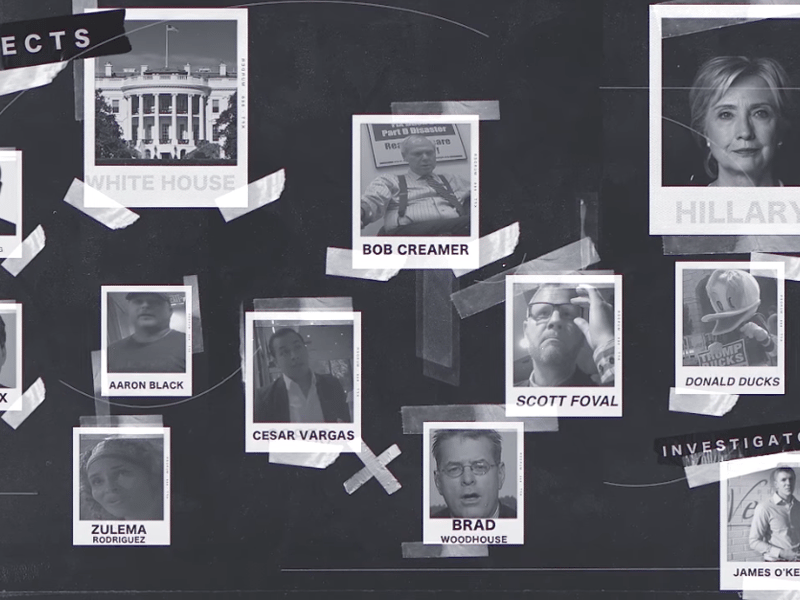
WASHINGTON (CN) — Dodging an important First Amendment case on the docket, the Supreme Court on Monday declined to decide if Oregon’s prohibition on unannounced recordings is unconstitutional.
Project Veritas, a conservative media organization known for its secret recordings, says the Beaver State unconstitutionally bans undercover journalism. Oregon’s unusually strict law prevents recordings that are allowed in other states. Project Veritas says the restrictive law turns investigative journalism and critical news coverage into a geographic lottery.
“If left unresolved, journalists’ freedom to uncover truth hinges arbitrarily on their state’s interpretation of content neutrality,” the group wrote. “Equally troubling is that Oregon attempts to shield most public discussions from newsgathering under the guise of protecting conversational privacy.”
Oregon requires all parties to be informed when recording any conversation, with two exceptions: A conversation during a felony that endangers human life, or openly recording interactions with law enforcement officers when they are performing official duties.
The state says its law is constitutional because it is content neutral in limiting when an unannounced recording of a conversation is acceptable.
“Each of the exceptions at issue — for conversations ‘during’ a life-endangering felony and conversations ‘in which’ a law enforcement official is participating — ‘draws a line based on the circumstances in which a recording is made, not on the content of the conversation recorded,’” the state wrote.
Project Veritas disagreed, arguing that Oregon’s law is textbook content-based regulation.
“Oregon’s law, by selectively determining which truths journalists may uncover and which must remain hidden, resembles Orwell’s vision in ‘1984,’ where government subtly but powerfully controls the narrative by deciding what information the public may see or hear,” the group wrote. “Such state-driven editorial interference strikes at the heart of the First Amendment’s protections against content-based regulation.”
Project Veritas says it’s not eavesdropping or secretly recording the conversations of others. Instead, the group argued that it only wants journalists to record their own conversations.
“It’s disappointing that the Supreme Court declined to hear this case. The court missed a vital opportunity to affirm that the First Amendment protects citizens who record public officials doing the public’s business,” Benjamin Barr, the Washington, D.C.-based attorney representing Project Veritas, said.
“Oregon’s secret recording ban silences whistleblowers, journalists, and ordinary citizens who hold government accountable. That’s not what free speech looks like. We’ll keep bringing these challenges nationwide until the courts fully recognize that recording public officials is a cornerstone of transparency and liberty,” Barr added.
Animal advocacy organizations supported Project Veritas’ petition, arguing that undercover investigations have been key to exposing animal cruelty and spurring change. In 2008, the Humane Society of the United States used hidden cameras to document workers abusing cows that were too sick or injured to walk at a California slaughterhouse.
The footage led the USDA to issue a sweeping recall of beef, and California enacted a law banning the slaughter of downed cattle for human consumption. Two of the employees were convicted of animal abuse, and the slaughterhouse went out of business.
“The audio recording was essential to the effectiveness of the Hallmark/Westland investigation,” the animal advocacy groups wrote. “Viewers not only saw the abuse — they heard it.”
“If the footage were silent — as would be required under Oregon’s eavesdropping statute to protect the workers’ conversations — the most arresting part of the investigation would have been lost entirely,” the groups wrote.
Under Oregon’s law, however, such recordings are barred. People for the Ethical Treatment of Animals, or PETA, ripped Oregon’s law.
“Recording bans like Oregon’s all too often silence whistleblowers and others working to expose the hidden cruelties that occur inside laboratories, slaughterhouses, factory farms, and sheep shearing sheds,” PETA Foundation deputy general counsel and director of litigation Asher Smith, said.
“PETA’s investigations have captured shocking audio and video of animal abuse in these exploitive industries, and legislators should be passing laws to require cameras in these facilities rather than, in many contexts, effectively banning them to protect bad businesses’ interests.”
Texas-based attorney Tony McDonald said, “I’m obviously disappointed but this is not unexpected. Unfortunately, the court grants very few petitions these days.”
McDonald represented the nonprofit media organization Citizens News Guild, which filed an amicus brief in the case to argue the importance for people to record meetings with government officials.
“Hopefully someone with a good case at the right time will get to the court when it is inclined to grant a case on this topic,” he added.
 Follow @KelseyReichmann
 Follow @kelseyreichmann.bsky.social
Subscribe to our free newsletters
Our weekly newsletter Closing Arguments offers the latest about ongoing trials, major litigation and rulings in courthouses around the U.S. and the world, while the monthly Under the Lights dishes the legal dirt from Hollywood, sports, Big Tech and the arts.