
 Search Articles


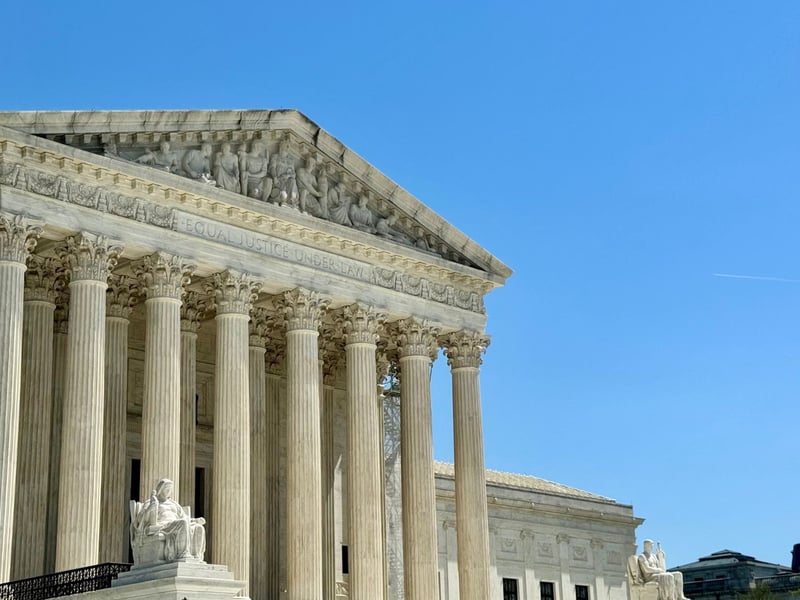
WASHINGTON (CN) — Ruling against an Army veteran, the Supreme Court on Wednesday ruled police officers do not need probable cause to enter a residence when responding to an emergency.
The so-called emergency aid exception to the Fourth Amendment allows police officers to conduct a warrantless search if they have reasonable suspicion there is an emergency and an immediate need to protect an individual or others from harm. William Trevor Case asked the justices to clarify that officers still need probable cause that such an emergency exists before they can enter without a warrant.
In a unanimous ruling led by Justice Elena Kagan, a Barack Obama appointee, the court held only the reasonableness standard created by Brigham City v. Stuart was sufficient because probable cause was rooted in the criminal context.
“We repeat today what we have held before: An officer may enter a home without a warrant if he has ‘an objectively reasonable basis for believing that an occupant is seriously injured or imminently threatened with such injury,’” Kagan wrote. “The officers’ entry satisfied that test.”
Case, an Army veteran from Montana, was convicted of assaulting a police officer after his ex-girlfriend called 911 to report Case was behaving erratically and threatening to commit suicide. She also warned that Case said if police intervened, he “would shoot them all too.”
When officers arrived at Case’s home for a welfare check — already familiar with Case’s history of “suicide by cop” threats — they looked through his windows and did not see Case, blood or any other signs of injury. Instead, they saw an empty handgun holster, beer cans and a notepad they thought was a suicide note.
The officers waited 40 minutes to enter Case’s home, during which time they decided against calling Case or his family and made no effort to obtain a warrant. Upon entering, they saw Case holding a handgun and shot him in the arm and abdomen.
At trial, Case sought to suppress the firearm and other evidence from his home because the police did not have probable cause to enter without a warrant and deliver emergency aid. The trial judge rejected Case’s argument, leading a jury to convict him on the felony assault charge.
On appeal, the Montana Supreme Court ruled 4-3 against Case, holding probable cause is superfluous when an officer is acting in a caretaker’s capacity and the officer’s reasons for a warrantless entry are totally separate from the investigation of the crime.
When the U.S. Supreme Court heard arguments in October, Case’s attorney warned allowing the lower reasonable suspicion standard to stand would empower officers to “backdoor [their] way into a criminal investigation.”
Kagan wrote that imposing the probable-cause standard in the non-criminal, non-investigatory setting would be awkward. Brigham City’s approach, Kagan wrote, offers a simpler solution. However, officers shouldn’t intrude on an individual’s Fourth Amendment rights during emergency circumstances, she added.
“We note that an emergency-aid entry provides no basis to search the premises beyond what is reasonably needed to deal with the emergency while maintaining the officers’ safety,” Kagan wrote. “But we assess the reasonableness of that limited entry on its own terms, rather than through the lens generally used to consider investigative activity.”
In claiming that if officers hadn’t entered his home nothing would have happened, Case was oversimplifying a complex situation, Kagan found.
“There is no basis for thinking that the officers would have gone into Case’s home just so he could instigate a gunfight,” Kagan wrote. “The circumstances making their entry reasonable…were those suggesting that Case may already have shot himself or would do so absent intervention.”
In a concurring opinion, Justice Sonia Sotomayor, also an Obama appointee, wrote officers should consider whether their entry into a home would escalate an ongoing emergency. Sotomayor said in some circumstances, like mental health emergencies, officers should opt for a different means of de-escalation.
 Follow @KelseyReichmann
 Follow @kelseyreichmann.bsky.social
Subscribe to our free newsletters
Our weekly newsletter Closing Arguments offers the latest about ongoing trials, major litigation and rulings in courthouses around the U.S. and the world, while the monthly Under the Lights dishes the legal dirt from Hollywood, sports, Big Tech and the arts.