
 Search Articles


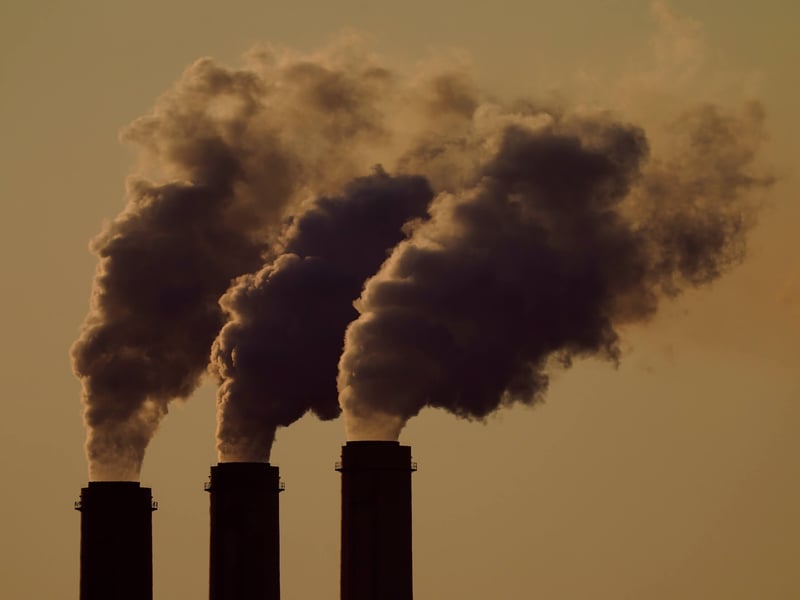
WASHINGTON (CN) — A rural electric cooperative asked the Supreme Court on Friday to block the Environmental Protection Agency’s coal cleanup rule forcing updates to a Kentucky plant priced at $16.5 million.
The East Kentucky Power Cooperative asked for an emergency stay to prevent the federal government from enforcing a “fatally flawed” rule.
Without a stay, [East Kentucky Power Cooperative]’s compliance efforts will have to ramp up in the coming weeks, culminating in the commencement of construction activities in March 2025,” the cooperative wrote. “This is no small matter for a rural electric cooperative, especially one that supplies energy to some of the most economically underprivileged areas in the nation.”
Coal combustion residual, or coal ash, is the byproduct of burning coal and contains hazardous pollutants like arsenic, boron, cobalt and others linked to cancer, heart and thyroid disease, reproductive failure and neurological harm. Coal plants produce around 75 million tons of coal ash per year, some of which leak into the groundwater threatening public health.
In April, the Biden administration issued a new rule under the Resource Conservation and Recovery Act forcing coal companies to control and clean up the contamination caused by disposal of coal ash.
The rule expanded protections for communities around active and inactive coal-burning power plants. According to the EPA, unmonitored inactive coal ash facilities are more likely to leak, contaminating the surrounding environment.
The Biden administration said the rule closed a loophole in 2015 regulations, for leaky historic disposal units contaminating groundwater. These sites were exempt from the 2015 regulations, but the EPA said closed facilities needed to retroactively apply the new rule to remediate pollution at disposal sites.
East Kentucky Power Cooperative operates two Kentucky plants, distributing coal ash between four landfills. However, they’re challenging the rule’s application for an old unused plant at William C. Dale Station. The cooperative began removing all coal ash from Dale station in 2014, halting energy production at the site before the 2015 rule.
Kentucky’s waste management agency approved and certified Dale station’s closure. In total, the cooperative says it spent $27 million clean-closing the site.
Under the Biden administration’s new rule, the cooperative estimates that compliance would cost another $16.5 million. East Kentucky Power said it would need to begin construction in March 2025 to meet 2028 closure deadlines. This work would include hydrogeologic studies, investigatory drilling and installing groundwater-monitoring systems and preparing earthwork for the installation process.
“EKPC will have to undo, and then redo, much of the closure work that it performed years ago when it closed the Dale Station impoundments by dewatering them and removing all the CCR,” the cooperative wrote. “And once groundwater-sampling wells are installed, then EKPC must begin the work of sampling and performing statistical analyses of results to establish background water quality. Stated simply, EKPC faces significant compliance work in the short term."
East Kentucky Power Cooperative identified multiple flaws with the rule, claiming that the EPA doesn’t have the authority to retroactively enact the rule.
“Aside from the lack of statutory authority, there is an even deeper problem with the rule: It is outside the federal government’s enumerated powers in the Constitution,” the cooperative wrote.
East Kentucky Power Cooperative says Congress doesn’t have the power to regulate sites where solid water is disposed of.
“The rule is not authorized by the commerce clause,” the cooperative said. “It is elementary that the federal government does not possess unlimited lawmaking power.”
Congress enacted the Resource Conservation and Recovery Act in response to a coal ash spill in Tennessee in 2008.
In 2022, Earthjustice and the Environmental Integrity Project found that ash at 91% of coal plants is contaminating groundwater above federal safety standards. At the time, 96% of power plants hadn’t proposed any groundwater treatment solutions. The Biden administration issued an enforcement alert in 2023, warning of widespread noncompliance with federal regulations.
 Follow @KelseyReichmann
 Follow @kelseyreichmann.bsky.social
Subscribe to our free newsletters
Our weekly newsletter Closing Arguments offers the latest about ongoing trials, major litigation and rulings in courthouses around the U.S. and the world, while the monthly Under the Lights dishes the legal dirt from Hollywood, sports, Big Tech and the arts.