
 Search Articles


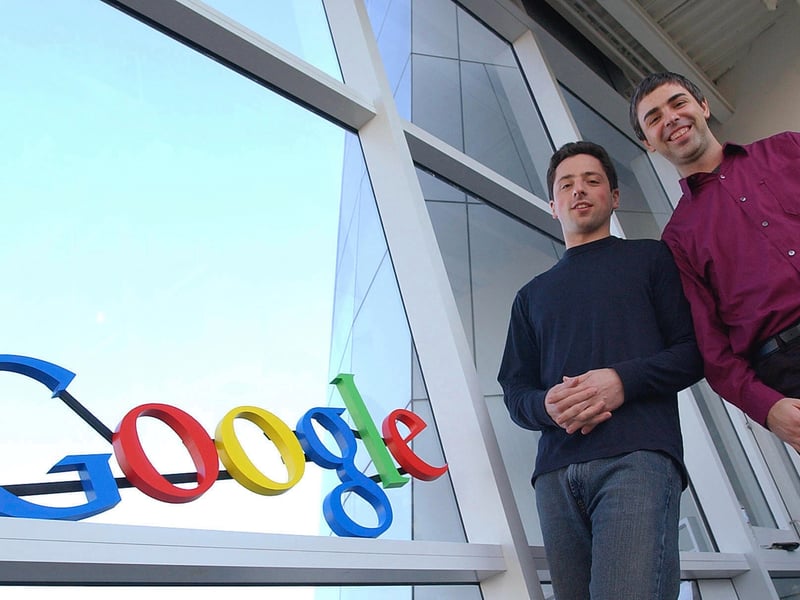
WASHINGTON (CN) — The long-running remedy phase of Google’s internet search antitrust trial came to an end Friday as the Justice Department and the tech giant made their closing arguments on how address Google’s search dominance.
U.S. District Judge Amit Mehta is tasked with crafting an equitable remedy that will strip Google of its illegally gained monopoly, improve competition among current and future search engines and address developing technologies like artificial intelligence.
The Barack Obama appointee, who heard two weeks of witness testimony earlier this month, grilled both parties to further detail their proposed remedies to assist him in writing his ultimate order expected in August.
Before him lay two proposals.
First, the Justice Department’s pitch to break up Google by divesting it’s Chrome browser and potentially Android, bar multibillion-dollar payments for default status on Apple devices and partner browsers and order data syndication for rival search engines to match Google’s quality.
A coalition of 38 attorneys general who joined the Justice Department further proposed a public education campaign to break Google’s name-recognition advantage.
Alternatively, Google’s narrow remedy would open the default-status deals to yearly bids from other search engines. Under Google’s scheme, rivals would be able to compete for default status on separate devices as well.
Both proposals have received considerable discussion since the start of the remedy phase, but Mehta still had a full day’s worth of inquiries, starting with the question of what to do with generative AI.
The topic has become a focus of the remedy phase as products like ChatGPT have exploded in popularity in the 12 months since the liability phaseof the trial ended. The technology has raised concerns on the government’s side that Google’s Gemini AI could allow the company to circumvent Mehta’s remedies that focus on general search.
Mehta pressed Justice Department attorney David Dahlquist whether he could define GenAI as a “search access point” — a device or software from which a user can access the internet — and effectively grandfather the technology into his remedies.
Dahlquist said there is a “direct connection” between GenAI and search, pointing to testimony from ChatGPT product head Nick Turley, who said that AI assistants would replace search engines.
Mehta expressed concern that he was being asked to conduct a “mini liability phase” to find Google had monopolized GenAI just as it had monopolized search, but noted that he could consider fitting AI-related remedies as “forward-looking” to ensure Google doesn’t engage in additional monopolistic conduct.
Dahlquist also pushed the data-syndication remedy as key to restore competition to internet search, noting that Google’s massive search index allows it to answer “long-tail” queries — hyper-specific and lengthy searches — that other search engines cannot.
The fed’s proposal to break off Google Chrome also dominated much of the marathon hearing, as Google attorney John Schmidtlein decried the idea both as detached from the company’s monopolistic conduct and a boon to its largest competitors.
Jonathan Sallet, of the Colorado attorney general’s office, assured the court that if a Chrome divestiture is ordered, an established Technical Committee will ensure that Microsoft cannot purchase the browser.
Plenty of other interested parties — like OpenAI, Yahoo and Perplexity — testified that they’d place bids for the world’s most-popular browser.
Unconvinced, Schmidtlein warned that splitting Google from Chrome would have serious impacts on users across the globe, highlighting the fact that 80% of Chrome’s users are international.
He also slammed the Justice Department’s “contingent divestiture” proposal for Android as anticompetitive — Mehta could order its sale if the government’s other remedies do not restore competition — warning that it would place a cloud over the Android team and hamper innovation while competing with Apple.
Mehta said that the D.C. Circuit in United States v. Microsoft had approved a similar remedy that allowed the court to impose further equitable relief if conditions did not change, but asked Schmidtlein how he should act after imposing any initial set of remedies.
“You should be agnostic,” Schmidtlein told Mehta. “Once you’ve opened [the market] up, once you’ve created the conditions to restore competition, then the market takes over. And whether Google comes up with the next great invention and keeps its position in search, or whether someone else comes along is not relevant to whether or not the decree was effective.”
The D.C. Circuit’s Microsoft decision has loomed heavily over the proceedings, as the last major antitrust case — and the next revenue for the case — where a major breakup of Microsoft ultimately floundered and resulted in a settlement.
Schmidtlein asked Mehta to impose a 60-day grace period before any remedies go into effect to allow the company to review the order before appealing the decision to the D.C. Circuit. Dahlquist urged Mehta to deny that request and leave any stay decision to the appellate court.
Before adjourning, Mehta thanked the parties for their hard work over the nearly five years since the case was first brought.
“The liability phase was a marathon, this has been a sprint for everyone,” Mehta said. “It really has been a privilege to preside over this phase, as well as the earlier phase, and the lawyering has been top notch.”
 Follow @Ryan_Knappy
Subscribe to our free newsletters
Our weekly newsletter Closing Arguments offers the latest about ongoing trials, major litigation and rulings in courthouses around the U.S. and the world, while the monthly Under the Lights dishes the legal dirt from Hollywood, sports, Big Tech and the arts.