
 Search Articles


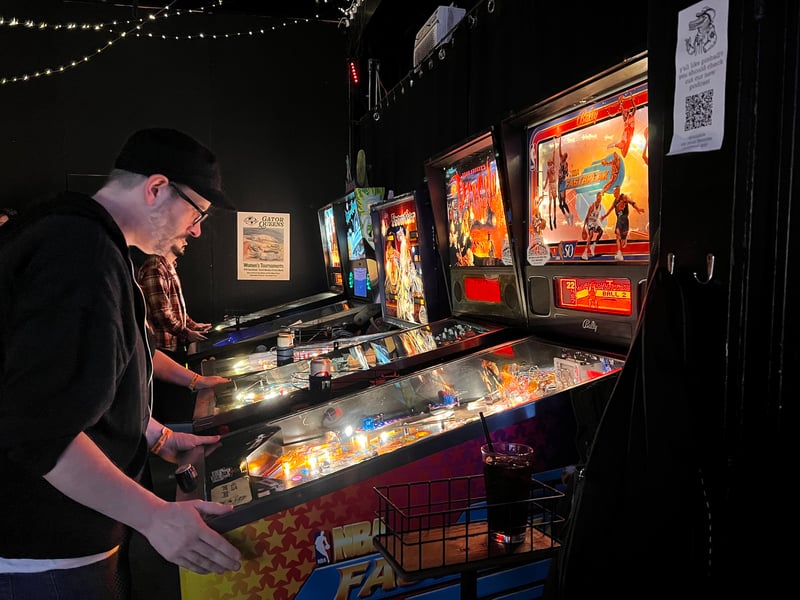
PORTLAND, Ore. (CN) — It’s an overcast evening in Portland, and naturally, a pinball tournament is underway.
Two more tournaments will take place tomorrow, followed by another the next day and one more the day after.
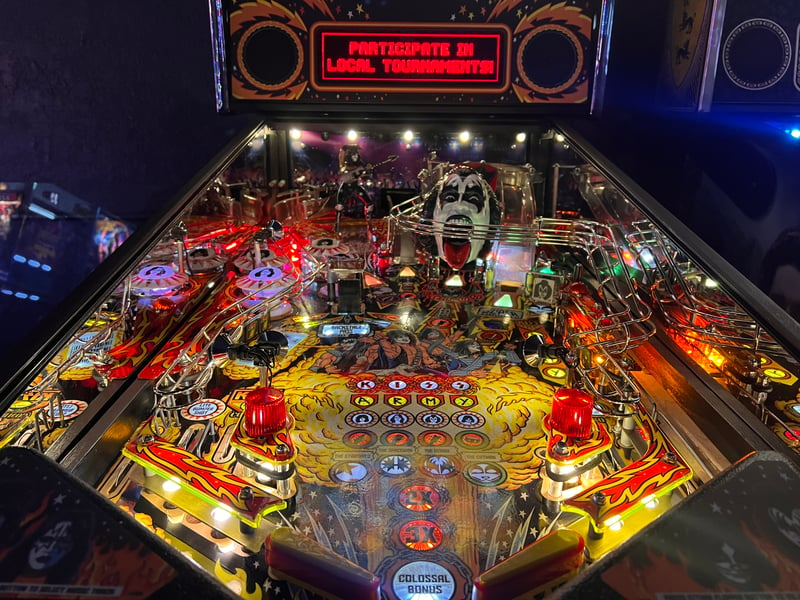
Portlanders love pinball. Venues here offer countless variations on the game, from old-school machines with simple motifs like rafting to modern digital tables themed after pop-culture figures like Godzilla or the Foo Fighters. The city is said to have the largest number of publicly accessible pinball machines in the world, and it certainly has an avid playership to match.
This Saturday, April 26, the Portland Pinbrawl kicks off at Ground Kontrol, Portland’s foremost arcade bar. The annual two-day tournament will pit 128 flippers — that is, pinball players — against each other. The winner will take home $1,000.
That event, the Super Bowl of Portland’s pinball community, is just one of a plethora of pinball tournaments held throughout the year all over the city. Rarely does a day go by without a chance for Portland flippers to stake their claim to glory.
“It’s a ravenous community,” said Dylan Snow, who helps run pinball events like these as promotions manager at Ground Kontrol.
In Portland, it’s not uncommon to stumble across a row of pinball machines at a bar — though some establishments center the game more than others.
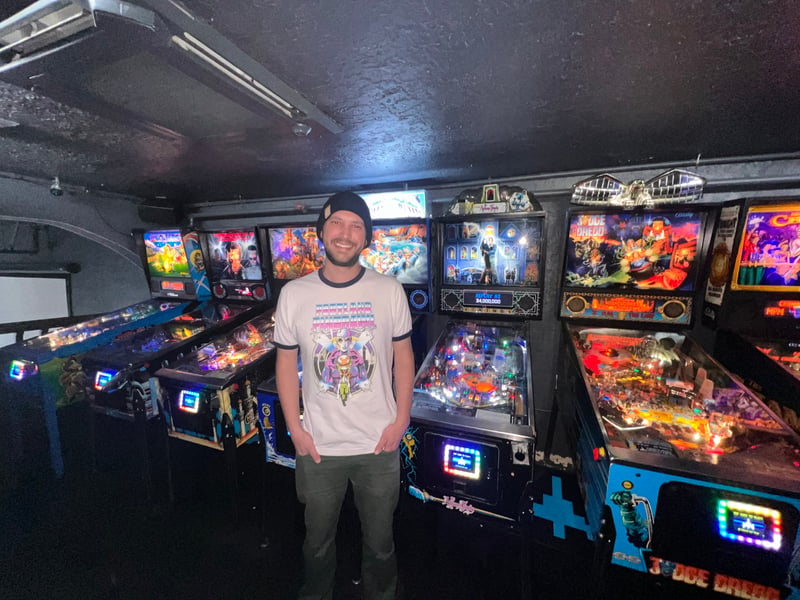
Within city limits, Ground Kontrol leads the pinball pack with a whopping 42 pinball machines. Next up are QuarterWorld, with 36, and Wedgehead, with 22. The biggest collection in the metro area is not in Portland proper but in the nearby city of Hillsboro, where the Next Level Pinball Museum boasts more than 300 machines.
Ground Kontrol has been a fixture of the pinball and arcade-game community since it opened in downtown Portland in 1999.
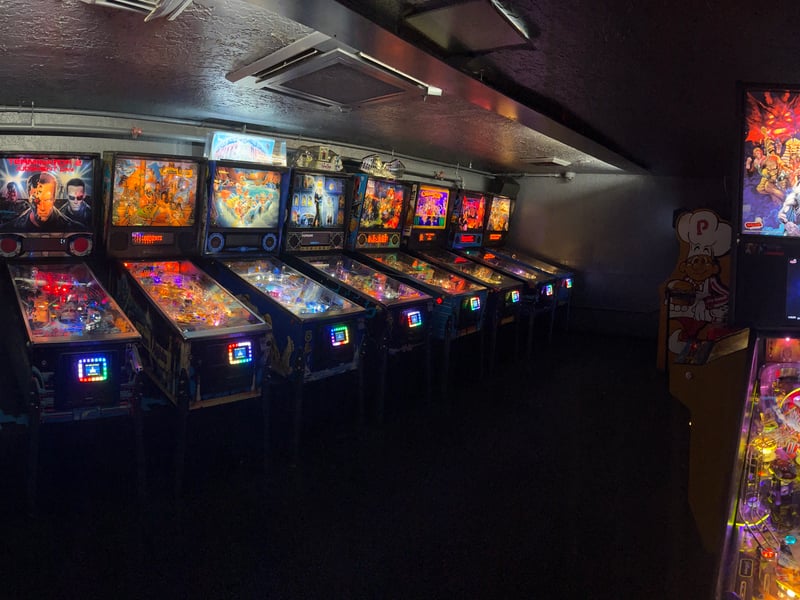
Snow has been a flipper since 2016, shortly after he started working there. He soon found himself drawn into the frenetic neon mayhem of this unique modern sport.
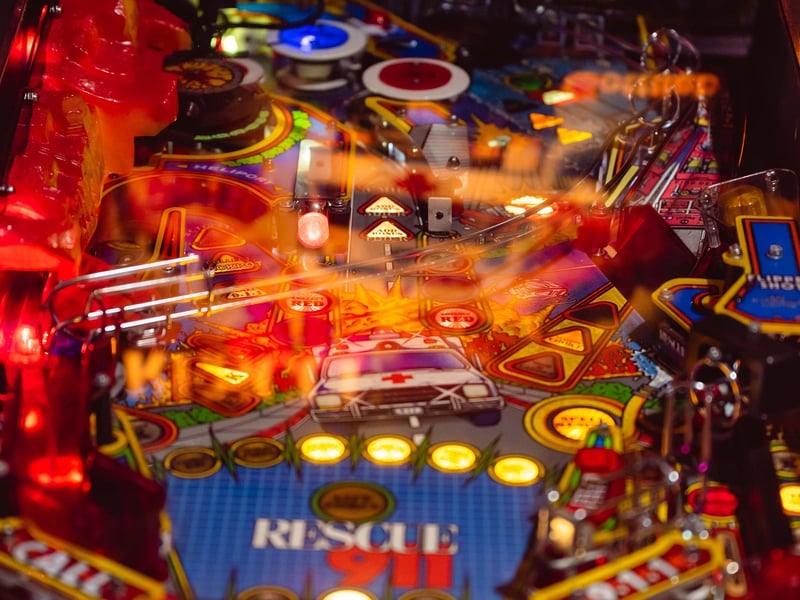
“You look at the play field, and there’s just lights flashing everywhere,” Snow said. His coworkers taught him that pinball was about more than just madly smashing the flippers. Now, he runs the venue’s monthly tournaments and is fully immersed in the scene.
“People are always seeking out more pinball,” he said.
Another prominent local flipper is Alan Robertson. A walking encyclopedia of all things pinball, he co-owns Wedgehead, a dedicated pinball bar in Portland’s Hollywood neighborhood. He also co-hosts a pinball podcast.
Robertson’s love of the game was also fostered at Ground Kontrol, where he often spent afternoons before night shifts as a cook. He honed his skills on Attack from Mars, an iconic 1995 pinball game in which flippers must ward off an alien invasion. As he got his bearings, Robertson said he went from “just kind of slapping the ball around to being like, ‘Oh, I understand what I’m supposed to do.'"
“The game taught me how to play it just by playing it,” Roberton said of Attack from Mars. “Pinball machines aren’t necessarily that good at that.”
In 2018, Robertson and business partner Chris Rhodes opened Wedgehead, named after the shape of pinball machines designed by Gottlieb, a major pinball manufacturer until it went under in 1996. Rhodes was already a pinball enthusiast and collector, with around 70 pinball machines that he supplies to various businesses around the area.
Wedgehead soon became a fixture of the local pinball community. While competitive pinball is often played one on one, Robertson developed a four-on-four tournament to bring in new players and pair them with pros.
“Your teammates are there to teach you the game,” he said, “and they’re there to celebrate when you do well.” Winners of the weekly Howdy Pardner tournament, as the competition is known, can take home custom merch like beer koozies and keychains.
Venues like Ground Kontrol and Wedgehead have nurtured a vibrant local scene where both experts and amateurs can feel welcome. That’s led to the unlikely modern-day resurgence of this decidedly old-timey game.
“It just doesn’t make a lot of sense that they’re still making these things in 2025,” Robertson said. Even so, “we all care so much about this game that really should have died a long time ago.”
Pinball can be a passionate community, particularly in the City of Roses.
Take local flipper Isaac Ruiz, who moved to Portland in 2006. Like many here, he was drawn into the pinball scene after stumbling upon the array of machines at Ground Kontrol. “I got just completely hooked,” he said as he logged team scores at a recent Howdy Pardner tournament.
Ruiz soon discovered the Pinball Map, at the time a fledgling online catalog of all publicly available pinball machines in Portland. In a sign of the city’s prominence in the pinball world, the website is now the go-to resource for tracking down machines everywhere.
Ruiz, who had experience coding, helped turn the Pinball Map into an iPhone app. He later also created the pinball tournament app Brackelope. Fast forward almost 20 years, and Ruiz is now a regular in Portland’s competitive pinball scene. “There are a lot of excited people willing to create and give back to the community,” he said.
Pinball’s resurgence in Portland has coincided with a broader trend, in which competitive pastimes have increasingly been viewed as professionalized sports.
Just as there are now professional video gamers, so too is there a World Pinball Championship. It’s run by the International Flippers Pinball Association, which first hosted tournaments and championships in the early 1990s before falling dormant until 2006.
Zoe Vrabel, a former longtime Portlander, has the distinction of being the IFPA’s first-ever women’s world champion. She mastered the game at a dive bar while attending college in Portland in the late 2000s.
In Portland, flippers skew younger, Vrabel said. They’re more alternative and comprised more of service industry workers and young professionals. That’s different from other scenes, where she says middle-aged and affluent white men make up a higher percentage of dedicated players.
“Portland was on the cutting edge of the pinball scene, the competitive pinball scene, but also just the larger, broader social aspect of pinball,” Vrabel said in an interview. “Even when I started playing pinball, it was already noticeably a hipper scene than most competitive communities at that time.”
A hipper scene — but still a largely male one. Vrabel says that gender gap is part of what motivated her to prove herself at the game.
“I’ve always been incredibly competitive,” she said. “I think that is part of why I stuck around, even though it wasn’t always socially a fun time.” Vrabel steadily advanced her rankings, becoming one of the world’s top-rated female players before winning the world championship in 2016. “I wanted to make sure that someone was proving that the gender divide is not due to a skill gap,” she added. “It’s due to a social gap in some capacity.”
Men still largely dominate the pinball community, but the gender gap is shrinking each year. Women-only leagues and tournaments are rising in popularity, thanks in part to groups like Belles and Chimes and Fantastic Ladies in Pinball. Vrabel now serves as director at the IFPA.
Whatever their gender, newbie flippers in the Rose City need not be intimidated. One appeal of Portland’s pinball scene is that while people can compete professionally here, they don’t have to. The local Portland Pinball League, which hosts 12-person team events each week, gives locals the opportunity to socialize without fear of damaging their IFPA rankings.
Pinball wasn’t always hip bars and pop-culture motifs. Nor were there always tournaments: For much of its history, the pastime was seen not as a game of skill but as a sleazy and mafia-linked form of gambling.
In the 1940s, Fiorello La Guardia, then the mayor of New York City, railed against what he called “pinball pushers.” The 1957 noir film “Portland Exposé” places the game at the center of a vicious gang war. Then, in 1976, pinball journalist and activist Roger Sharpe showed off his moves in a Manhattan courtroom, convincing New York City authorities that pinball was indeed a game of skill. Bans were soon lifted across the country, including in Portland, which legalized pinball that same year.
Given the game’s dubious origins, it’s fitting that Portland’s pinball revival bears the fingerprints of a self-proclaimed “pinball gang”: the Crazy Flipper Fingers.
The group would post up at bars with pinball machines, drinking plenty of beer as they played into the night. Their calling card? The initials “CFF,” entered into the high-score rankings on machines across town.
Sadly, rumors of the Crazy Flipper Fingers’ criminal largesse seem to have been greatly exaggerated. Although Portland police supposedly once put out a bulletin about the group, a police spokesperson said they were “not aware of anything like this.”
For the purposes of police bulletins, “gang members were usually designated if they’re involved in a violent criminal street gang,” that spokesperson told Courthouse News. “I’d be surprised if this pinball group would qualify for that.”
But the Crazy Flipper Fingers do exist — they even have a website — and the group’s love of the game is undeniable.
“You wanted to entice people like that to your establishment,” Vrabel said. “They were kind of behind the pinball resurgence” in Portland, “and the fact that we were ahead of the curve in loving pinball.”
Portland’s love affair with pinball has persisted even as the Flippers faded into local lore.
Snow, the Ground Kontrol promotions manager, says the game jives well with the city’s love of all things retro. (See also: VHS tapes and pennyfarthing bicycles.) Portlanders “gravitate toward things like pinball and, similarly, old-school arcade machines,” he said.
Another factor could be the weather. With more overcast days than sunny ones, the city is well-suited for indoor activities. And pinball is “a really good social indoor activity, and something that anybody can do,” said Kyle Scott, a casual flipper who recently started competing in tournaments like the ones at Wedgehead.
At a Howdy Pardner tournament on a recent evening, Scott took turns keeping a pinball alive on an NBA Fastbreak machine. His experienced teammates peppered in suggestions on where to aim and how to unlock different game modes, while the less-seasoned ones sipped their beers and offered words of encouragement.
Scott grew up playing pinball at arcades in the 1980s and ‘90s. Now, he’s one of dozens or even hundreds of flippers in Portland’s competitive pinball scene. It was a joy to relive this part of his childhood every week, slapping flippers and chasing high scores.
For Portlanders like Scott, pinball isn’t just a game — it’s a community. The city’s many machines offer a chance to unwind, compete and maybe even walk away with a little cash. As Scott puts it, it’s a game that’s easy to learn but hard to master. Maybe that’s what keeps people coming back.
Subscribe to our free newsletters
Our weekly newsletter Closing Arguments offers the latest about ongoing trials, major litigation and rulings in courthouses around the U.S. and the world, while the monthly Under the Lights dishes the legal dirt from Hollywood, sports, Big Tech and the arts.