
 Search Articles


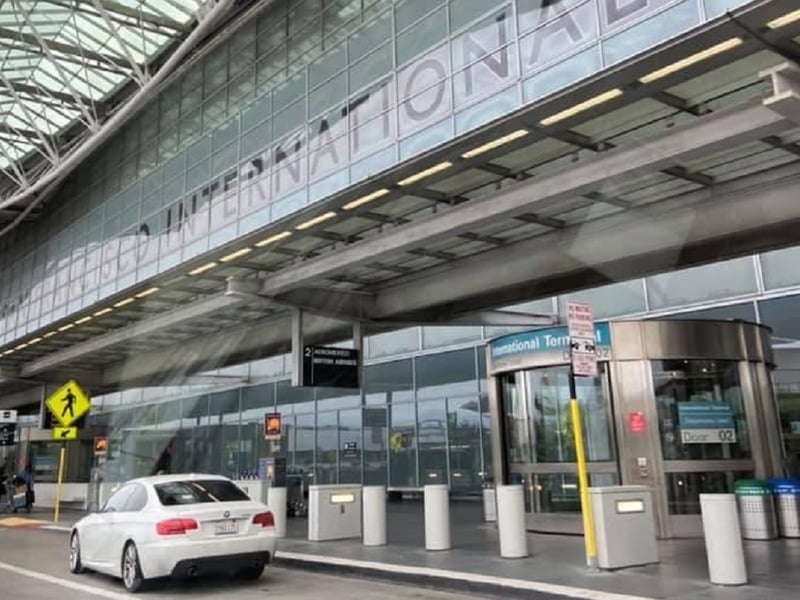
SAN FRANCISCO (CN) — The Port of Oakland told a panel of Ninth Circuit judges Monday that the name “San Francisco Bay Oakland International Airport” does not infringe on the city of San Francisco’s trademark.
“The purpose of saying San Francisco Bay before Oakland is to describe where the airport is located,” Timothy Berg of Fennemore Craig, an attorney for the Port of Oakland, said.
Since 1954, San Francisco has used the trademarked name “San Francisco International Airport.” Last April, Oakland announced plans to change its airport’s name from “Metropolitan Oakland International Airport” to “San Francisco Bay Oakland International Airport.”
At the time, Port of Oakland Board of Commissioners President Barbara Leslie said the name change would “boost inbound travelers’ geographic awareness of the airport by highlighting the airport’s location on the San Francisco Bay.”
San Francisco sued the Port of Oakland shortly after, arguing the new airport name infringed its trademark and caused confusion to customers. Last November, a federal court agreed, blocking the Port of Oakland from using the name “San Francisco Bay Oakland International Airport.”
“Including ‘San Francisco’ in the name of the Oakland airport when there is in fact no affiliation, connection or association between the Oakland airport and San Francisco is contrary to how airports in the United States are normally named and is highly likely to be confusing,” U.S. Magistrate Judge Thomas Hixson said.
At the hearing, U.S. Circuit Judge Daniel A. Bress, a Donald Trump appointee, said even if the Port of Oakland’s motives were “pure,” that alone may not be sufficient.
Berg stressed that the only confusion the lower court found was whether the two airports were related, and the confusion over affiliation is separate from any purchasing.
“People don’t purchase tickets to go to an airport, and they don’t care who owns the airport,” he said. “They’re purchasing a ticket to get somewhere, to a city … wherever they want to go. That’s the purchasing decision, not who owns the airport.”
In contrast, Bobby Ghajar of the firm Cooley, representing the city of San Francisco, emphasized the lower court’s ruling that travelers may be confused about whether the two airports are affiliated or connected, arguing the similarities could lead visitors to associate Oakland’s “lower-ranked, different” airport with San Francisco’s.
“This type of confusion affects San Francisco. It affects its bottom line. It hurts travelers, and it takes San Francisco’s ability to control its goodwill out of its hands,” he said.
Berg also argued that the similarity between the two entities is a geographical descriptor, and cities in the Bay Area, including Oakland, should be able to “accurately describe” where they are located.
“I know Oakland was in the Bay Area; most people in the West do. But lots of people in the East don’t, and I suggest to you that lots of people outside of the United States don’t. The purpose of using ‘San Francisco Bay Oakland Airport’ was to let people know Oakland was in the Bay Area, and there is nothing wrong with that, particularly when you can’t tie it to any kind of customer purchasing decision,” he said.
Ghajar rebutted, claiming the Port of Oakland was not using ‘San Francisco Bay” as a way to tell travelers their location but rather incorporating the name into its brand.
“If the port wanted to use a descriptor or tell people where it’s located, it could have used the phrase ‘located in’ or ‘on the San Francisco Bay,’ but that’s not what the port did. The port replaced its registered trademark, ‘Oakland International Airport,’ with a new trademark, a new brand, ‘San Francisco Bay Oakland International Airport,’” he said.
Ghajar added that San Francisco’s trademark is supported by decades of use, millions of dollars in marketing and rankings.
“Our airport’s reputation matters. When people read about airports, it informs their decision which airport they want to travel to. That’s why the parties spend so much money building infrastructure and trying to create positive experiences for the customer,” he said.
In July, the Port of Oakland’s Board of Port Commissioners voted to change the airport’s name to “Oakland San Francisco Bay Airport.”
Ghajar said the plaintiffs also have an issue with the current name, though Berg added there had been no litigation so far.
“It is unfortunate that the Port of Oakland still seeks to capitalize on the San Francisco International Airport’s globally recognized brand, including by continuing to defend last year’s ‘San Francisco Bay Oakland International Airport’ name in court, which contradicts its stated goal to put ‘Oakland first,’” Alex Barrett-Shorter, deputy press secretary for San Francisco City Attorney David Chiu, said in a statement to Courthouse News. ”The renaming invites traveler confusion and risks jeopardizing the brand identity we have built through decades of investment and service.”
The Port of Oakland said in a statement that it was pleased the Ninth Circuit “took the time to deeply consider the facts of the case.”
“As we’ve said from the beginning, there should be no confusion about OAK’s place on the San Francisco Bay,” the port told Courthouse News.
Senior U.S. Circuit Judge Danny J. Boggs, a Ronald Reagan appointee sitting by designation from the Sixth Circuit, and U.S. Circuit Judge Salvador Mendoza Jr., a Joe Biden appointee, rounded out the panel.
 Follow @mhattridge_
Subscribe to our free newsletters
Our weekly newsletter Closing Arguments offers the latest about ongoing trials, major litigation and rulings in courthouses around the U.S. and the world, while the monthly Under the Lights dishes the legal dirt from Hollywood, sports, Big Tech and the arts.