Search Articles


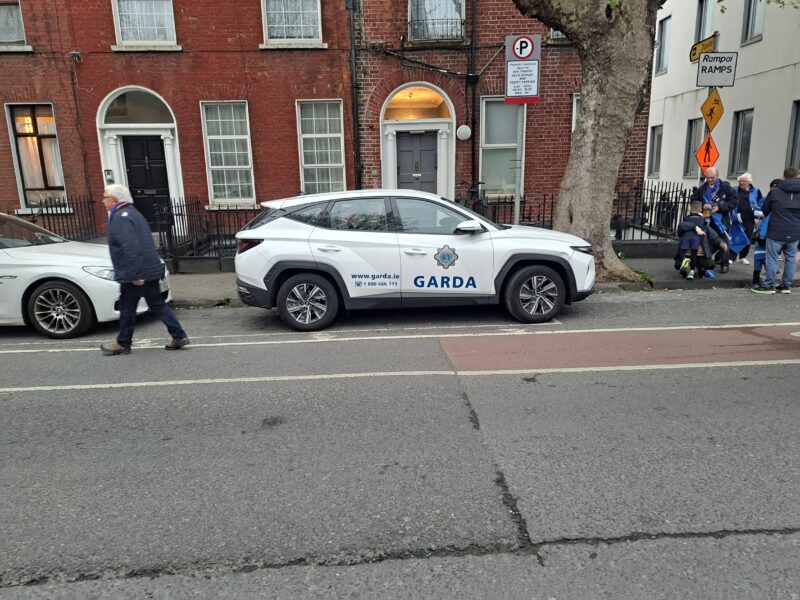
MANCHESTER, England (CN) — Irish police announced Friday they have arrested a woman in her 20s and a man in his 40s after intercepting a vehicle carrying what authorities described as an “extremely significant” explosive device they believe was bound for an attack in Northern Ireland.
Police confirmed the vehicle was stopped around 3 p.m. Wednesday on a highway south of Carrickmacross, a town about 6 miles from the Northern Ireland border, during an intelligence-led operation targeting what Garda Commissioner Justin Kelly called “radicalized republicans.”
Republicanism calls for Irish control of all the island, without the United Kingdom, of which Northern Ireland is a part.
Carrickmacross lies about 65 miles from Belfast and 90 miles from Dublin.
Kelly said Friday the bomb was a complete explosive device rather than bomb-making materials.
“This was an explosive device and it would have or could have potentially caused significant damage,” Kelly told reporters in County Tipperary. “This is an intelligence-led operation, so we certainly do have information in relation to the individuals involved.”
The woman, who was driving the vehicle, remains in custody under Ireland’s Offences Against the State Act, legislation that gives police expanded powers to investigate terrorism and organized crime.
Police later arrested a man in his 40s in the Dublin region under the same law.
Ireland’s national police service, An Garda Síochána, said its bomb disposal unit examined the vehicle after officers stopped it.
Police declined to release further details.
Enduring legacy from the Troubles
The seizure highlights the enduring security threat from dissident republican groups since the peace process that largely ended decades of sectarian violence in Northern Ireland.
Kelly said a small minority of republicans rejected the 1998 Good Friday Agreement, the U.S.-brokered peace accord that brought an end to most of the violence known as the Troubles.
“We certainly know that there are a small minority of dissident republicans,” Kelly said, adding, “this is a threat that we’re going to continue to face for some time.”
The Provisional Irish Republican Army, the main republican paramilitary organization during the Troubles, declared a ceasefire before the agreement and formally ended its armed campaign in 2005.
Smaller groups, including the New IRA and Continuity IRA, later emerged after splitting from the movement.
While much smaller than the Provisional IRA, they have continued to mount attacks using improvised explosive devices and carried out killings, such as the murder of 29-year-old Northern Irish reporter Lyra McKee in 2019.
The Police Service of Northern Ireland welcomed the operation, saying it demonstrated the close cooperation between security forces on both sides of the border.
Northern Ireland is part of the United Kingdom but shares its only land border with the Republic of Ireland.
Assistant Chief Constable Davy Beck, who leads the Police Service of Northern Ireland’s crime department, said the seizure reflected the two forces’ “joint commitment to address the threat posed by violent dissident republican groups and keep communities safe.”
Ireland’s Justice Minister Jim O’Callaghan called the discovery “very worrying” and said it showed the dissident republican threat remained active.
He praised officers for preventing the device from posing what he described as “a real threat to the public.”
Northern Ireland Secretary Chris Bryant, who was only appointed by new Prime Minister Andy Burnham on Monday, said intercepting the bomb “undoubtedly saved lives and kept communities safe on both sides of the border.”
During the Troubles, explosives and weapons were frequently smuggled across the border from the Republic of Ireland into Northern Ireland for attacks by republican paramilitary groups.
Courthouse News reporter James Francis Whitehead is based in England.
 Follow @jayfranklinlive
Subscribe to our free newsletters
Our weekly newsletter Closing Arguments offers the latest about ongoing trials, major litigation and rulings in courthouses around the U.S. and the world, while the monthly Under the Lights dishes the legal dirt from Hollywood, sports, Big Tech and the arts.