
 Search Articles


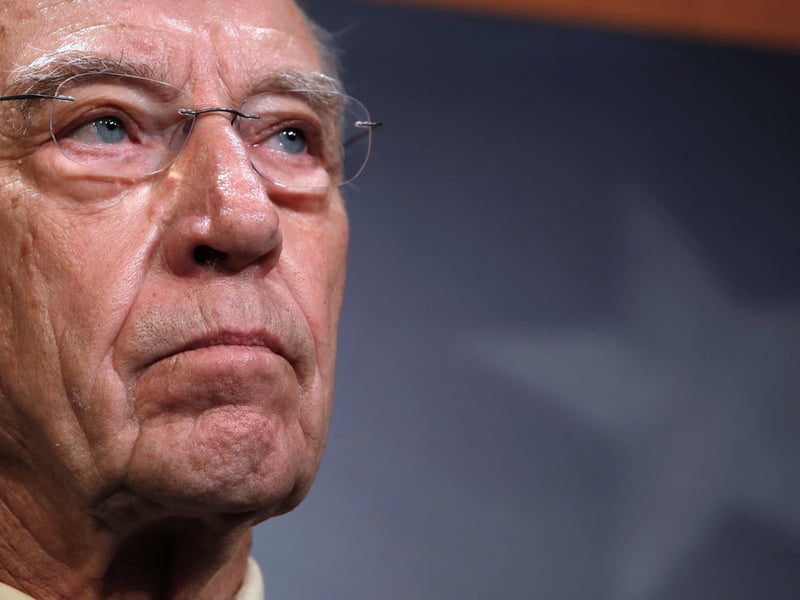
WASHINGTON (CN) — Hours after the widow of the late Charlie Kirk said the murder trial of his suspected killer should be on camera, a top Senate Republican refreshed calls for legislation that would allow video in federal courtrooms nationwide.
“Courts at both the state and federal level have a massive impact on our daily lives and the lives of generations to come, yet few Americans get the chance to see the nation’s courts in action,” Iowa Senator Chuck Grassley said in remarks on the Senate floor Tuesday morning.
The Senate Judiciary Committee chairman’s comments come after Erika Kirk, widow of slain conservative commentator Charlie Kirk, said in an interview that she hoped the trial of his suspected killer would be televised.
“There were cameras all over my husband when he was murdered,” Erika Kirk told Fox News host Jesse Watters in an interview scheduled to air Wednesday. “There have been cameras all over my friends and family mourning. We deserve to have cameras in there.”
Charlie Kirk was assassinated in September while speaking at an event at Utah Valley University. Clips of his grisly killing circulated widely online but were quickly scrubbed from social media platforms.
Grassley on Tuesday commended Kirk’s widow for her “brave plea” to bring cameras into the courtroom, adding that her appeal fits into his longstanding push to change judiciary regulations barring videography and broadcasting in federal court proceedings.
Some state courts allow photography and video in their chambers, but such practices are universally banned in federal courtrooms thanks to part 53 of the Federal Rule of Criminal Procedure. But a bipartisan group of lawmakers, led by Grassley, have for years championed legislation that would amend those regulations.
The Iowa Republican in March reintroduced a pair of bills that, if made law, would give federal judges and the Supreme Court individual discretion to allow cameras in their courtrooms. The “Sunshine in the Courtroom Act” would set up guardrails protecting the identities of witnesses and jurors in court proceedings, and its provisions would sunset after three years to give Congress a chance to evaluate their impact on the judiciary.
The measure’s counterpart, the “Cameras in the Courtroom Act,” would also instruct the Supreme Court to provide for television coverage of sessions already open to in-person viewing by members of the public. Under that bill, a majority of justices could vote to block video access to certain open sessions if they believe televising proceedings would violate due process.
Grassley argued Tuesday that bringing cameras into federal courts would boost transparency and help Americans “grow in confidence and understanding of the judiciary.” And he pointed to Charlie Kirk’s assassination as an important example of the need for greater public access to the courts.
“When pivotal moments in history happen, we shouldn’t be timid in calling for greater transparency that history demands in the federal courts,” the Iowa senator said.
Gabe Roth, director of reform-minded legal advocacy group Fix the Court, in an interview with Courthouse News, applauded Grassley’s efforts to modernize court access, pointing out that while the judiciary has in some cases relaxed its prohibition on audio recording of proceedings, it has refused to relent on its videography blockade.
“If there’s any concern people had in the past about filming criminal proceedings, I think they’ve been put to rest in this day and age, because it’s so easy to not only record it but to have a judge control what’s going on behind the scenes so you don’t have sensitive information getting out there,” said Roth.
The Supreme Court has streamed live audio of oral arguments since the Covid-19 pandemic, but the justices have resisted calls to begin televising proceedings. Some have contended that putting high court arguments on TV would incentivize lawyers to pursue soundbites, and that the justices’ words could be taken out of context.
Roth opined that the trial of Charlie Kirk’s suspected killer was a tragic but effective springboard for lawmakers such as Grassley to renew their push to bring cameras into federal courtrooms.
“For legislation to pass in Congress, there always has to be a related news story — even an incredibly tragic one like this one,” he said. “Unfortunately, Congress only legislates in immediate reaction to present circumstances, so I think that’s probably why it’s coming back up now.”
Though discussion of cameras in courtrooms is back at the fore, a path forward for the two bills aimed at addressing the matter remains unclear. The House-side version of the Cameras in the Courtroom Act is currently without a lead sponsor — its primary backer was the late Virginia Representative Gerry Connolly, who died in May.
Grassley, meanwhile, told Courthouse News Tuesday afternoon that he would bring the legislation up for a vote on the Judiciary Committee if he could get consent from the Democratic minority to do so. He said that he did not have a timeline for such action.
But Roth said he believed the measures still enjoyed bipartisan support. “There haven’t been any real changes in sponsorship or interest in the intervening months,” he opined.
According to polling data, Americans broadly agree that cameras should be permitted at the Supreme Court. A 2022 C-SPAN-Pierrepoint poll found that 65% of likely voters support television broadcasting at the high court, and 70% said that such access to the justices would improve public trust.
 Follow @BenjaminSWeiss
Subscribe to our free newsletters
Our weekly newsletter Closing Arguments offers the latest about ongoing trials, major litigation and rulings in courthouses around the U.S. and the world, while the monthly Under the Lights dishes the legal dirt from Hollywood, sports, Big Tech and the arts.