
 Search Articles


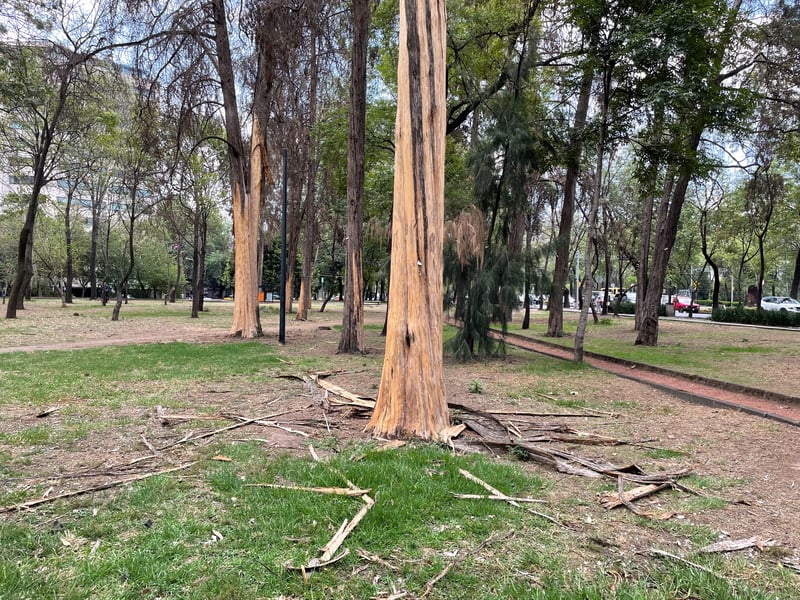
MEXICO CITY (CN) — For millions of Mexico City residents, Parque Líbano is just another leg in what is probably a long commute. Crammed between two major traffic arteries and a slice of luxury high-rises, the 0.02-square-mile park is little more than a stand of a few hundred cedar, ash and jacaranda trees, with a couple spunky Osage oranges sprouting at the edges for character.
Pictures less than five years old show lush, green foliage on tall, healthy-looking trunks. Now nearly half of the trees in the park officially known as the Republic of Lebanon Garden are dead. It serves as a macabre warning of what awaits the rest of Mexico City’s green spaces if nothing is done to mitigate the effects of a climate that is changing much faster than residents may have expected.
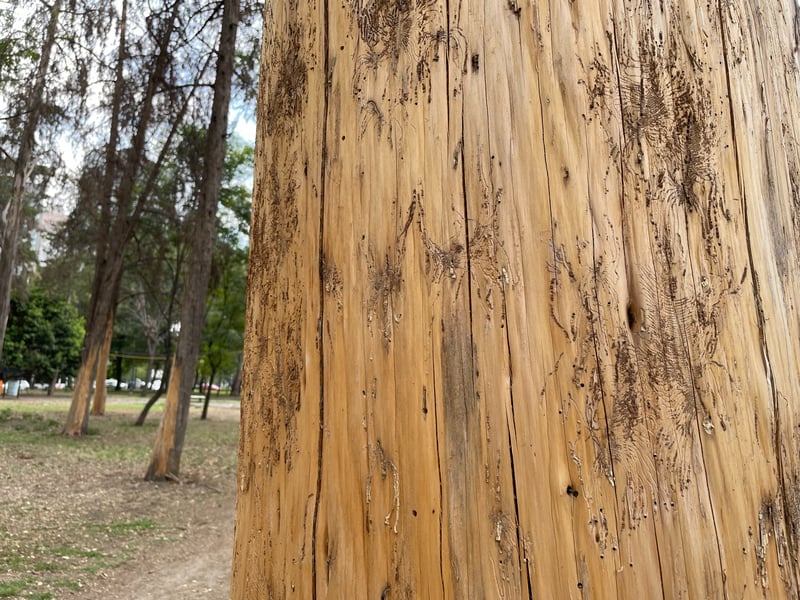
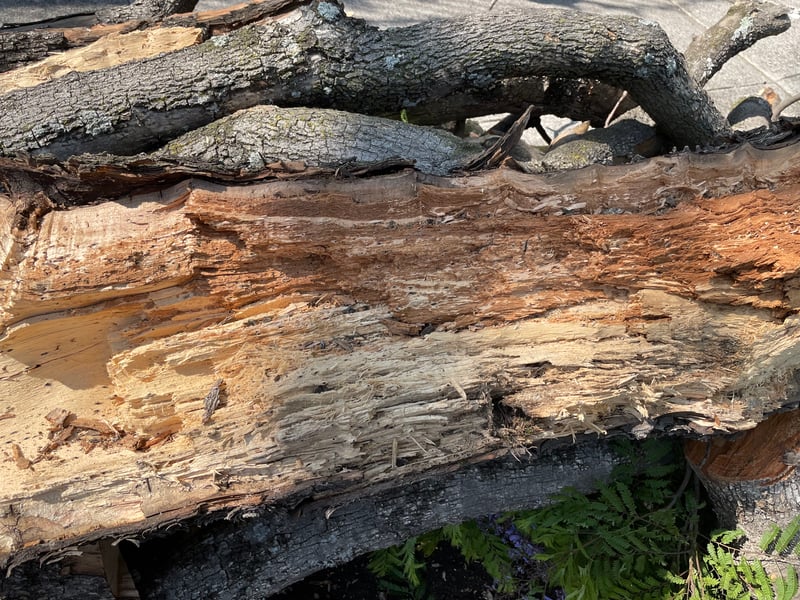
As rainfall averages slump and temperatures rise, plagues like bark beetles have found comfortable homes in the trees that tie this park to its namesake nation. They feed and breed unchecked beneath the cedars’ flaky bark, which falls off in long strips that splay out in the patchy grass around the trees. The yellowed wood of the exposed trunks bears their telltale tracks that lead some to call them worms.
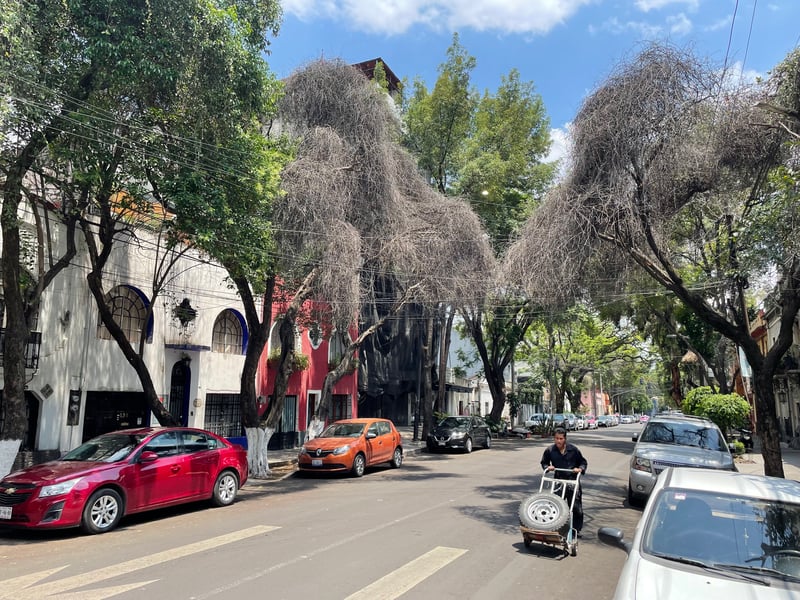
But it is not just this park and it is not just these trees. Weakened by a laundry list of climatic conditions, the capital’s emblematic trees are succumbing to mistletoe, bark beetles and other plagues that thrive in the debilitated greenery.
Ash, willow, Chinese elm, the endemic Montezuma cypress and the jacarandas adored by residents and visitors alike: none are immune. Even the iconic ahuejote, a species of willow native to southern Mexico that gives the canals of Xochimilco their ethereal feel, can fall victim to unchecked mistletoe. The Mexica, or Aztecs, believed the tree maintained balance between the earthly and celestial realms.
“With the cedars dead from bark beetles, the ash trees riddled with mistletoe, jacarandas dying from various fungi — add to that what’s happening to the palm trees — and I think we can call this a crisis,” said Diana Marchal Valencia, a certified arborist with the International Society of Arboriculture.
Though wary of sounding alarmist, Marchal sees the signs of the crisis all around her. Dead ash trees topped with mushroom caps of dead mistletoe line entire blocks in the trendy neighborhoods of Roma and Coyoacán. Color drains from cedars all over the city as the beetles skin them alive. Their once hearty trunks softened to sponges by a host of ruinous fungi, eye-catching jacarandas buckle under the weight of their own wetness when it rains.
Exactly how many trees have been lost in recent years is unclear. Like water theft, violence against searchers for the disappeared and other current problems in Mexico, the government has not been diligent about compiling the data — except when political pressure compels it.
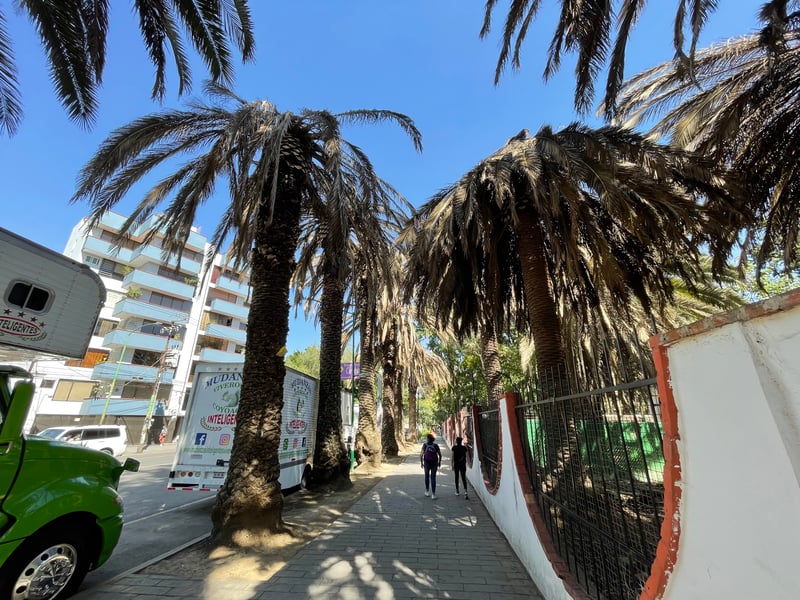
While not technically trees, Mexico City’s palms are perhaps the most striking example of the capital’s phytosanitary crisis. The highly politicized death of a palm tree in a roundabout on the monument-strewn Paseo de la Reforma Avenue in April 2022 led the city government to order a full investigation into what is killing the palms.
A gang of around 10 biotic and abiotic factors, including multiple species of fungus as well as soil pH levels, air and water pollution, subsoil compaction and others, are hacking their way through the city’s palms. A initiative by the city environment secretariat Sedema to inject fungicide into their trunks has not stemmed the tide.
The agency says it cut down 850 palms in 2022 as part of the program created in response to the death of the palm on Paseo de la Reforma. It does not have the authority to remove any trees due to mistletoe.
All of the tree species found in Mexico City are vulnerable to at least one of the four species of mistletoe present here. Trees hosting the hemiparasite can be found in 40% of the city’s green spaces. The same climatic factors affecting palms also weaken trees, making them more susceptible to mistletoe.
Marchal has watched trees contract mistletoe and slowly die while her application to prune the affected branches withered away in a file cabinet. Such applications tend to grow back as permits to cut the dying tree down.
“It’s crazy, they make you wait months, then tell you to cut the tree down, even when there is still time to save it,” she said. “And it’s incredible to see after you clear the mistletoe off of a tree, how quickly it recovers. In a matter of months, depending on the season, it comes back, and it’s spectacular.”

Environmental law and its enforcement in the Mexico City government is a paragon of complexity in a country known for its tangled bureaucracy.
“We need to make a structure that is different from how the city is currently handling plagues and diseases,” said Roberto Quintero, head of Sedema’s Plagues and Diseases Unit.
Sedema does very little tree trimming or any other kind of maintenance on the city’s green spaces, Quintero said. It can conduct training and make recommendations, but has no executive decision-making capabilities.
The agency is just one of at least 20 government entities that play an administrative role in public tree management. Certain medians and sidewalks fall under a primary roads authority, others a secondary one. Some are the responsibility of the park in which they grow, and some parks are managed by the federal government.
The majority of Mexico City’s trees, however, depend on the administration of the borough in which they are located for phytosanitary care. The capital is divided into 16 boroughs, called alcaldías.
Quintero pointed to an article in the city’s land protection law which clearly stipulates that the alcaldías are legally responsible for “implementing actions of conservation, restoration and monitoring of ecological balance.”
Not one of the 16 alcaldías that Courthouse News contacted responded to a request for interview.
With so many cooks in the kitchen and the city’s budget focused on other priorities as Mayor Claudia Sheinbaum revs up her 2024 presidential campaign, issues like tree maintenance easily fall through the cracks.
“This multiplicity of authorities sometimes doesn’t allow for concrete and effective actions,” said Miguel Ángel Cancino, who founded and served two terms as head of the city’s environmental attorney’s office.
He saw a “lack of institutional coordination and monitoring” in the city’s public policy during his nearly two decades in the office.
Fed up with governmental inaction, some Mexico City residents have taken the matter into their own hands.
In 2015, a neighborhood group called La Voz de Polanco started a program to prune trees affected with mistletoe in the upscale neighborhood of Polanco.
“We’re going to end up treeless without the responsible and organized intervention of neighbors, because the government doesn’t have the capacity,” said the group’s president Mayte de las Rivas.
While the group’s website says it “contributes” to the work the government does to clean the alcaldía’s trees of mistletoe, the correct term might be “forces” it to do that work.
“If an alcaldía really were to have the will, it would have a plan to manage mistletoe in every one of its neighborhoods and they could go after it, but that’s not what they do,” said De las Rivas.
She and others from La Voz de Polanco act as facilitators for citizens and private entities looking to take action against mistletoe in their neighborhood. If a company wants to donate funds to the cause, they help organize the pruning. The organization never accepts money, preferring to have the donor pay the pruning service provider directly.
They also campaign for mistletoe management programs to be funded by the alcaldía’s participatory budget, a percentage of the borough’s cash flow left to the discretion of residents. By raising awareness among their neighbors, they have promoted these programs in Polanco and shown residents of other boroughs how to do so as well. They claim to have saved over 1,200 of the city’s trees from mistletoe.
“Neighbors don’t notice it, because they look up and see green, so it’s a tree, right?” De las Rivas said.
Raising awareness among neighbors has proven effective, but it is time consuming and dependent on civic engagement in an age of intense polarization and mistrust of institutions.
Across town, one family claims to have a much easier solution: a spray that kills mistletoe while not only leaving the tree unharmed, but fertilizing it as the hemiparasite dries up.
Jorge Neme used his Integral Mistletoe Liquidator (LIM) on his citrus orchards in Veracruz for decades before noticing the need for it in Mexico City.
At his airy family home near the Mexico City airport one recent afternoon, he pointed to those years of personal use of the substance on his own property and the product’s various certifications as proof that it is safe and effective. The liquidator won a 2019 Sedema contest to present a mistletoe-control product that doesn’t harm trees. It has also been certified by the federal health protection commission.
“If it weren’t an effective product, one that really doesn’t harm the environment, they would’t have given us those certifications,” said Neme.
Quintero, of Sedema, confirmed that LIM is effective and only harms mistletoe. Despite Sedema’s recommendations that the alcaldías use LIM to treat their infected trees, the city is not spraying the stuff all over town.
Courthouse News contacted the public works and services department, which is responsible for some of the city’s largest and most iconic avenues, as well as Mayor Sheinbaum’s office for comment. Neither responded.
When asked if she knew about LIM, De las Rivas of La Voz de Polanco said she had heard of it, but that “some experts told us that it kills the tree.” She did not name the experts or grant Courthouse News’ request to be put in touch with them.
Despite their differences in opinion, all stakeholders said the problem needs one thing to bring this urban forest back to health: continuity.
The Mexico City government changes every six years, and its priorities usually change with it. Alcaldías get a new batch of bureaucrats every three years.
“This requires continuity, permanence, monitoring and quality actions, because plagues and diseases don’t get resolved in one three- or six-year term,” said Quintero.
Meanwhile, citizens like arborist Marchal hope for a day when their neighbors take the leaves overhead as seriously as she does.
“We’ve got to stop with the lip service, we’ve got to realize this is a problem and then put ourselves to work systematically to resolve it,” she said. “Because if we have healthier trees, we’ll be healthier ourselves.”
 Follow @copycopeland
Subscribe to our free newsletters
Our weekly newsletter Closing Arguments offers the latest about ongoing trials, major litigation and rulings in courthouses around the U.S. and the world, while the monthly Under the Lights dishes the legal dirt from Hollywood, sports, Big Tech and the arts.