
 Search Articles


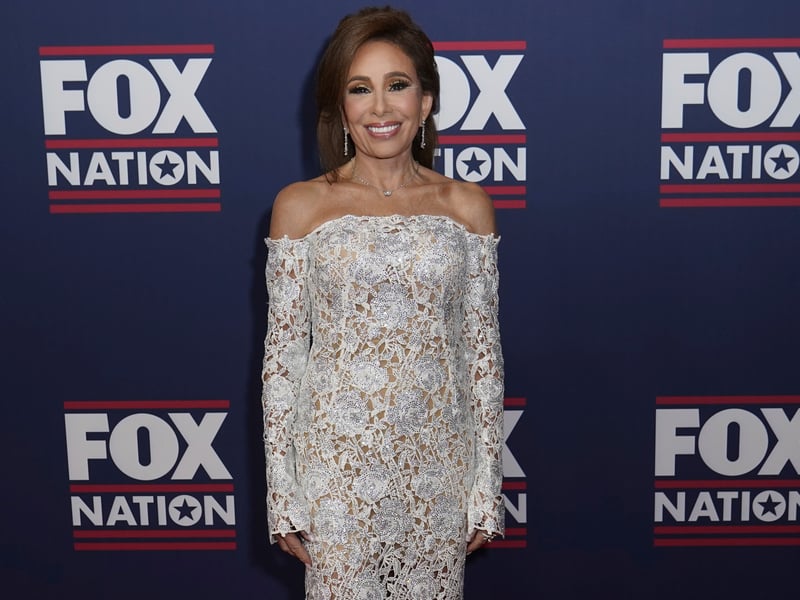
WASHINGTON (CN) — Jeanine Pirro, President Donald Trump’s nominee to become D.C.’s permanent top federal prosecutor, has previously criticized rioters who breached the U.S. Capitol on Jan. 6, 2021 — but as she faces a key Senate vote, she’s taken a more cautious approach to the White House’s move to pardon many Jan. 6 rioters.
In a Senate questionnaire, the former Fox News host and New York county judge reaffirmed her opposition to violence against law enforcement and her condemnation of the Capitol riot. But she refused to weigh in on whether she believed Jan. 6 rioters convicted for such behavior should have been pardoned, leaving the decision solely with the president.
Pirro, whose nomination as U.S. attorney for the District of Columbia will soon face a major hurdle in the Senate Judiciary Committee, is the second of Trump’s judicial nominees in recent weeks to walk a tightrope on the Capitol riot as they seek to win over crucial Republican votes on the panel.
Nominees for U.S. attorney positions do not traditionally appear before the Senate for a confirmation hearing — so written questions for the record are the primary location for lawmakers to question such appointees.
And in her written Senate questionnaire, Pirro faced sharp questions from Democrats about her position on Jan. 6 and Trump’s January decision to offer clemency to more than 1,500 people convicted of crimes related to the Capitol riot.
Pirro has previously slammed rioters who breached the Capitol in efforts to halt the certification of the 2020 presidential election, calling them “deplorable, reprehensible and criminal” in a 2021 episode of her Fox News program “Justice with Judge Jeanine.” She also called for the prosecutions of some rioters.
Since then, however, she has made public comments critical of the Justice Department, suggesting that rioters were targeted for their political beliefs and that prosecutors involved in Jan. 6 cases should themselves be criminally charged.
In her Senate questionnaire, Pirro told lawmakers that she had demanded Jan. 6 rioters be prosecuted because she wanted to see “justice served.”
“If anyone committed a crime that could be proven beyond a reasonable doubt, they should be charged,” she wrote. “Immediately following the events of Jan. 6, 2021, I publicly condemned the violence and called for those responsible to be held to account.”
But the nominee would not weigh in on the Trump administration’s pardons for rioters, telling senators that the Constitution gives the president the right to issue pardons for anyone who commits an offense against the U.S.
She also took issue with a statement from Senate Minority Whip Dick Durbin that Trump had given “full and unconditional” pardons to Jan. 6 rioters who were convicted of assaulting police officers.
“I am also not aware that ‘rioters who were convicted of violent assaults on police officers’ were given ‘full and unconditional pardons,’” she wrote.
According to an analysis by law and policy journal Just Security, roughly 608 Jan. 6 defendants had been charged with crimes related to assaulting, resisting or impeding law enforcement officers at the time of Trump’s sweeping pardons.
Pirro also declined to comment further to Senate Democrats about her own condemnations of the Capitol rioters, and whether they affected her opinion on the White House’s decision to offer many of them clemency. “I believe that our Constitution gives every president the power to pardon any individual for offenses against the United States,” she wrote.
And the nominee said that she did not recall endorsing criminal charges for Jan. 6 prosecutors during an episode of her WABC radio show this past January.
“Anyone who commits a crime that can be proven beyond a reasonable doubt should be prosecuted,” she repeated to Connecticut Senator Richard Blumenthal.
Pirro’s refusal to weigh in on pardons for Jan. 6 rioters comes just days after Trump’s nominee for a key appellate judgeship, Emil Bove, staked out his own careful balance on the Capitol riot in separate written questions provided to Senate lawmakers.
Bove in his questionnaire refused to directly condemn the riot, and said that he believed “heavy-handed” actions by federal prosecutors were equally unacceptable to violence against law enforcement.
Both nominees are set to face a major vote in the Judiciary Committee, tasked as the first line of defense for White House judicial nominees. And the panel sunk Pirro’s predecessor, former acting U.S. attorney for D.C. Ed Martin, based on his own past statements defending Jan. 6 rioters.
North Carolina Senator Thom Tillis was the deciding factor in the failure of Martin’s nomination — the outgoing Republican lawmaker has long said that anyone who breached the Capitol on Jan. 6 should be fined or jailed. But Tillis does not appear to be an obstacle to either Pirro or Bove despite their own balanced takes on the Capitol riot, indicating in recent weeks that he would vote for both nominees.
It would only take one Republican defection on the closely divided Judiciary Committee to scuttle either Pirro’s or Bove’s nominations.
The panel is slated to vote on Bove during a business meeting Thursday. Pirro is also listed on the agenda for that meeting, but Democrats are likely to use committee rules to request that a vote on her appointment be delayed one week.
Pirro has been acting U.S. attorney for D.C. since May, tapped by Trump for the role days before Martin’s own 120-day term was set to expire. If confirmed, she would take over the role in a permanent capacity.
 Follow @BenjaminSWeiss
Subscribe to our free newsletters
Our weekly newsletter Closing Arguments offers the latest about ongoing trials, major litigation and rulings in courthouses around the U.S. and the world, while the monthly Under the Lights dishes the legal dirt from Hollywood, sports, Big Tech and the arts.