
 Search Articles


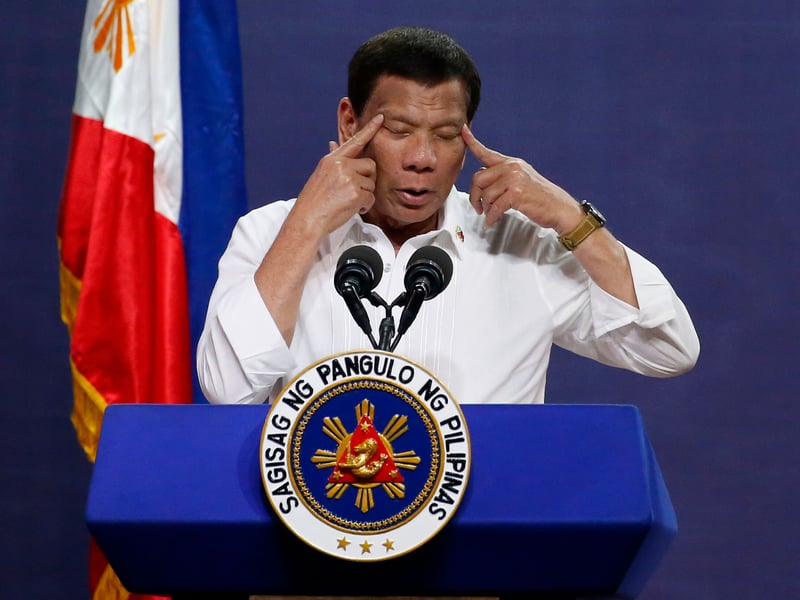
THE HAGUE, Netherlands (CN) — Former Philippine President Rodrigo Duterte will stay in detention while his case moves forward, judges at the International Criminal Court said Friday, citing him as a flight risk.
The ICC decision shuts down two separate bids by Duterte’s lawyers to have him released while proceedings continue. His defense argued that at 80 years old and in declining health, he posed no risk. The judges disagreed, finding that detention remains the only way to ensure he appears in court, avoids tampering with the case and doesn’t commit further offenses.
Duterte’s road to The Hague has been long and politically charged. A former Davao City mayor who led the Philippines from 2016 to 2022, he rose to power promising a war on drugs that left thousands dead in police operations and vigilante killings. Rights groups and the United Nations condemned the campaign as a systematic assault on civilians.
The ICC first opened an investigation in 2021, looking into possible crimes against humanity linked to Duterte’s bloody drug war. When it became clear that local authorities weren’t making progress toward accountability, judges gave the green light to resume the probe in 2023.
Judges signed a warrant for his arrest on March 7, 2025. Five days later, Duterte was on a flight to The Hague.
In Friday’s decision, the judges said there are still “reasonable grounds to believe” Duterte is responsible for crimes against humanity tied to the drug war killings, a point his lawyers didn’t dispute for now.
The court also pointed out that Duterte has repeatedly dismissed its authority, even calling his arrest “a pure and simple kidnapping.” His family has also complicated his case. His daughter, the country’s vice president, has publicly demanded his return to the Philippines. To the judges, those statements were a clear sign that he and his allies might try to interfere with the process.
Prosecutors argued that freeing Duterte would give him “the possible opportunity to intimidate or threaten witnesses either directly or indirectly, through his associates or his family members.” The judges agreed, citing his past efforts to influence investigations and his continued political reach.
The judges also pointed to Duterte’s own words. In a 2024 campaign video, he vowed to “double the killings” if he ever returned to power. Earlier this year, he won back the mayor’s seat in Davao City, where many of the killings took place. To the court, that made his promise sound less like bluster and more like a real warning.
Duterte’s lawyers leaned on medical reports saying his mind isn’t what it used to be, arguing his condition makes him too frail to flee or meddle in the case.
The judges didn’t agree. They said his mental fitness will be assessed separately by independent experts and shouldn’t be used as a shortcut to get him out of detention. For now, they called the defense’s claims too thin to stand on their own.
The defense also promised strict safeguards if Duterte were released, including electronic monitoring, limited communication and supervision in a host country ready to take him in. Again, the judges weren’t convinced. They said the plan was too vague, relied too much on the court’s own resources and offered no clear way to enforce the rules. Even simple measures like electronic tracking weren’t realistically in place.
Humanitarian pleas didn’t land either. The judges said the law leaves little room for exceptions once detention is justified and noted that the ICC’s detention center already provides medical care and family access, making release on health or compassion grounds unnecessary.
With that, Duterte remains confined as the case heads for its next test — a confirmation hearing that will determine whether the charges move on to a full trial. If it does, it would mark a historic first: a former Philippine president standing before an international court over the deadly war on drugs that defined his rule.
That next step, though, is on pause for now. Judges put the confirmation hearing on hold last month after Duterte’s lawyers said he wasn’t fit to stand trial, and the case will stay in limbo until a medical review decides otherwise.
Courthouse News reporter Eunseo Hong is based in the Netherlands.
Subscribe to our free newsletters
Our weekly newsletter Closing Arguments offers the latest about ongoing trials, major litigation and rulings in courthouses around the U.S. and the world, while the monthly Under the Lights dishes the legal dirt from Hollywood, sports, Big Tech and the arts.