
 Search Articles


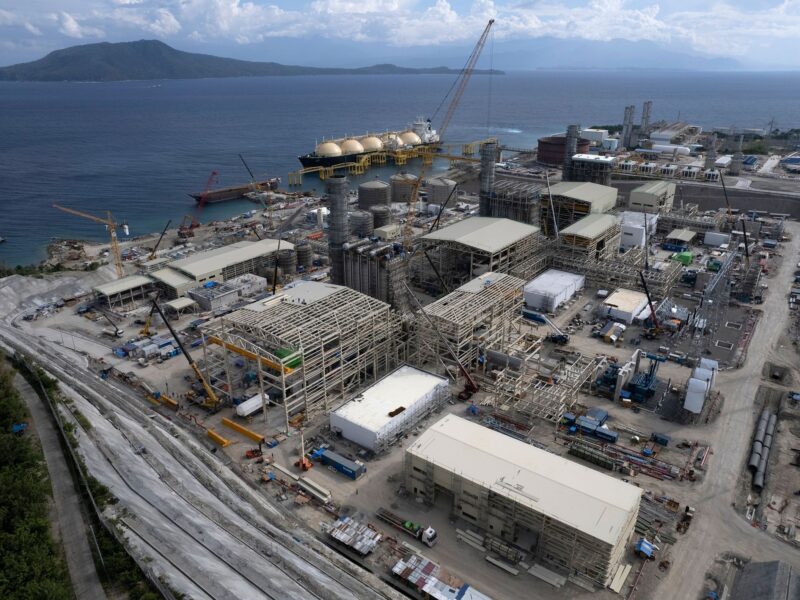
MANILA, Philippines (AFP) — Philippine President Ferdinand Marcos declared a state of “national energy emergency” on Tuesday, citing risks to the domestic fuel supply and energy stability created by the Middle East war.
The state of emergency was declared just hours after the country’s energy secretary said the Philippines planned to boost the output of its coal-fired power plants to keep electricity costs down as the war wreaks havoc with gas shipments.
“A state of national energy emergency is hereby declared in light of the ongoing conflict in the Middle East, and the resulting imminent danger posed upon the availability and stability of the country’s energy supply,” the executive order released Tuesday evening said.
The order authorizes the country’s Department of Energy to make advance payments of 15% to secure fuel contracts while taking direct action against hoarding or profiteering.
“The declaration … will enable the government, through the (energy department) and other concerned agencies, to implement responsive and coordinated measures under existing laws to address the risks posed by disruptions in the global energy supply and the domestic economy,” the order said.
The order also grants the transportation department the ability to direct public transportation fuel subsidies and reduce or suspend toll charges and aviation fees, while fast-tracking aid to individuals in “crisis situations.”
The Philippines, which has some of the region’s highest energy costs, is heavily dependent on imported fuel to keep its power plants running.
Leaning on coal
The archipelago nation of 116 million relies on coal for about 60% of its electricity generation.
Energy secretary Sharon Garin told reporters earlier Tuesday that with the cost of LNG (liquefied natural gas) soaring, the country would “temporarily” be forced to lean even more heavily on the carbon-belching fossil fuel.
While hoping to “maximize” the use of local coal, the Philippines was also keeping the option of upping its purchases of coal from top supplier Indonesia, the energy secretary said.
“We talked to the generation companies, the coal-powered plants, to check how much they can increase their generation,” Garin said, calling it a “temporary measure” that could start as early as April 1.
“If we are successful in implementing this, at least we can decrease the electricity rate hikes because of the conflict in the Middle East,” she said.
Indonesia, meanwhile, had assured the Philippines it would place no limits on coal orders.
“There’s no restriction on our importation of coal from Indonesia as of today,” Garin said, adding increased purchases may not be necessary.
Marcos in January announced a “significant” discovery of natural gas made near the country’s rapidly depleting Malampaya offshore natural gas field.
It was hoped the discovery could extend the life of the field, which supplies about 40% of power to main island Luzon and was expected to run dry within a few years.
—
By Agence France-Presse
Subscribe to our free newsletters
Our weekly newsletter Closing Arguments offers the latest about ongoing trials, major litigation and rulings in courthouses around the U.S. and the world, while the monthly Under the Lights dishes the legal dirt from Hollywood, sports, Big Tech and the arts.