
 Search Articles


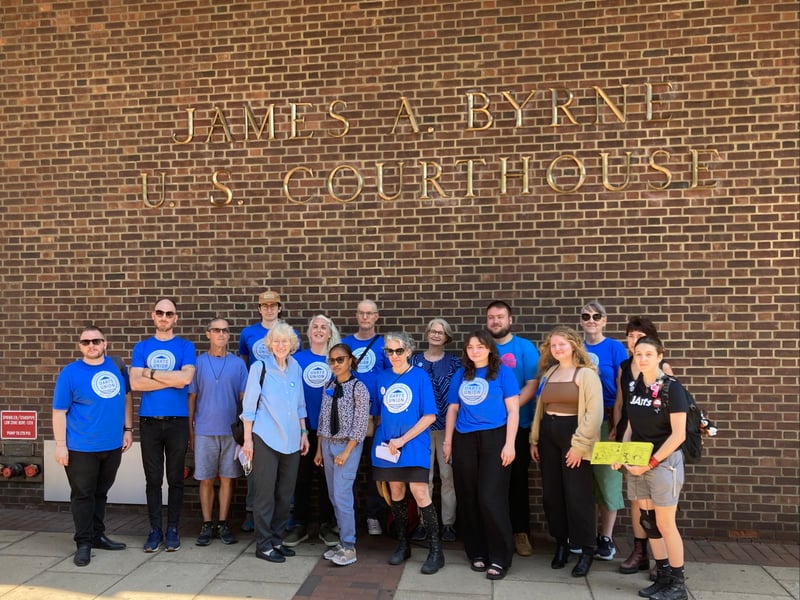
PHILADELPHIA (CN) — As they took to court Wednesday seeking redress from Philadelphia’s now-defunct University of the Arts, former students and employees remained in the dark about why the private art school closed its doors with only a week’s notice.
University administrators announced on May 31 that the 154-year-old university would close on June 7, citing an urgent financial crisis, to the shock of its approximately 1,150 students and 700 faculty and staff.
The UArts Faculty Union, an affiliate of the American Federation of Teachers, filed a class action on June 3 saying the sudden closure violated the WARN Act, which requires employers shuttering their businesses to give either 60 days’ notice or to pay employees 60 days of wages — neither of which UArts did.
While the school could provide business records to show desperate circumstances made it impossible to comply with the 60-day mandate, the university so far has been reluctant to reveal details about its finances both leading up to and immediately following its closure.
Defense lawyer Kristine Grady Derewicz told U.S. District Court Judge Chad F. Kenney during a hearing Wednesday that “unforeseen business circumstances” spurred the closure and ensuing layoffs. She said she couldn’t guarantee that the university would be able to provide employees with their salaries and healthcare benefits through August as required by law.
“It’s an expectation, not a promise,” Derewicz said. “Everyone’s hope and expectation here is that there will be sufficient assets and cash to make these payments.”
She told the judge a clearer picture should be available in a few weeks.
“I apologize, because I have information that is still sensitive, and I very much do not want to create expectations that are inappropriate, particularly for folks who are here today,” she said, referring to the group of UArts staff and students watching from the gallery, many of whom wore blue union shirts and buttons.
While lawyers for both the university and the union expressed interest in a speedy resolution, Eric Lechtzin, an attorney for the union, told reporters after the hearing that his focus is on getting the employees paid — even if it means a lengthier trial.
“As counsel for defense said, they’re trying to raise the money to pay the claims, but they haven’t,” Lechtzin said outside the courthouse. “And until we’re assured of their ability to pay a settlement, the case is going to have to march on.”
The University of the Arts’ sudden closure, while extraordinary, comes amid a period of financial hardship for higher education across the U.S.
Robert Kelchen, a professor at University of Tennessee, Knoxville, said a combination of decreased college enrollment, the end to pandemic-era federal funding and economic inflation has squeezed college budgets severely.
“Art schools are in a really difficult spot,” he said, “because art is an expensive field to teach, because of the facilities required and small class sizes — you can’t jam 500 people in the classroom the same way you can in some other fields.”
In January, the Pennsylvania Academy of the Fine Arts, the country’s first art school and museum, announced it would end its degree programs in 2025. Last year, the San Francisco Art Institute filed for bankruptcy, and the Art Institutes college system announced it was closing eight of its campuses.
Even amid the trend of art schools shutting their doors, though, the sudden nature of UArts’ closure stands out — even to Kelchen, who said he looked through the school’s financials from the past decade.
“The most recent available year was a really bad year financially, but it looked like they’ve been sitting in a pretty good financial position before that," he said. “So nothing screamed out at me that closure was imminent based on their financials, even though they were certainly struggling.”
The timing of the closure is also likely to bring excess economic hardship to much of the university’s former staff: Every UArts faculty member unexpectedly laid off on June 7 missed the traditional academic hiring cycle, Kelchen explained.
“They’re going to have a difficult time getting full-time employment,” he said. “For those who have options outside of the higher education industry, they should be able to find other positions. But if they’re very specialized in higher education, it may take a while to find a job.”
Rick Rein, an adjunct music professor at UArts who lost his job during the June 7 layoffs, sat in the court gallery Wednesday among many of his former coworkers and students. He explained to Courthouse News that he, like his peers around him, attended the hearing “to put a human face” to those who have been affected by the university’s closure.
“There are 700-and-change people who have lost out on professional opportunities, who’ve been robbed of community,” he said. “We’ve all put a lot of time and labor and emotional effort into the university, and we’re all looking for answers as to why that happened as much as we’re looking for restitution of what we’re owed.”
 Follow @JacksonHeals
Subscribe to our free newsletters
Our weekly newsletter Closing Arguments offers the latest about ongoing trials, major litigation and rulings in courthouses around the U.S. and the world, while the monthly Under the Lights dishes the legal dirt from Hollywood, sports, Big Tech and the arts.