
 Search Articles


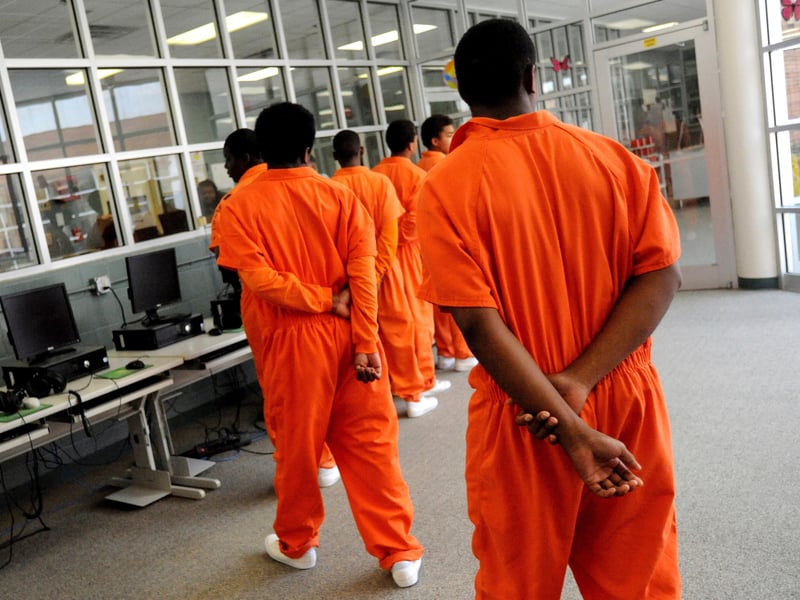
RICHMOND, Va. (CN) — Advocacy groups tried to convince a Fourth Circuit panel on Wednesday they have a real stake in improving conditions at South Carolina’s juvenile justice centers.
The South Carolina chapter of the NAACP, Justice 360 and Disability Rights South Carolina accuse the Palmetto State of subjecting minors to unconstitutional conditions of confinement. The organizations sued the state in 2022, just weeks after South Carolina announced a settlement with the Department of Justice to improve conditions at five facilities, which the organizations claim are understaffed and unsafe.
“The children held in those facilities face historic levels of extreme violence, frequent prolonged solitary confinement, squalid living conditions and are provided with virtually no rehabilitative or educational services,” the organizations say in their brief. “Overuse of isolation, like violence, is a function of both conscious mismanagement and a result of facilities being woefully overcrowded and understaffed.”
But the state argues the lawsuit would put the court in the position of micromanaging its executive functions. Attorney Beth Richardson of Robinson Gray, representing the state, asked the three-judge panel to affirm a lower court’s dismissal of the claims, saying the organizations lack standing.
“Federal courts cannot order systemic reform of state juvenile detention centers without assuring first that there has been a concrete and particularized deprivation of an identified individual’s rights,” the state says in its brief. “Federal courts are not in the business of adjudicating advocacy groups’ policy preferences better left to the legislative process."
The nonprofits claim the purported violations at facilities directly harm not only their juvenile constituents but also the organizations themselves, which have to divert resources away from their main missions.
A magistrate judge concluded that Justice 360 had organizational standing, meaning they showed injury to their organization, and that Disability Rights South Carolina had associational standing, meaning they showed injury to their members.
But the lower court dismissed the associational claims, since the group’s constituents are no longer in custody, and the organizational claims, since Justice 360 didn’t state a claim for relief.
U.S. Circuit Court Judge Andrew Wynn, a Barack Obama appointee, noted the organizations’ associational claims seemed to run afoul of the Supreme Court’s ruling* Summers v. Earth Island Institute* , which stops an advocacy group from claiming associational standing if it doesn’t refer to a concrete deprivation of a federal right and the resulting injury to a named member of the group.
U.S. Circuit Judge Harvie Wilkinson took issue with the lack of specificity. Rather than suing on behalf of named individuals, the organizations focused on broader issues that would apply to all minors.
“This whole suit seemed to me to have a sort of phantom quality,” the Ronald Reagan appointee said. “This case is shrouded in mystery because we don’t know who the plaintiffs are, we don’t know how they’ve been injured, we don’t even know where they are."
The organizations argue that a ruling against them would stifle advocacy groups’ ability to pursue change through courts.
“If this court were to uphold the district court’s decisions that are on appeal here, not only would it deny the plaintiffs and their constituents relief from grave constitutional violations, it would also represent a dramatic shift in established law,” attorney Jacob Alderdice of Jenner Block, representing the organizations, said. “It would close the courthouse doors to long-accepted claims and claimants.”
Wilkinson countered that there is a better vehicle for seeking change than through an organization’s grievances.
“I’m sure you have a worthy cause, and there may be difficulties with the prison in the way it’s run, and there may be problems with the conditions, but there’s a way to bring those problems out, and that is to get some actual people, name them, represent them, indicate how they’ve been harmed concretely by these prison conditions,” Wilkinson said. “Individuals shouldn’t be the caboose in all this; they should be the engine."
Wilkinson disagreed with Alderdice’s view of the role of a court.
“It’s so easy to blur the distinction between the judicial and the executive authority,” Wilkinson said. “Judicial supervision of the day-to-day operations of prisons is, in the first instance, an executive function. The Department of Corrections is an executive agency, and judicial supervision has got to be the exception rather than the rule."
The organizations described the facilities as places where violence is prevalent, isolation is excessive and educational opportunities are insufficient.
“Plaintiffs’ clients and constituents have suffered brutal assault after brutal assault, such as a 14-year-old child with a serious mental illness who cycled through three facilities, and was attacked at each facility, including being beaten with a ’lock in a sock,’ forcing him to get staples in his head to seal a wound,’” the organizations write in their brief.
“Another child was the victim of over 60 assaults while in DJJ custody, including being beaten with a sock filled with rocks while sleeping and then, when moved to isolation for protection, was stabbed repeatedly after the doors malfunctioned.”
U.S. Circuit Judge Allison Rushing, a Donald Trump appointee, completed the panel. Courthouse News reached out to attorneys representing the organizations. The state declined to comment.
Subscribe to our free newsletters
Our weekly newsletter Closing Arguments offers the latest about ongoing trials, major litigation and rulings in courthouses around the U.S. and the world, while the monthly Under the Lights dishes the legal dirt from Hollywood, sports, Big Tech and the arts.