Search Articles


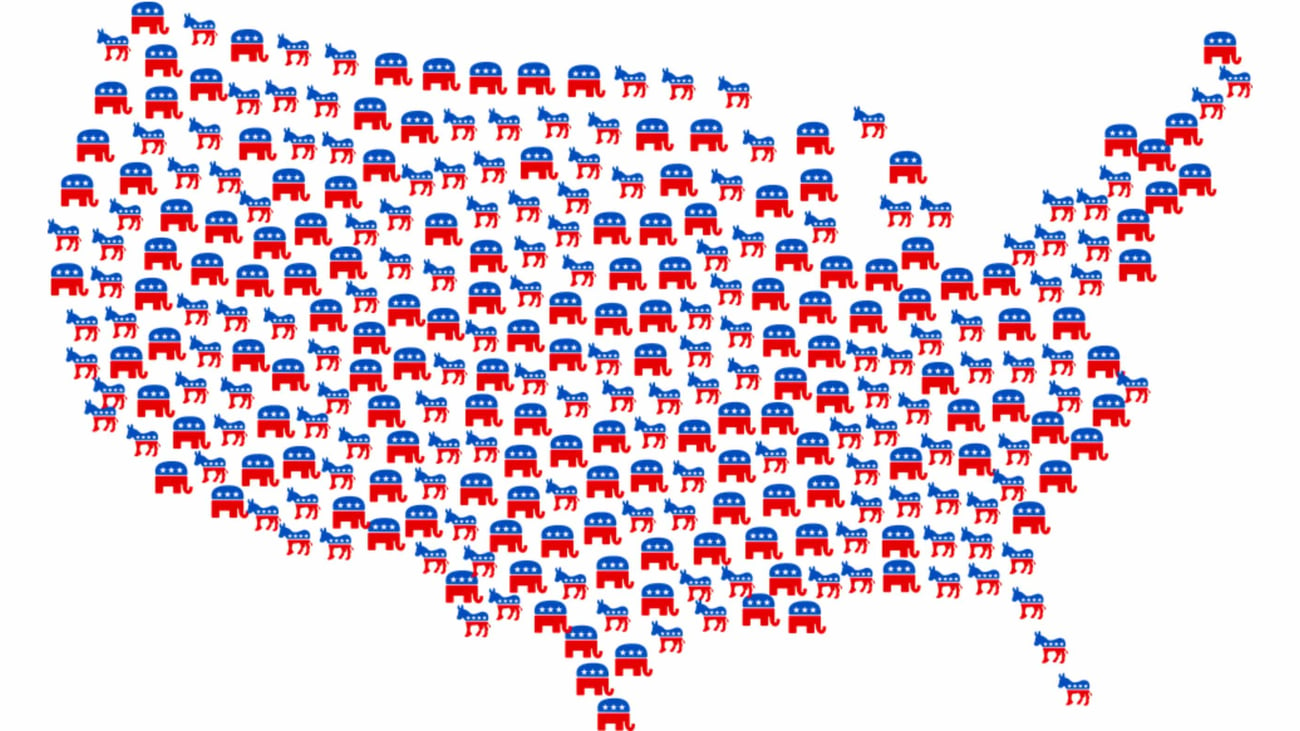
(CN) — Do you prefer a smaller government that provides fewer resources, or a bigger government providing more services? With what importance do you rank climate change and protecting the nation’s borders?
These are among the 24 questions posed in Pew’s political typology quiz that reveal where one lands on the nation’s political spectrum between party anchors like the “leftward progressives” and the “no apologies right,” to party outcasts the “left out left” and the “pragmatic and polite right.”
Developed from a Pew poll of 10,357 people published Wednesday, the categories reveal points of division within Democratic and Republican institutions as well as unexpected points of agreement between political opponents.

“Your opinion on one or two issues isn’t your destiny,” Baxter Oliphant, a senior researcher at the Pew Research Center, said in a phone interview. “There’s just a lot more variety to what politics is about, what people value, what people are experiencing."
With just 9% of Americans falling into the “tuned-out middle,” most people fall on one clear side of the liberal-conservative divide — even as each side is split among different points of debate.
“There are people on both sides of the aisle who are Republicans or Democrats or who lean towards either of those parties who just don’t fit the stereotypes we often have for the people that vote for Republicans or vote for Democrats,” Oliphant said.
Despite clear political divides, researchers found a noteworthy percentage of people identifying as Republicans who have more in common with Democrats, and vice versa. Majorities in the “pragmatic and polite right” agree with the “order and opportunity left” on key immigration issues for examples, supporting a strong border and opposing mass deportation of immigrants.
“Despite having different partisan balances within them, they have very similar views on immigration,” Oliphant said. “Almost everybody in those two groups, it’s 98% of the ‘pragmatic and polite right’ and 97% of the ‘order and opportunity left’ say it’s at least somewhat important to maintain secure borders.”
“And neither of these groups supports a national effort to deport immigrants who are living in the United States illegally,” Oliphant added.
Along with cross-partisan agreement, researchers found points of contention within parties.
Within the Republican Party, researchers found fault lines fall on social and cultural issues as well as political style and their support of President Donald Trump. While the “no apologies right” and “Christian conservatives” expressed strong support of Trump, other conversative groups expressed low support of the sitting president.
When it comes to people who tend to support Democrats, “the order and opportunity left” is as uncomfortable with using they/them pronouns as many political conservatives. Relatively few “leftward progressives” and “loyal liberals” are concerned with violent crime, while nearly half the people in “the order and opportunity left” worry about crime, a larger share than the “unconventional right.”
Small portions of left-leaning Americans additionally told Pew they view Trump and Ronald Reagan as the best most-recent president, while Barack Obama boasted the highest support among both Democrats and the average American.
In part, trends in age and race also underscore the political divides. Adults younger than 30 making up the majority of the far left and Americans older than 65 populating the far right. While white Americans make up the majority of the conservative party, Black and Hispanic adults fill the center spots leaning left.
Along with demographic characteristics, right-leaning and left-leaning Americans tend to obtain their news from different sources with liberals checking NPR and the New York Times, while conservatives mainly look to Fox News and Newsmax.
Pew co-founder Andrew Kohut began running the typology survey in 1987, several years before establishing Pew with the Times Mirror newspaper in Los Angeles.
 Follow @bright_lamp
Subscribe to our free newsletters
Our weekly newsletter Closing Arguments offers the latest about ongoing trials, major litigation and rulings in courthouses around the U.S. and the world, while the monthly Under the Lights dishes the legal dirt from Hollywood, sports, Big Tech and the arts.