
 Search Articles


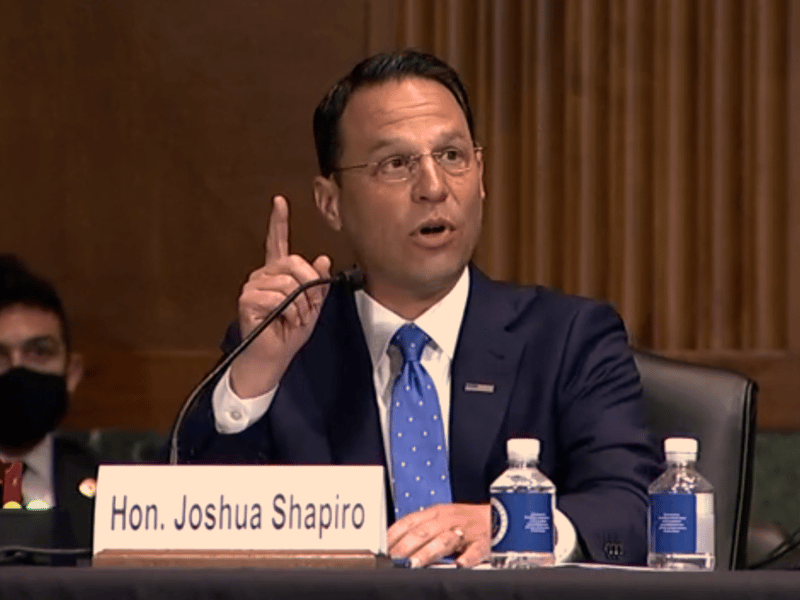
HARRISBURG, Pa. (CN) — Pennsylvania Governor Josh Shapiro filed a notice with a state appeals court Tuesday that his administration will challenge a 1982 state law that limits Medicaid coverage for abortions.
“As governor, I will always uphold our state’s constitution and protect a woman’s right to make decisions over her own body and have the health care services she needs,” Shapiro, a Democrat, said in a statement alongside the filing — taking a stance against the state’s Republican-controlled legislature.
The current ban, he said, discriminates against poor women based on sex and violates the Pennsylvania Constitution.
“My administration looks forward to making our arguments in court and is urging the court to strike down this ban that denies Pennsylvanians access to health care solely because of their sex and clearly runs counter to the recent Supreme Court ruling,” Shapiro said.
In January this year, the Pennsylvania Supreme Court ruled the decades-old ban on using Medicaid dollars for abortion services was sex-based discrimination and threw the case back down to the Commonwealth Court for review. The only times Medicaid funds can be used for abortions currently In Pennsylvania are in cases of rape or incest, or when deemed medically necessary to save the life of a mother.
The 219-page ruling from the state’s high court marked a major milestone for the Allegheny Reproductive Health Center, the abortion clinic operator that sued the Pennsylvania Department of Human Services over the matter in Commonwealth Court in 2019.
In its notice Tuesday, the human services department told the court that after conducting a thorough review of the January decision, “it has concluded that the provisions of the Abortion Control Act challenged by petitioners violate the Pennsylvania Constitution.”
“The department has likewise concluded that, under the framework set forth by the Supreme Court, it cannot advance a meritorious defense of those provisions,” department deputy chief counsel Matthew McLees and executive deputy general counsel Michael Fischer wrote in the notice. “While the department remains bound by the statutory restrictions at issue in this case and therefore cannot consent to the relief petitioners have requested, it intends to concede in its responsive brief that petitioners are entitled to judgment in their favor.”
The notice said a response brief to the application for summary relief will be filed on or before Aug. 16.
The case is sure to cause partisan tension. Pennsylvania House Republican leader Representative Byran Cutler has accused the state’s high court of making an “activist decision” and “seeking to overstep its authority and change well-settled law.”
“This decision, supported by only part of the seven-member court, eviscerates the past, well-established precedent of the Pennsylvania Supreme Court and opens the door for tax dollars to pay for all elective abortions,” Cutler said.
Pennsylvania Supreme Court Justice Christine Donohue, a Democrat, penned the opinion and was joined by Justices David Wecht and Kevin Dougherty, also Democrats. Democratic Chief Justice Debra Todd and Republican Justice Sally Mundy dissented. Mundy was the only Republican justice to participate in the ruling.
The court is split between Democratic and Republican justices 4-3.
Republican Justices Kevin Brobson and Daniel McCaffery were not on the court when the case was argued in October 2022 and subsequently didn’t participate in the decision.
Planned Parenthood, who had joined the center as a plaintiff in the suit, called the Pennsylvania Supreme Court’s ruling “a resounding victory.”
“It brings us one step closer to reproductive freedom,” the organization said in a statement.
In Pennsylvania, abortion is legal under state law up until 23 weeks, or roughly five months, of pregnancy.
Shapiro previously acted as Pennsylvania’s attorney general from 2017 through 2023.
Subscribe to our free newsletters
Our weekly newsletter Closing Arguments offers the latest about ongoing trials, major litigation and rulings in courthouses around the U.S. and the world, while the monthly Under the Lights dishes the legal dirt from Hollywood, sports, Big Tech and the arts.