
 Search Articles


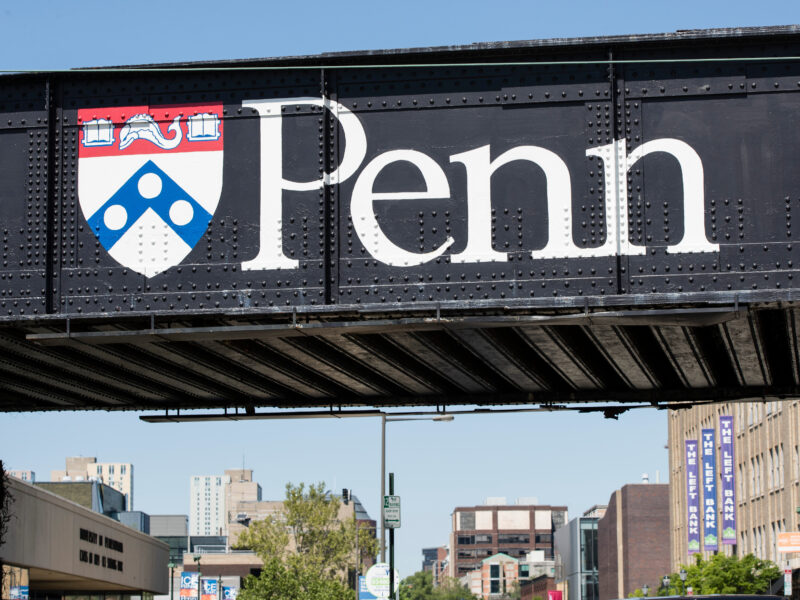
PHILADELPHIA (CN) — The University of Pennsylvania must produce a list containing the names and personal contact information of Jewish people on its campus as part of a federal subpoena, a federal judge ruled Tuesday.
Despite opposition and comparisons to Nazi Germany made by the university and its Jewish communities, U.S. District Judge Gerald J. Pappert sided with the Equal Employment Opportunity Commission in a 32-page ruling, dismissing assertions by Penn and several Jewish-affiliated organizations that a subpoena would put employees at risk as “easily dispensed with.”
The commission first filed charges against Penn in December 2023, claiming the university had engaged in a pattern or practice of harassment of Jewish employees.
Then in July 2025, the commission issued an administrative subpoena demanding Penn provide a list of its employees in groups and organizations “related to the Jewish religion,” including their names, mailing addresses, personal phone numbers and email addresses.
Penn refused, leading the commission to file an enforcement action and resulting in a monthslong legal battle.
“Though ineptly worded, the request had an understandable purpose — to obtain in a narrowly tailored way, as opposed to seeking information on all university employees, information on individuals in Penn’s Jewish community who could have experienced or witnessed antisemitism in the workplace,” Pappert, a Barack Obama appointee, wrote.
Pappert did, however, find that the university does not have to disclose which specific Jewish-related organizations each employee is a member of.
Penn and the Jewish-affiliated organizations had previously compared the subpoena as akin to requests made in Nazi Germany, telling Pappert in court documents that “allowing regimes to collect lists of Jewish people has not boded well for their safety.”
However, Pappert scolded the parties in his opinion for making such a comparison, calling it “counterproductive.”
“Penn and other groups and associations the court permitted to intervene significantly raised the dispute’s temperature by impliedly and even expressly comparing the EEOC’s efforts to protect Jewish employees from antisemitism to the Holocaust and the Nazis’ compilation of ‘lists of Jews,’” Pappert wrote. “Such allegations are unfortunate and inappropriate.”
While the Jewish-affiliated groups also argued in court that enforcing the subpoena would violate members’ religious freedom and First Amendment rights by discouraging participation in the on-campus Jewish community, Pappert ruled that “mere ‘subjective chilling effects’” do not constitute substantial burdens of members’ religious exercise.
Pappert ordered the university to comply with the subpoena by May 1.
However, Penn announced in a statement Tuesday evening it intends to appeal.
“While we acknowledge the important role of the EEOC to investigate discrimination, we also have an obligation to protect the rights of our employees,” a Penn spokesperson told Courthouse News. “We continue to believe that requiring Penn to create lists of Jewish faculty and staff, and to provide personal contact information, raises serious privacy and First Amendment concerns.”
The ruling comes amid an escalation of pressure against top U.S. universities by the Trump administration, much of which has been helmed by the Equal Employment Opportunity Commission.
Under President Donald Trump-appointed chairwoman Andrea R. Lucas, the commission filed antisemitism charges against Columbia University in July 2025, resulting in a $21 million settlement — a payment the commission says is the largest it has ever received for antisemitism.
Additionally, the Trump administration last year froze $175 million in federal funding to Penn over its past embrace of transgender swimmer Lia Thomas. The university ultimately conceded to the administration, limiting how transgender people can participate in its athletic programs in exchange for continued federal funding.
 Follow @JacksonHeals
Subscribe to our free newsletters
Our weekly newsletter Closing Arguments offers the latest about ongoing trials, major litigation and rulings in courthouses around the U.S. and the world, while the monthly Under the Lights dishes the legal dirt from Hollywood, sports, Big Tech and the arts.