
 Search Articles


(CN) — Free-to-air public broadcaster PBS sued President Donald Trump and his administration on Friday, claiming that the president violated procedural and constitutional law by revoking all federal funding to PBS and radio network NPR.
The suit, filed in the U.S. District Court for the District of Columbia by PBS and its Northern Minnesota affiliate, centers on Trump’s May 1 executive order, titled “Ending Taxpayer Subsidization of Biased Media.” In it, the president rebuked both PBS and NPR news coverage as “corrosive” and biased, and ordered the end of federal funding for both networks by June 30.
Approximately 15% of PBS’s budget stems from federal funding.
“This action challenges an unprecedented presidential directive attacking PBS and its member stations in a manner that will upend public television,” PBS writes in its complaint.
In its complaint, PBS disagrees with Trump’s assertion of biased programming, adding that Trump’s attacks on PBS’ federal funding constituted violations of the network’s First Amendment rights.
“Regardless of any policy disagreements over the role of public television, our Constitution and laws forbid the president from serving as the arbiter of the content of PBS’s programming, including by attempting to defund PBS,” the broadcaster writes.
PBS points in its complaint to Congress’ 1967 Public Broadcasting Act as establishing a strict set of limitations on government interference in federally-funded television programming.
Specifically, PBS notes that the act forbids any U.S. department, agency, officer or employee to “exercise any discretion, supervision or control” over public telecommunications or the Corporation for Public Broadcasting, the non-profit corporation tasked with distributing federal funds to public broadcasting networks.
The Public Broadcasting Act’s accompanying Senate Report states these protections from government interference more explicitly, PBS adds.
“[We] wish to state in the strongest terms possible that it is our intention that local stations be absolutely free to determine for themselves what they should or should not broadcast,” the report reads.
And in 1984, PBS notes in its suit, the Supreme Court further affirmed that Congress intended in the act to safeguard stations that “might be pressured into becoming forums devoted solely to programming and views that were acceptable to the Federal Government.”
Trump, PBS says, had repeatedly pressured the television network in such a way leading up to his executive order.
According to PBS, Trump derided both PBS and NPR as “RADICAL LEFT ‘MONSTERS’” in an all-caps April 1Truth Social post, demanding that Republicans defund both networks.
Two weeks later, the White House published a statement saying that federal funding of PBS’ programs was “biased,” “trash” and “a waste.”
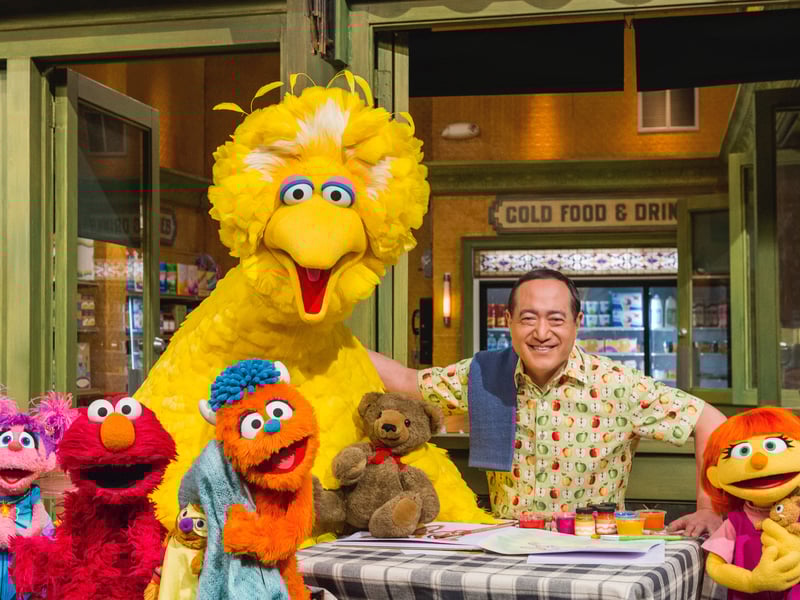
Specific programming targeted in the statement included a 2024 documentary purportedly “making the case for reparations,” a 2020 town hall “address[ing] racism” featuring Sesame Street and a 2017 film purportedly celebrating a transgender teenager’s “changing gender identity” — descriptions which PBS called inaccurate and misrepresentative.
Approximately two weeks after the White House statement, Trump issued the executive order ending federal funding of PBS and NPR.
In context with Trump and his administration’s public contempt with the networks’ content, PBS contends, the executive order stands out as a targeted attack on PBS’ First Amendment rights to free speech, free press and editorial discretion.
“The president has waged a campaign against PBS based on his disagreement with the purported views expressed through its programs and editorial decisions — culminating in the issuance of the [executive order],” PBS writes in its complaint.
PBS seeks an injunction barring the implementation of the executive order.
 Follow @JacksonHeals
Subscribe to our free newsletters
Our weekly newsletter Closing Arguments offers the latest about ongoing trials, major litigation and rulings in courthouses around the U.S. and the world, while the monthly Under the Lights dishes the legal dirt from Hollywood, sports, Big Tech and the arts.