
 Search Articles


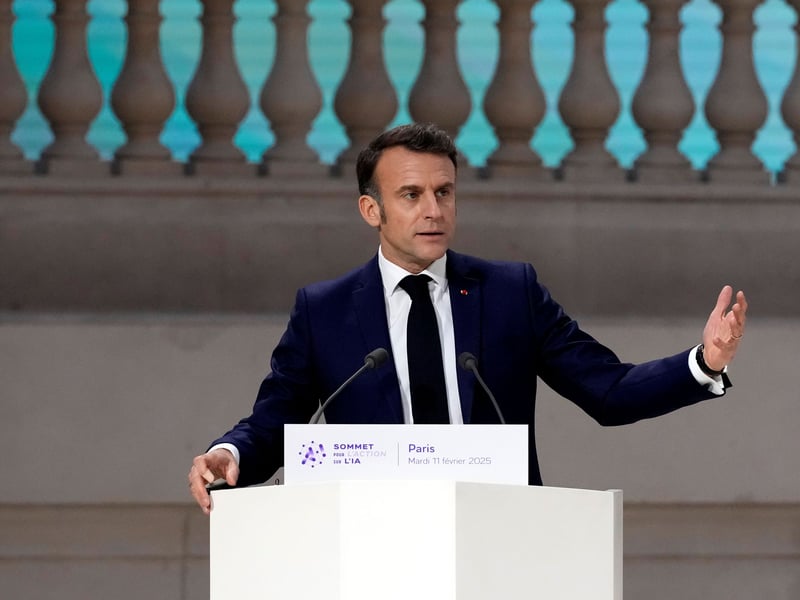
PARIS (CN) — French President Emmanuel Macron raised his arms, glowing, as he addressed a tightly packed crowd in Paris an hour and a half behind schedule.
“Ladies and gentlemen,” he exclaimed, “this is the summit of a European awakening.”
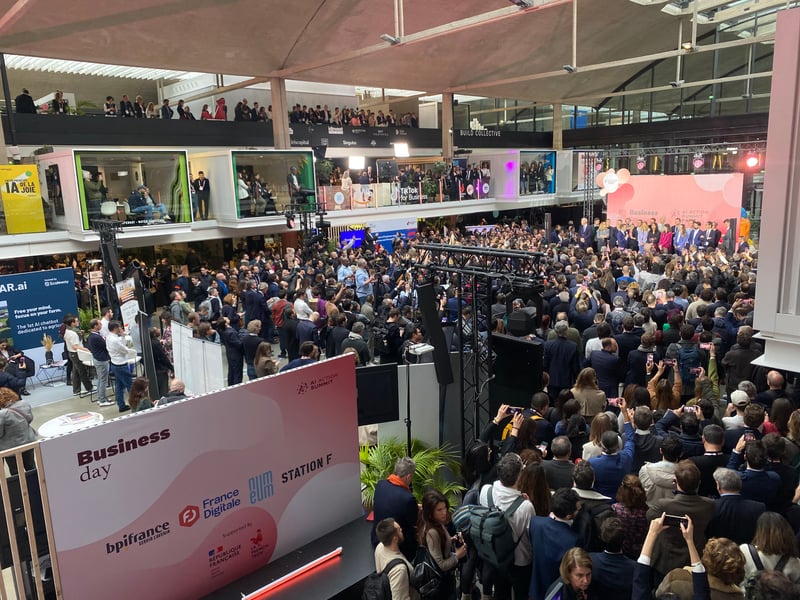
Macron paved his way through throngs of people, barely visible under clusters of camera phones being pointed overhead, as he made his entrance at the AI Action Summit in Paris, which united high-profile heads of state and tech giants to chart the future of artificial intelligence in the international sphere.
His surprise appearance at Business Day took place at the Station F, a complex with over 30 startup programs, 150 venture capital funds and 600 events per year. It markets itself as the world’s biggest startup campus, with transparent cubicle offices perched over a concrete open space.
But on Tuesday, Station F could best be described as a center of sensory overload: The normally airy space was rammed with AI specialists, business booths and invitees stopping to network in crowded hallways. Nonstop forums on multiple stages all revolved around AI.
“And why am I so keen on this summit and being with you today? First of all, because I want us and our children to be able to choose,” Macron said. “And if we let the Americans and the Chinese be the champions alone … we will not get anything back — so we’re in the race.”
Macron exuded positivity and enthusiasm on stage. But the content of his speech was a slight diversion from the previous tone he took at the summit, which was much more collaborative in spirit. Although he frequently mentioned Europe catching up to the U.S. and China in its AI development, the mood was more opportunity than risk.
It’s likely that the summit didn’t play out Macron’s best case scenario. Earlier in the day, there were bumps in the road.
One of the overarching themes of the event was the ethics of AI governance, including the importance of setting certain standards for the world’s biggest players in the sphere.
This is where the Statement on Inclusive and Sustainable Intelligence come in. Backed by more than 60 signatories on Tuesday, the international declaration was designed to ensure that “AI is open, inclusive, transparent, ethical, safe, secure and trustworthy, taking into account international frameworks for all” while “making AI sustainable for people and the planet.”
China, India and Canada joined the statement, but the U.S. didn’t play ball and neither did the U.K., in a major snub to the summit that promoted itself on these principles — and to Macron, who has sought to position France as a future leader in the sector alongside the U.S.
As AI develops, experts argue there’s an increasing urgency to clearly define some international rules. Otherwise, it will be a free-for-all.
“Without clear rules, nations will create their own or gravitate towards their preference, fragmenting the globe around AI ethics,” Abishur Prakash, the founder of the geopolitical advisory firm The Geopolitical Business Inc., told Courthouse News.
“There are big gaps in how data, the fuel of AI, is governed — the world is approaching a point where data borders are returning and being reinforced, and this could result in lopsided AI development.”
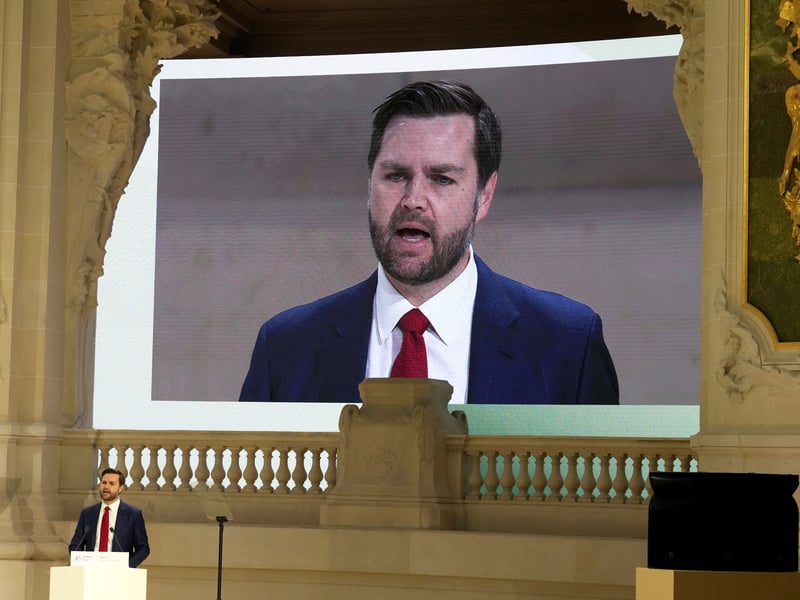
When the news broke that the U.S. wouldn’t sign the statement, U.S. Vice President JD Vance — on his first foreign trip outside of the U.S. — diverted the narrative away from the cross-cultural collaboration themes backing the summit.
On Tuesday in the Grand Palais, the historic exhibition hall anchoring the event, Vance advocated against “excessive regulation” of AI, saying it could kill a transformative sector just as it’s taking off. It was a clear dig at Europe, which is much more highly regulated than the U.S. — something that Macron is advocating to change in order to attract more AI investments.
Vance then took a jab at China, which he called an “authoritarian regime.”
“Partnering with them means chaining your nation to an authoritarian master that seeks to infiltrate, dig in and seize your information infrastructure,” Vance said.
The speech cast a shadow over an event that marketed collaboration and innovation — and set the tone for Vance’s first foreign trip outside of the U.S. in the role of vice president.
 Follow @lilyradz
Subscribe to our free newsletters
Our weekly newsletter Closing Arguments offers the latest about ongoing trials, major litigation and rulings in courthouses around the U.S. and the world, while the monthly Under the Lights dishes the legal dirt from Hollywood, sports, Big Tech and the arts.