
 Search Articles


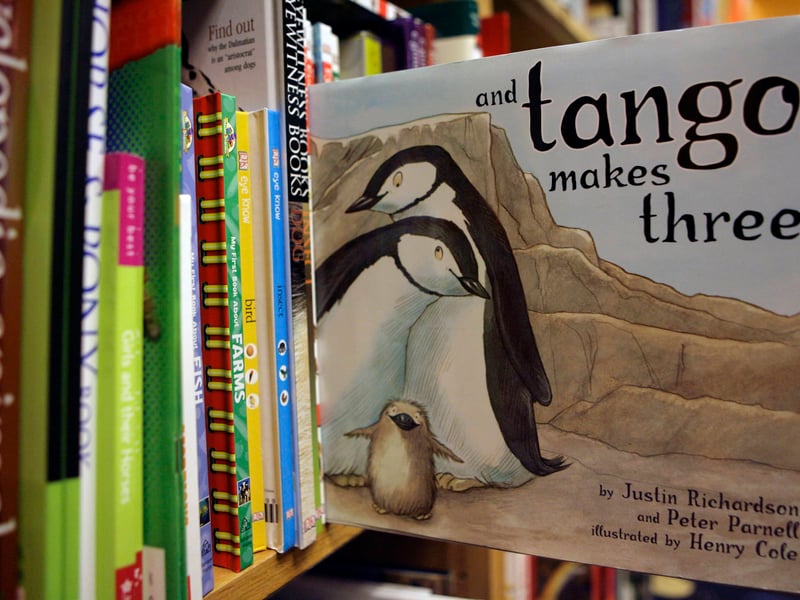
ATLANTA (CN) — Three Florida parents continued their legal fight against the Florida State Board of Education in the 11th Circuit on Friday, arguing the state’s library book removal policy violates the First Amendment’s ban on viewpoint discrimination.
Nancy Tray, Anne Watts Tressler and Stephana Ferrell sued the Florida Department of Education in June 2024 over HB 1069, which set up a system for parents to petition for the removal of objectionable books in school. The parents argued the law does not give them a way to contest the book removals.
U.S. District Judge Allen Winsor, a Donald Trump appointee, dismissed the lawsuit last year, contending the law was “based on status, not viewpoint” and only sought to give parents who oppose a book a process to bring complaints to the state when their local school board refused to remove it.
In oral arguments on Friday, Brooke Menschel of Democracy Forward Foundation asserted the law “intentionally stilted the discussion and in doing so excluded parents like the appellants here who hold a different perspective.”
“Whether the parents who disagree with the school board decisions can engage with the state depends entirely on whether they disagree with removing the material or disagree with not removing the material,” Menschel said. “No case in this court or in the Supreme Court supports that type of thumb on the scale for one side of the debate.”
U.S. Circuit Judge Robin Rosenbaum asked if the parents’ lawsuit has anything to do with the content of the books.
“I guess there are certain criteria here, some of which seem, you know, not debatable,” said Rosenbaum, a Barack Obama appointee. “They’re not a problem under the First Amendment. For example, if there’s something that’s pornographic or whatever. But then there are other sort of squishier categories like inappropriate for the age level, and that obviously necessarily involves balancing of the allegedly objectionable material with any kind of redemptive value, any educational value that the material might have, right?”
“The question is less about the content of the books or even necessarily the objections, and it’s more about the fact that these parents wanted to voice their disagreement with actions by a local — an arm of their local government,” Menschel responded.
U.S. Circuit Judge Britt Grant seized on those comments.
“So I know you’ve said it’s irrelevant what the content of the books are,” said Grant, a Donald Trump appointee. “But you could have a parent who says, ‘I want to remove a book because I think it has a sexual content that is inappropriate for the age group.’ But you could also have a parent who says, I want to remove this book because it has religious teachings on sex that I disagree with.”
“But those would be two very different viewpoints,” Grant continued. “So why is the district court not correct that this is not in fact a viewpoint?”
“Because, your honor, the relevant viewpoint is the viewpoint of whether you disagree with a decision to remove or not remove,” Menschel answered. “It’s actually not about the books at all. The parents here would have been excluded based on their viewpoint, no matter what books they oppose removing.”
Charles Lawson, representing the Florida Board of Education, argued the law is about content, because it targets a very limited criteria of books: those that are pornographic or contain sexual conduct.
“This case is not about suppressing ideas, and it’s not about suppressing viewpoints,” said Lawson, a former Florida Supreme Court justice. “It’s not about closing public debate. It’s about a very narrow administrative oversight process created to ensure that local school boards comply with the law and do not retain banned material, prohibited material, and that’s for the protection of minors.”
Lawson added that if the content is prohibited, there is not a “discretionary decision on the part of the school board.”
“So there is a huge difference when you talk about objections as to whether it’s an objection to illegal material or an objection to other material,” he said. “The only decisions that are reviewed are the non-discretionary decisions where there’s a potential that they are violating the law by keeping material that is prohibited by state law.”
U.S. Circuit Judge Elizabeth Branch questioned how the appeal process works for other issues parents might bring, hypothetically bringing up an example of a parent who objects to their child studying the moon landing.
“If a parent hears that their child is studying the moon landing and is convinced that there is no moon landing and they raise an objection, they say, this is not accurate,” said Branch, a Donald Trump appointee. “So you’re saying that the accuracy question, parents can raise an objection, but there’s no prohibition such that win or lose, there’s no appeal for that, right?”
“That’s correct,” Lawson said, adding that objections are compiled by local school boards and sent to the Florida State Board of Education for further review.
“When you’re talking about the vast other categories of material that exist out there, then there is no process at the state level except the reporting process in which no parent is involved,” he said.
Rosenbaum still questioned if there is still some viewpoint discrimination, pointing to the part of the statute that requires the school board to pay for a special magistrate to look at books not removed after a parent objects to its content.
“The problem is if a school board winds up saying or just sort of acquiescing in a parent’s objection because they think that the state board might decide that the material satisfies the criteria, even though they don’t really think it does, there’s a financial incentive for them to remove the book, even though they are not exercising discretion to do so,” the judge said. “They’re doing it purely because they aren’t sure how the state school board — the state education board will decide, and they don’t want to impose the financial penalty on themselves of having to pay a trained attorney to act as a special magistrate.”
The three parents’ lawsuit is just one of many filed against the state and local school boards over books pulled from libraries. A 2024 report by the American Library Association and PEN America found the state leads the nation in books removed from school libraries.
 Follow @alexbpickett
Subscribe to our free newsletters
Our weekly newsletter Closing Arguments offers the latest about ongoing trials, major litigation and rulings in courthouses around the U.S. and the world, while the monthly Under the Lights dishes the legal dirt from Hollywood, sports, Big Tech and the arts.