
 Search Articles


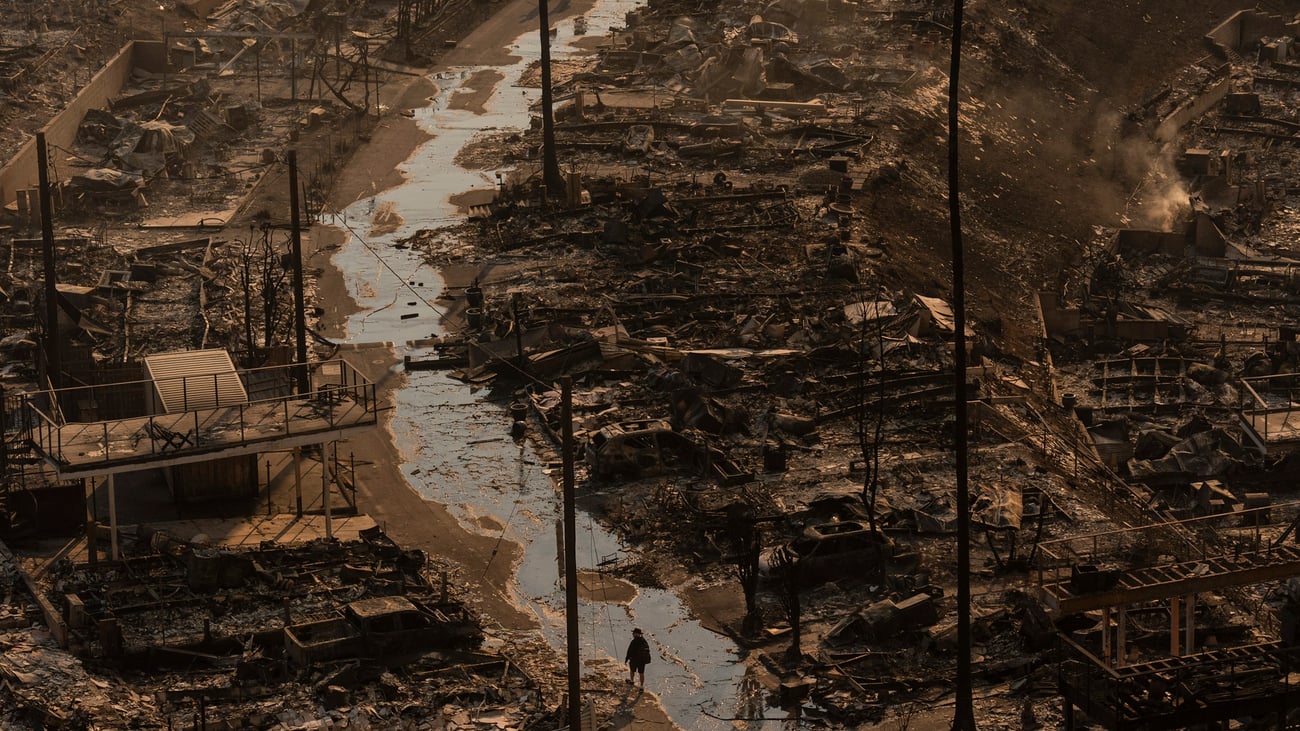
LOS ANGELES (CN) — The man accused of starting a brush fire in the earlier hours of Jan. 1, 2025, which prosecutors say ended up burning down the Pacific Palisades a week later, repeatedly told investigators there were no fireworks that New Year’s Eve when he hiked up a trail near his former home around midnight.
The jury in downtown Los Angeles, where 30-year-old Jonathan Rinderknecht is on trial, on Thursday heard audio recordings of an interview investigators with the U.S. Bureau of Alcohol, Tobacco, Firearms and Explosives and LA Police Department conducted later in January 2025.
“Like zero fireworks,” Rinderknecht told the investigators. “It was very quiet.”
Rinderknecht said he had been working as an Uber driver that evening and ended up dropping off a passenger in the Palisades, an affluent neighborhood in the hills overlooking the Pacific Ocean where he had lived a few years prior with his then-boyfriend in a large, rented house.
Feeling nostalgic, Rinderknecht said, he decided to drive up to a trailhead close to his former home and walk up a hill he had hiked on “10,000 times” to watch the fireworks.
“It felt unusually calm,” Rinderknecht told the investigators. “It felt too calm for New Year’s Eve.”
When it turned out there were no fireworks to behold from the hill, the suspect said in the interview, he decided to walk back down. As he was descending back to where he had parked his car, Rinderknecht said, he saw a light that was growing bigger and called 911 to report a wildfire.
His repeated insistence in the interview that he saw or heard no fireworks that night belies his defense that the Jan. 1 fire was caused by fireworks and not by arson. Rinderknecht’s attorney, Steven Haney, told the jury in his opening statement that the so-called Lachman Fire was started by fireworks, as was initially assumed by the LA Fire Department, which extinguished the fire overnight.
It wasn’t until federal investigators started to examine the cause of the Palisades Fire — a devastating firestorm fanned by Santa Ana winds that destroyed thousands of homes — that they determined that the Palisades Fire was ignited from smoldering embers from the Lachman Fire among underground tree roots.
Both geolocation data from Rinderknecht’s cell phone and video footage from residential security cameras showing his car driving through the neighborhood led investigators to question him about what occurred that night he hiked up the hill by himself.
Matthew Beals, a certified fire investigator with the ATF, was called by the prosecution to testify about the eight-hour interview that he and an LAPD detective conducted with Rinderknecht that day, first at his studio apartment in West Hollywood and later the same day on the hillside in the Pacific Palisades.
“I didn’t think he was being honest with me,” Beals told the jury under questioning by Assistant U.S. Attorney Danbee Kim, referring to Rinderknecht’s assertion that he first saw the fire and called 911 as he was going down the hillside. “It didn’t jive with the phone data.”
Other government witnesses told the jury that geolocation data of Rinderknecht’s phone, which pinpoints the caller’s location when making a 911 call even if the call doesn’t go through, shows that he was up the hillside, near the origin of the fire when he first tried to call it in 12 minutes after midnight.
He repeatedly tried calling 911 as he made his way down the hill but because of poor reception only got through to an operator once he gotten close to the residential street below. At that time, other people had already alerted emergency service and firefighters from the local station were on their way.
During portions of the interview played to the jury, Rinderknecht became agitated when questioned about the fire and his actions, and, speaking very rapidly, embarked on barely coherent rants about the rich and people in power.
“They set up systems that are unbalanced and disproportionate … they’ll always take you down,” he says at one point. “You gotta take them down.”
A behavior analyst testified Wednesday that Rinderknecht fits the profile of an arsonist who seeks to take revenge on society.
Kevin Kelm, an expert witness retained by the government, said that, based on ChatGPT interactions and witness testimony, Rinderknecht couldn’t cope with stressors in his life such as financial and relationship problems. At the same time, he was fixated on political and social issues like wealth disparity that enraged him without being able to do anything about them.
“He tends to collect grievances,” Kelm said. “It’s always somebody else’s fault.”
Rinderknecht faces as long as 45 years in prison if he’s found guilty on all three counts he’s charged with: destruction of property by means of fire, arson affecting property used in interstate commerce and timber set afire.
U.S. District Judge Anne Hwang, a Joe Biden appointee, has largely barred the defense from arguing that the Los Angeles Fire Department should bear responsibility for failing to fully extinguish the initial Lachman Fire.
 Follow @edpettersson
Subscribe to our free newsletters
Our weekly newsletter Closing Arguments offers the latest about ongoing trials, major litigation and rulings in courthouses around the U.S. and the world, while the monthly Under the Lights dishes the legal dirt from Hollywood, sports, Big Tech and the arts.
Additional Reads

 SCOTUS won’t review role of race in police stops June 22, 2026