
 Search Articles


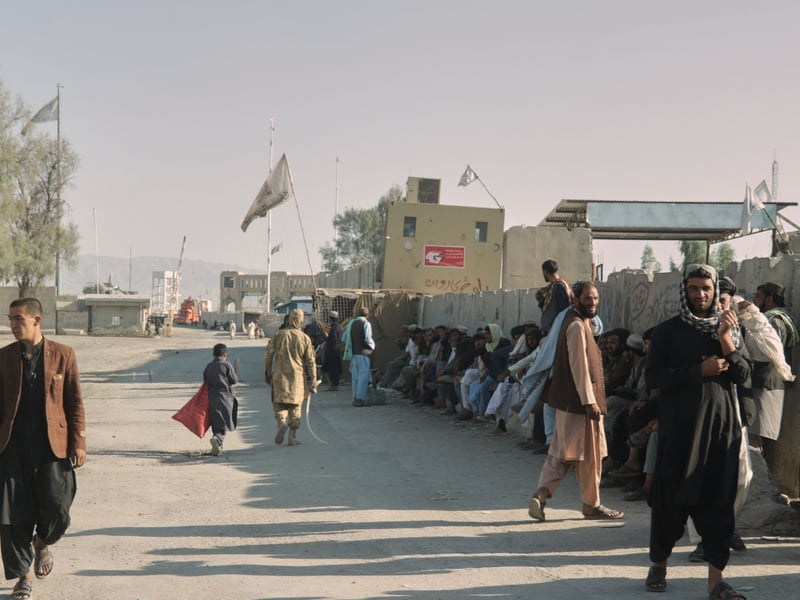
ISLAMABAD (AFP) — Negotiations between Afghanistan and Pakistan to secure a lasting truce after their bloodiest clashes in years were deadlocked Tuesday, with a Pakistani security source saying a “last-ditch effort” was underway.
Dozens of people were killed on both sides of the border in the worst such violence since the Taliban returned to power in 2021.
The one-time allies have had frosty relations since then, with the Taliban government denying accusations from Islamabad that it harbors militant groups which stage attacks in Pakistan.
After an initial 48-hour ceasefire between the warring neighbors lapsed, a second truce emerged on Oct. 19 following talks in Doha, mediated by Qatar and Turkey, though its terms remain unclear.
Talks in Istanbul began Saturday and aimed to establish long-term peace.
They stretched into an 18-hour marathon session on Monday, according to Pakistan’s state-run Radio Pakistan.
A Pakistani security source said the Afghan Taliban delegation initially agreed to Islamabad’s call for “credible and decisive action” against the Tehreek-e-Taliban Pakistan militant group, also known as the Pakistani Taliban.
But the Afghan side “reversed its position repeatedly after instructions from Kabul,” said the source, who was not authorized to discuss the talks publicly.
Border still shut
Pakistan’s Defense Minister Khawaja Asif had warned on Saturday that failure to reach a deal could lead to “open war.”
“We have the option, if no agreement takes place, we have an open war with them,” he said ahead of the Istanbul talks.
Abdul Mateen Qani, spokesman for Afghanistan’s interior ministry, said that any attack would be met with a response “that will serve as a lesson for Pakistan and a message for others.”
“It’s true that we do not possess nuclear weapons, but neither did NATO nor the United States manage to subdue Afghanistan despite 20 years of war,” Qani told Afghan media outlet Ariana News.
The fighting broke out after explosions in Kabul on Oct. 9, which the Taliban government blamed on Pakistan and launched a retaliatory border offensive.
The border between the two neighbors has been closed for two weeks, with only Afghans expelled from Pakistan allowed to cross.
In the Afghan border town of Spin Boldak, a driver told AFP that “fruit is rotting” in trucks.
“There are 50 to 60 trucks, some with apples, others with pomegranates and grapes,” said 25-year-old Gul, who only gave his first name.
“We wait and call on the government to reopen” the border, he said.
The violence killed at least 50 Afghan civilians and wounded 447 others in one week, the United Nations mission in Afghanistan told AFP on Monday.
Pakistan’s military said on Oct. 12 that 23 personnel had been killed and 29 wounded, without detailing civilian casualties.
—
By Agence France-Presse
Subscribe to our free newsletters
Our weekly newsletter Closing Arguments offers the latest about ongoing trials, major litigation and rulings in courthouses around the U.S. and the world, while the monthly Under the Lights dishes the legal dirt from Hollywood, sports, Big Tech and the arts.