
 Search Articles


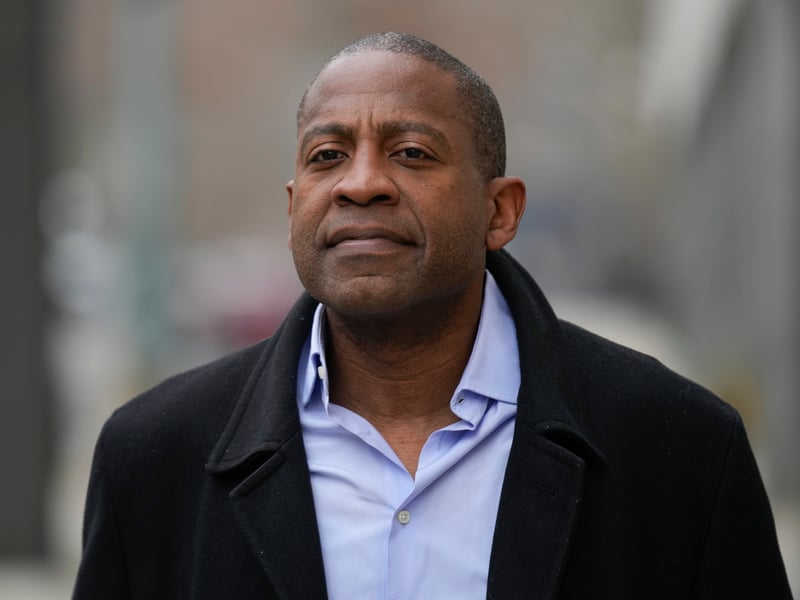
BROOKLYN (CN) — Ozy Media CEO Carlos Watson denied accusations Monday he was providing “scripted” testimony during direct examination from his attorneys.
Watson is accused of conspiring with other Ozy executives to lie to investors about the company’s finances and encouraging his co-founder Samir Rao to impersonate YouTube executive Alex Piper on an investor call with Goldman Sachs.
He faces charges for conspiracy to commit securities and wire fraud, in addition to aggravated identity theft. If convicted, he could face up to 37 years in prison.
Rao, Ozy Media’s former chief operating officer, and Suzee Han, the company’s onetime chief of staff, each pleaded guilty to charges last year and are now cooperating with the government in the case against Watson. The pair were also named alongside Watson in a separate lawsuit filed by the U.S. Securities and Exchange Commission.
After three days of direct examination, Assistant U.S. Attorney Jonathan Siegel asked Watson on cross-examination Monday if his previous testimony was scripted.
Last week, Watson told jurors how much revenue he believed Ozy generated from 2016 to 2021, starting with $9 million in 2016 and peaking at $80 million in 2021.
He also broke down Ozy’s yearly revenue — per his recollection — by product-services including television, festivals, newsletters podcasts and “barter” revenue, which he previously stated was service-based revenue that Ozy secured from various clients.
But Siegel said Watson was reading off a piece of paper that showed the exact numbers he stated in court, which also differed from Ozy pitch decks shown in court that summarized the digital media company’s yearly revenue.
For instance, Siegel pointed to Watson’s testimony that Ozy had $25 million in 2018 while the pitch deck shown in court said the company made $22 million in revenue that year.
“When you were on the stand, trying to add these numbers up on the stand, that was an act?” Siegel asked, pointing to Watson’s notes that were shown in court.
“No, definitely not,” Watson responded.
“My belief is that we consistently undercounted our revenue,” Watson added, when pressed why the pitch deck revenue numbers were lower than his estimations made in court.
Siegel also directed Watson to discrepancies in reported revenue for 2017, pointing to his testimony from last week that Ozy made about $14 million in revenue that year.
For that same year, Ozy’s internal income statement shown in court reported less than $7 million in revenue. In 2017 tax returns also shown in court, and signed by Watson, the company again reported less than $7 million.
Siegel also showed multiple emails from Watson to investors in which he reported $12 million in revenue in 2017. When asked repeatedly if he continued to do so after filing taxes for that year, Watson did not give a direct answer.
But he did add that Rao was the person who drafted the emails that reported revenue to investors, despite Watson being listed as the sender. According to Watson, he simply copied and pasted Rao’s drafts before sending out the emails to investors.
A separate hearing was held after prosecutors claimed Watson tried to sneak in two phones Monday — the second time he’s attempted to do so during trial.
According to prosecutors, when Watson checked in his bag at security, he failed to inform court security officers that there were two phones in his bag. After the metal detector picked up one phone, Watson checked it in with security.
But, when Watson put his bag through the metal detector a second time, security officers said the machine picked up a second device.
Prosecutors say Watson claimed it was a phone charger, but after a security officer checked his bag, they found it was another phone.
Watson has previously claimed that both phones don’t work, and that they are used to make text message and email evidence more easily available in court.
U.S. District Judge Eric Komitee said he’s not going to revoke Watson’s bail but is considering a contempt order.
“This is my last warning,” Komitee said. “I’m not going to revoke bail at this time but I’m as close as I can possibly be.”
 Follow @NikaSchoonover
Subscribe to our free newsletters
Our weekly newsletter Closing Arguments offers the latest about ongoing trials, major litigation and rulings in courthouses around the U.S. and the world, while the monthly Under the Lights dishes the legal dirt from Hollywood, sports, Big Tech and the arts.