
 Search Articles


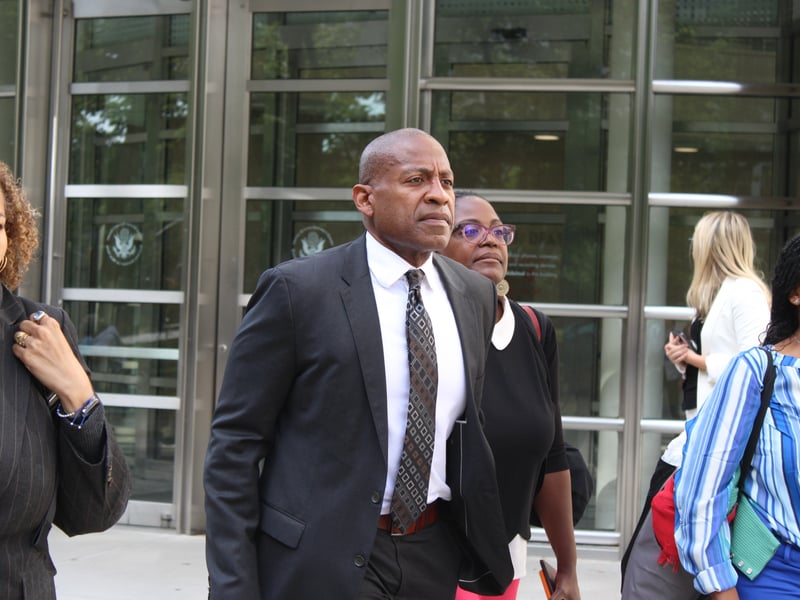
BROOKLYN (CN) — Ozy Media CEO Carlos Watson received a sentence of over nine years in prison Monday for his involvement in a fraud scheme in which he conspired to impersonate a YouTube executive and repeatedly lied to investors about the now-defunct media company’s finances.
Watson was convicted by a Brooklyn jury in July for conspiracy to commit securities and wire fraud, in addition to aggravated identity theft. He will be expected to surrender for imprisonment on March 28, 2025. Ozy Media will not have to pay a fine but is subject to one year of probation despite being already shut down.
In making his sentencing decision, U.S. District Judge Eric Komittee said he also considered Watson’s actions at trial — which he deemed as an obstruction of justice. He specifically pointed to instances in which Watson perjured himself on the stand, refused to submit evidence to the prosecution prior to trial and attempted to sneak phones into the courthouse on two separate occasions.
“The quantum of dishonesty in this case is exceptional,” Komittee said Monday.
“You’ve had a substantial amount of time to reflect on what happened here and you still maintain that you committed no crimes,” the judge added.
In an interview with reporters after his sentencing, Watson said as much.
“I continue to think this is deeply unfair,” Watson said.
As he has often said throughout his trial, Watson called the case a “modern lynching” and emphasized he believed he was being targeted by Brooklyn prosecutors because of his race.
He specifically criticized the government’s decision to prosecute the case in Brooklyn when Watson lives and works in California, pointed to the lack of Black men on the jury and said the press failed to successfully report on the racial injustice in his case.
While he maintained his innocence, he said that he should have received a lesser sentence for the charges he was convicted of.
“Even if you believe everything they said,” Watson said. “You still don’t prosecute Carlos Watson.”
But U.S. Attorney Jonathan Siegel said Watson “couldn’t accept the idea that his business, like many others, would fail.”
He added that the evidence against him shown at trial, in addition to his continued decision to deny all the claims against him, displays his “selfishness.”
“His motivation was narcissism,” Siegel said.
Ozy Media, founded by Watson in 2012, was a digital media start-up that produced TV shows, podcasts and newsletters. In its flagship program, “The Carlos Watson Show,” its founder interviewed politicians and pop culture celebrities including Joe Biden, Hillary Clinton and John Legend.
Watson repeatedly described Ozy at trial as a “sneak peek into the future” of industries including politics, entertainment and scientific research. The company also prided itself in the annual “Ozy Fest” in Central Park which featured A-list musicians, comedians and public figures such as RuPaul, writer Malcolm Gladwell and rapper Common.
But the company shut down in 2021 after an article in The New York Times reported that Ozy’s co-founder and chief operating officer Samir Rao impersonated a YouTube executive on a call with Goldman Sachs and made flagrant misrepresentations of the company’s finances.
Rao and Suzee Han, the company’s onetime chief of staff, each pleaded guilty to charges last year and are cooperating with the government. The pair were also named alongside Watson in a separate lawsuit filed by the U.S. Securities and Exchange Commission.
Prosecutors pointed to evidence at trial that Watson conducted a series of schemes to oversell the company’s finances to investors. Tripti Thakur, who served as Ozy’s chief financial officer for three months in 2019, testified that Rao sent a fake contract with the Oprah Winfrey Network to a potential bank lender.
Prosecutors also said Watson misrepresented Ozy’s earnings to investors by as much as four times the actual revenue numbers, citing internal income statements that dramatically contradicted emails and pitch decks sent to investors.
 Follow @NikaSchoonover
Subscribe to our free newsletters
Our weekly newsletter Closing Arguments offers the latest about ongoing trials, major litigation and rulings in courthouses around the U.S. and the world, while the monthly Under the Lights dishes the legal dirt from Hollywood, sports, Big Tech and the arts.