
 Search Articles


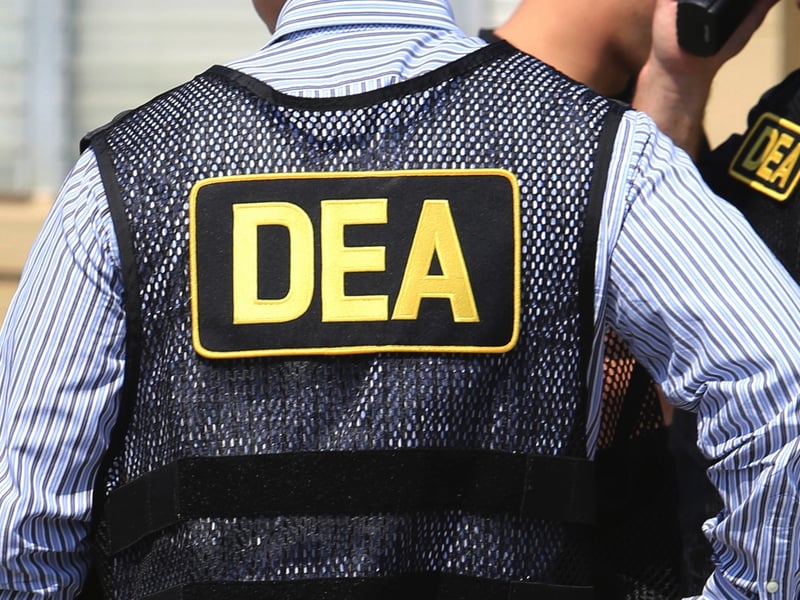
SAN FRANCISCO — A federal judge who sided with a Drug Enforcement Administration agent who struck and killed a cyclist in Salem, Oregon, in 2023 was wrong to dismiss the case, the Oregon attorney general’s office argued to a Ninth Circuit panel on Tuesday.
Oregon Senior Assistant Attorney General Philip Thoennes said that DEA agent Samuel Landis’s conduct was “not reasonable” when he drove through an intersection and hit 53-year-old Salem resident Marganne Allen on her bicycle during a fentanyl-related surveillance operation in a residential area.
The oral arguments heard on Tuesday revolve around whether Landis is immune from criminal prosecution from the state of Oregon while he was conducting law enforcement operations.
According to Thoennes, there were major unresolved factual disputes between the grand jury testimony and the opinion of U.S. District Court Judge Michael McShane, a Barack Obama appointee who dismissed the case in January.
“The first is that the district court stated that the defendant subjectively believed he needed to drive through the intersection without stopping,” Thoennes said of the lower court’s decision. “We don’t believe that view of the facts can be supported if the record is viewed in light most favorable to the state.”
Landis was conducting a surveillance operation with the DEA’s Salem field office on March 28, 2023, targeting a multinational drug operation, dubbed “Operation Backsplash,” in an effort to combat fentanyl distribution, according to the attorney general’s court briefing.
Eight officers from the DEA, FBI and Salem Police Department, were in radio communication with each other and traveling in separate, unmarked vehicles while following a suspected drug courier throughout Salem during the operation.
At one point, the “priority became regrouping,” Landis wrote in an appellate brief. Landis was driving down a narrow residential street when he went through a four-way intersection at about 18 mph and struck Allen, he claims. The agent said he radioed for help and rendered aid to Allen, who was unresponsive and shortly after taken to a hospital where she died.
Landis claimed that he was driving with a “sense of purpose” during grand jury testimony. But Thoennes argued that this sense of purpose didn’t constitute an emergency.
“Is your bottom line that you don’t think the record supports that Landis actually thought it was necessary?” Senior U.S. Circuit Judge M. Margaret McKeown, a Bill Clinton appointee, asked Thoennes. “Is that the bottom line?”
“That’s correct,” Landis replied “The agent must have a subjective belief that their conduct was necessary.”
McKeown was joined on the panel by Senior U.S. Circuit Judge Carlos Bea, a George W. Bush appointee, and U.S. Circuit Judge John Owens, also an Obama appointee.
The Oregon Attorney General’s Office also took issue with McShane’s opinion that DEA agents must routinely break traffic laws.
“We think that’s accurate, but it’s an oversimplification,” Thoennes told the judges.
Thoennes said that Landis’s driving was not consistent with keeping a low profile necessary in a surveillance operation and that there are limits to the types of traffic laws agents can break, as other DEA agents noted during the grand jury testimony.
Thoennes also said the court “placed too much weight” on the fact that Landis was a DEA agent engaged in disrupting illegal drug trafficking.
“The state has no dispute that it is an important mission. The state actively participates in that mission,” Thoennes said. “We think it misses the point. We’re asking if the defendant’s conduct driving through the intersection, in the circumstances at the time — which didn’t include an emergency and didn’t involve hot pursuit, was still being tailed by at least two other officers who had eyes on the subject and were in radio communication — was that conduct objectively reasonable?”
Attorney Hannah Horsley, representing Landis, contested the state’s factual disputes between the agent testimony and district court’s opinion.
“Even today, they really are not identifying any genuine disputes of material fact,” Horsley told the panel. “These are, really in essence, a criticism and a disagreement about the legal conclusions it drew from an undisputed factual record.”
Horsley said that Landis was entitled to immunity and that the federal court was correct to dismiss the case. She also acknowledged the tragedy of Allen’s death.
“We’re faced with an agent who made a tactical decision to run that stop sign and that it was safe to do so in the circumstances at the time,” Horsley said. “In hindsight, that was the wrong call. We all know that now.”
Subscribe to our free newsletters
Our weekly newsletter Closing Arguments offers the latest about ongoing trials, major litigation and rulings in courthouses around the U.S. and the world, while the monthly Under the Lights dishes the legal dirt from Hollywood, sports, Big Tech and the arts.