
 Search Articles


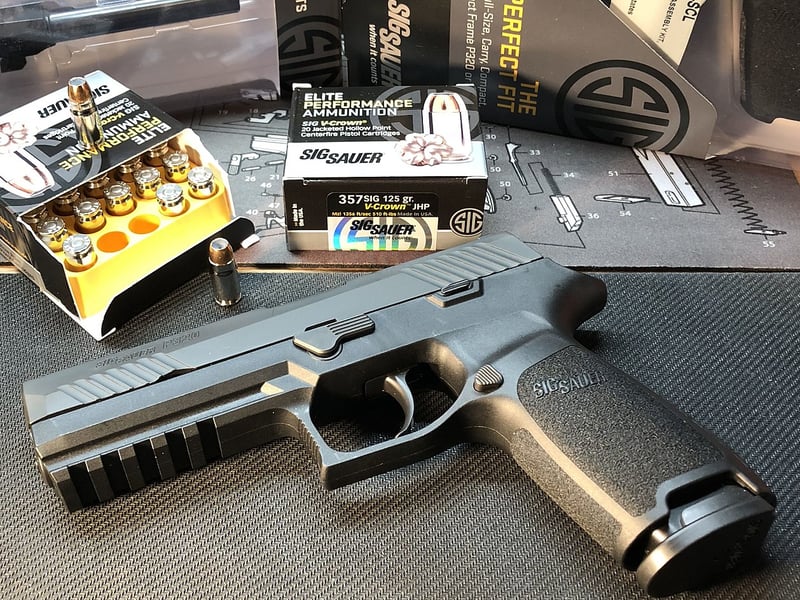
DENVER (CN) — An Oklahoma man on Thursday asked the 10th Circuit to revive his suit against a gun manufacturer after his P320 single-action pistol discharged in a holster he was wearing.
In February 2018, Tyler Herman slipped his P320 pistol into a newly purchased concealed carry holster and put the device in his pants. When Herman went to remove the holster, the gun suddenly discharged, severely injuring him.
His wife, an officer for the Oklahoma City Police Department, called 911.
On Oct. 25, 2021, Herman sued the gun’s manufacturer Sig Sauer for selling a defective firearm.
To date, the P320 has become Sig Sauer’s most popular handgun, selling 2.5 million units. At the same time, dozens of gun owners have reported the gun unintentionally firing, driving six similar lawsuits nationwide, including one in Philadelphia where a jury last month awarded a man $11 million in damages.
Ronald Reagan-appointed U.S. District Judge David Russell found Herman’s subject experts focused too much on general defects and failed to explain why his specific gun discharged when it did. He granted Sig Sauer’s motion for summary judgment in September 2023.
Herman appealed, and on Thursday urged a 10th Circuit Panel to consider the full record and send the case to a jury.
Chief U.S. Circuit Judge Jerome Holmes questioned whether the evidence that Herman would have engaged a manual safety if he had it was still in play, after the deposition where Herman recalled his grandfather teaching him gun safety at an early age fell to the wayside.
“I’m hard-pressed to understand why that isn’t something we should view as waived now,” the George W. Bush appointee said.
Representing Herman, attorney Samuel Haaz argued that his experts relied on the fact in their opinion, even if they didn’t explicitly cite it, and even if the court ignored the experts, it is common sense that manual safeties prevent guns from spontaneously firing.
Haaz practices with the Philadelphia firm Saltz Mongeluzzi.
Pushing back, Judge Holmes echoed the lower court: “Everything you are saying relates to whether this is a defective gun, it doesn’t relate to whether that defect caused this specific injury.”
Holmes also questioned the role of Herman’s choice in buying a weapon that lacked a manual safety feature.
“He had his grandfather’s advice, and when push came to shove he bought the gun without a manual safety,” the judge said.
Sig Sauer’s attorney Kristen Dennison argued Herman’s expert testimony was irrelevant because they didn’t look at the specific facts in this accident, while the manufacturer’s expert inspected the holster and gun.
“All of the experts agree the trigger was pulled, and a gun is designed to go off when the trigger is pulled. You certainly have to investigate the circumstances that caused the trigger to be pulled,” said Dennison, who practices with Littleton Park in Purchase, New York.
U.S. Circuit Judge Veronica Rossman, appointed by Joe Biden, and Senior U.S. Circuit Judge David Ebel, appointed by Ronald Reagan, rounded out the panel. The hearing was held over Zoom and broadcast on YouTube. The court did not indicate when or how it would decide the case.
 Follow @bright_lamp
Subscribe to our free newsletters
Our weekly newsletter Closing Arguments offers the latest about ongoing trials, major litigation and rulings in courthouses around the U.S. and the world, while the monthly Under the Lights dishes the legal dirt from Hollywood, sports, Big Tech and the arts.