
 Search Articles


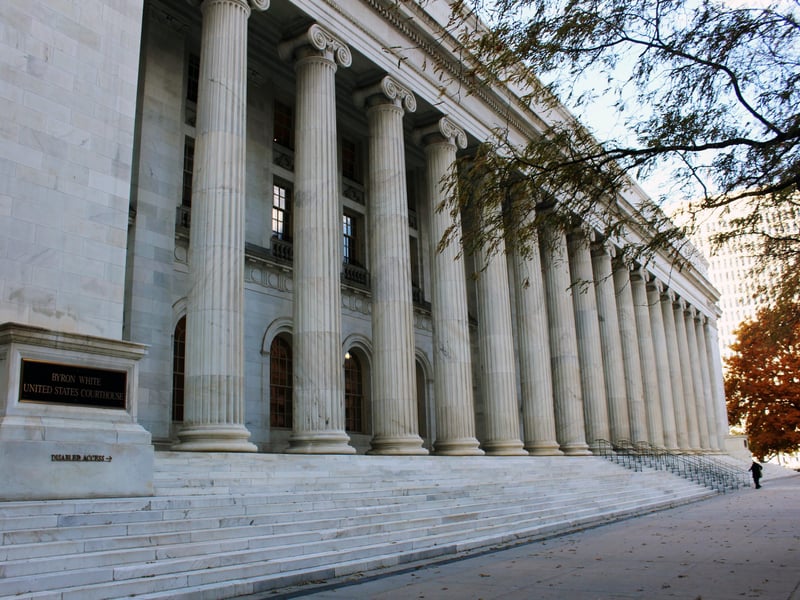
DENVER (CN) — An Oklahoma City police officer argued before the 10th Circuit Tuesday that he should be protected by qualified immunity from a lawsuit filed by the teenager he shot in 2019.
On March 10, 2019, a neighbor called the police reporting teenagers playing in an abandoned house and said one of them might have a gun.
Arriving on scene, Oklahoma City Police Officer Kyle Holcomb remarked that he heard the sounds of a BB gun being fired. Through a fence, Holcomb spotted 14-year-old Lorenzo Clerkley Jr. climbing out of a basement window. Thinking Clerkley was carrying a weapon, Holcomb ordered him to drop it, then fired off four shots, hitting the teenager in the leg and head.
When they realized the police were outside, the teens walked out and turned themselves in.
An internal investigation concluded Holcomb was justified in using force because he believed he was in danger.
In a lawsuit filed May 19, 2020, Clerkley’s family maintains he had left his pellet gun inside and was empty-handed when Holcomb shot him.
On Aug. 14, 2023, George W. Bush-appointed U.S. District Judge Stephen Friot rejected Holcomb’s qualified immunity claim and denied his request for summary judgment, finding a jury best positioned to answer the question of whether Clerkley was carrying anything that posed a threat when Holcomb shot him.
Holcomb appealed.
“The issue of what’s in the defendant’s hand isn’t the same as whether the office perceives a threat,” argued Holcomb’s attorney, Stacey Felkner of the Oklahoma City firm Collins Zorn.
Felkner argued in a brief that Holcomb’s body camera captured footage of Clerkley holding something that looked like a gun, but the judges on the panel said they struggled to see anything on the video.
“Just watching it without pausing, I couldn’t lay eyes on something that is a firearm,” said U.S. Circuit Judge Joel Carson.
Felkner cautioned against pausing the video since her client didn’t have that luxury on the scene.
“To me, it looks like he’s pointing it like this,” Felkner said, holding her fingers in the shape of a gun.
Carson pushed back.
“Then you have a better eye than me,” the Donald Trump appointee replied.
On behalf of Clerkley, civil rights attorney Robert Blakemore emphasized that he didn’t see evidence of a gun anywhere on the video.
“At very best, it’s a disputed fact as to whether there was any reason for Officer Holcomb to believe he was in danger, or that Mr. Clerkley was holding a gun and pointing it at him,” said Blakemore, who practices with Smolen Roytman in Tulsa, Oklahoma.
U.S. Circuit Judge Timothy Tymkovich questioned how the court should consider the fact that the officer made a split-second decision.
“In this excessive force context, officers responding to a dangerous situation have to make a split-second decision, and this video embodies that,” the George W. Bush appointee said. “Why wouldn’t that cut in favor of the officers, that there’s a threat, a serious crime, and split-second decision?”
Blakemore responded by turning the tight timeline in favor of his client.
“The first factor is whether there is a command to drop the weapon, ‘drop the gun,’ and in this instance, he couldn’t comply because he wasn’t holding anything, and there wasn’t time to comply,” Blakemore said. “The shot was less than one second after the command was made.”
Leaving five minutes on the clock, Blakemore concluded that the case hinged on a fact question that belonged before a jury and appellate courts lacked jurisdiction to review.
Outside the courtroom, Blakemore reflected on his own upbringing.
“When I was a kid, we would do stuff like this all the time, hang out in abandoned houses — but I’m from midtown Tulsa and I’m white. A white 14-year-old versus a Black 14-year-old, that’s the unspoken thing here,” Blakemore told Courthouse News.
U.S. Circuit Judge Nancy Moritz, appointed by Barack Obama, rounded out the panel.
The court did not indicate when or how it would decide the case.
 Follow @bright_lamp
Subscribe to our free newsletters
Our weekly newsletter Closing Arguments offers the latest about ongoing trials, major litigation and rulings in courthouses around the U.S. and the world, while the monthly Under the Lights dishes the legal dirt from Hollywood, sports, Big Tech and the arts.