
 Search Articles


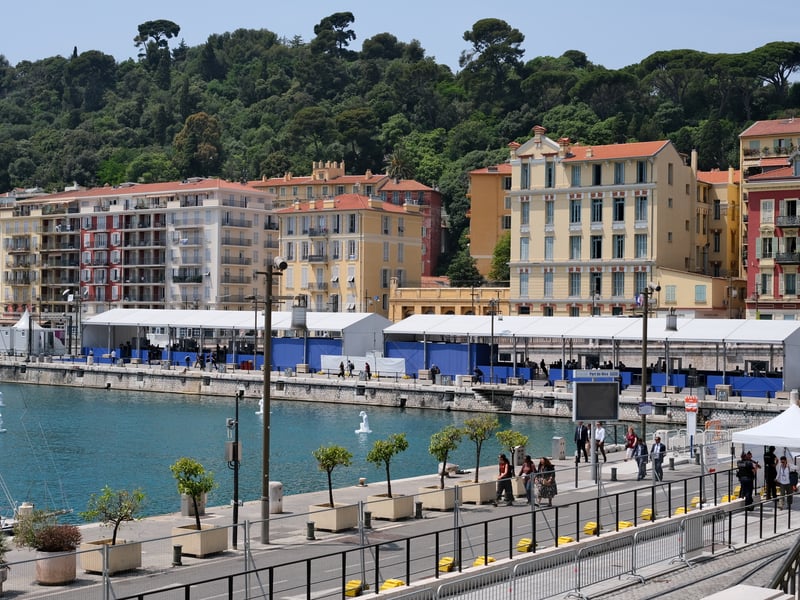
NICE, France (CN) — Swaths of the breezy, tree-lined streets of Nice, framed by pastel buildings and beachgoers, have been shut down to accommodate the biggest ocean conference the world has ever seen.
From June 9 to 13, over 15,000 heads of state, delegations and scientists are attending the UN Ocean Conference, cohosted by the governments of France and Costa Rica, to shape the future of the ocean. Almost 60 signatories have gotten onboard the ambitious High Seas Treaty, and a $2.8 trillion proposal has been made to address seaweed and mangrove restoration.
And although the conference is operating at a colossal, global scale, the focus has very much been on the smaller actors that play an indispensable role in the sector: traditional fisheries, underrepresented populations and their potential to spread first-hand knowledge with the smallest local communities and largest multinational organizations.
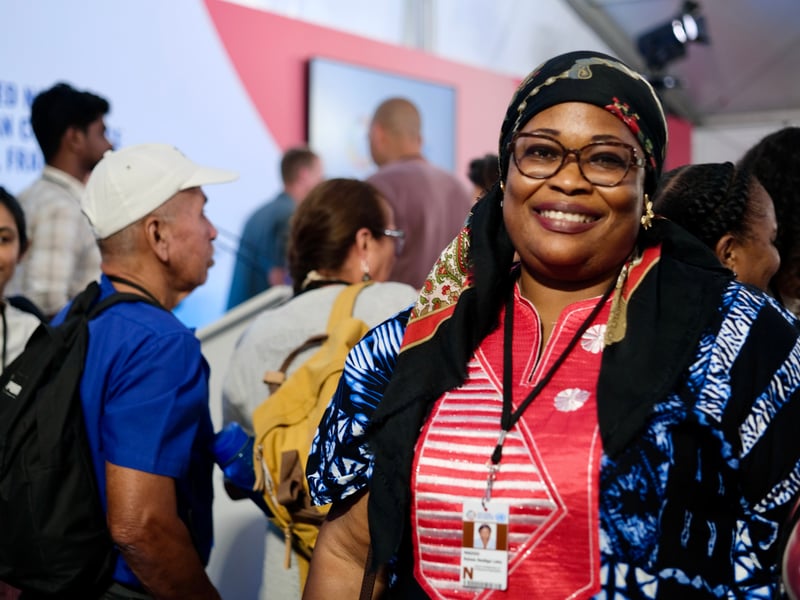
Raissa Nadège Leka Madou is a small-scale fisherwoman from the Ivory Coast, like her mother and grandmother before her. She opened a moving panel on Thursday evening that amplified the voices of people like her who carry invaluable, in-depth knowledge of the sea down through generations.
“This is my life, this is my blood, this is for the sea,” she told Courthouse News. “The market, my clients are my connection… we women are strong, we are not weak.”
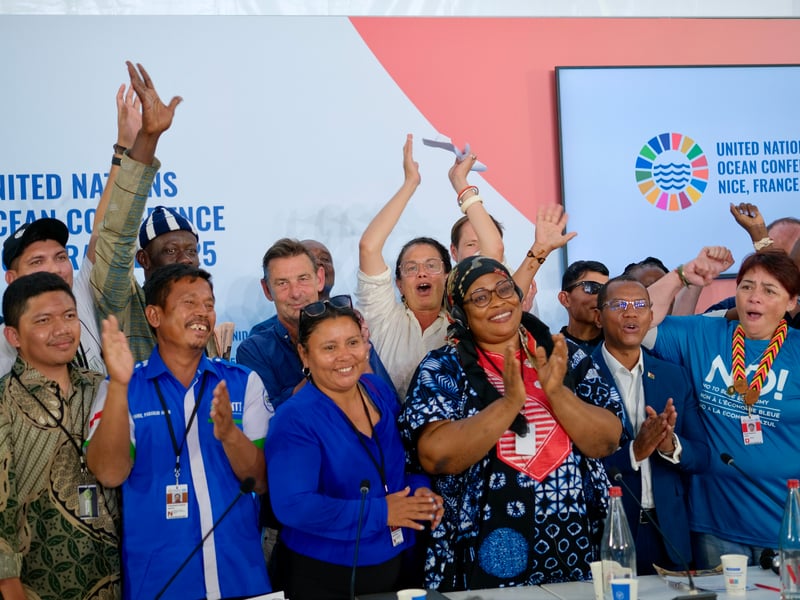
The panel united small-scale fishers from the Ivory Coast, Indonesia, France, Honduras and Chile.
“Across Africa, over 12 million women and men rely on small-scale fisheries for their livelihoods,” Madou said passionately to a full room of listeners. “We are the ones that bring fish from people’s plates, to their schools, to their markets — but increasingly, we’re being pushed out by industrial fleets, oil and gas projects, hotels that send fishers off from their boats.”
Mandou added that small-scale fishers must be given priority access to coastal areas, and “governments must stop treating small-scale fishers like squatters on our own shores.”
She then turned her attention to the role of women in the industry.
“Now, let me speak not just as a fish trader but as a woman — at small-scale fisheries, women are everywhere in the value chain, in our communities. We are economists, environmentalists, educators, but we are also invisible,” she said. “In many countries, we have no access to decision-making, which means that our needs are overlooked — if you want resilient coastal communities, you have to support the women that holds them together.”
At the end of her speech, the crowd erupted in applause. It began to steadily grow; the room ran out of seats, and listeners began to sit on the ground.
Although designating non-commercial fishing as small-scale suggests that its impact might not be colossal, the numbers tell another story. Over 90% of the world’s fishers work on this scale, and 500 million people depend on these — directly or indirectly — for their livelihoods, especially in coastal communities and developing countries, according to information signed off by the French Minister of Agriculture, WWF, Food and Agriculture Organization of the United Nations (FAO) and others.
Zoila Bustamante Cardenas, a fisherwoman from Chile and the president of the Chilean National Confederation of Artisanal Fishermen, was the next to take the podium.
“I’ll go directly to the point: We’re here as small-scale fishers to see how decision-making takes place without even looking at us,” she said, her voice raised. “I am not the friend of a fisherman, I’m not the wife of a fisherman — I am a fisherwoman.”
She continued to deliver an impassioned speech about why it’s critical to listen to artisanal fishers when envisioning a future for the ocean.
“I’m a woman, I’m a small-scale fisherwoman, and my blood is salty; it’s within me. Everything that I think is the ocean. I live in the ocean. I am the ocean,” she said. “So who is better to transmit to you the needs of the ocean, the needs of our people and the needs that government is trying to implement … without looking at us?”
Again, the growing crowd in the room erupted in applause.
This event was co-organized by the African Confederation of Professional Organisations of Artisanal Fisheries. Gaoussou Gueye, its president, greeted people warmly before the panel began, with a big smile. He previously worked in industrial fishing, but turned to the artisanal sector.
“Artisanal fishing in Senegal in particular occupies an extremely important place, especially in the context of food security and the fight against poverty and job creation, because many young people are now involved in fishing and there are many families who are fed through fishing,” he told Courthouse News.
“The contribution of artisanal fishermen to food security is essential; it’s in this context that we have requested that the artisanal fishing of small pelagics be reserved for artisanal fishing for a better contribution to food security,” he continued, “And not to give fishing opportunities to vessels, especially foreign ones, so that they can fish these small pelagics, which they will then process.”
Gueye explained that keeping artisanal fisheries local is crucial; when big industrial vessels come into play, the fish are no longer accessible to locals.
“If African populations really want to fight against poverty, food insecurity and have animal proteins like fish, there should be at least a certain appropriation of artisanal work towards these products,” he said. “And above all, have a zone reserved for artisanal fishing.”
Gueye added that countries like Senegal are often competing with others that are much more powerful, both economically and politically. And blue governance requires cooperation between local communities and political decision-makers. And these decision-makers would seriously benefit from the knowledge these small-scale fishers can share, which is often overlooked despite it being almost second-nature to multi-generational fishers.
“Because we must not simply believe that research is on the institutional level — artisanal fishermen have knowledge,” Gueye said. “And now, we must try to see how to make these two types of knowledge collaborate, and now make politicians understand that before making these decisions, they must refer to the recommendations made by those who make their living from the sea, especially artisanal fishermen.”
This has been a common theme that has been running throughout the conference. On Wednesday, multiple panelists — including the mayor of New Orleans, Latoya Cantrell — evoked the subject.
“Our economy, our heritage and our future is tied to the water,” Cantrell said during the Ocean Panel 6 on Wednesday. “The world’s greatest experts on where they live are the people who live in those neighborhoods, front and center.”
Cantrell stressed that as the world builds new economies around the ocean, they must be tied to the same people who are innovating around them.
“The seat at the table is big enough for all of us — it has to be,” she said. “We have examples from generations, time and time again, that it’s the people in communities that have to lead the way … they’re doing it, but they have to be supported … the global fight must fund and allow local leadership.”
Other experts shed light on how traditional fishing practices and modern technology don’t have to be mutually exclusive.
On Thursday morning, at a small-scale fisheries side event, which took place in a crowded room in the Mama Shelter hotel near the harbor, Justin Ilakini — a managing director at the National Fisheries Authority — gave an example of how modern tools can be deployed to traditional fishers to improve challenges at sea.
In Papua New Guinea, Ilakini described how his organization has been helping thousands of fishers install a satellite-based tracking system called NEMO onto their boats, which has shown potential to drastically improve safety and boost transparency for regulatory compliance. Both approaches can co-exist in a sustainable way — and, experts say, they should.
 Follow @lilyradz
Subscribe to our free newsletters
Our weekly newsletter Closing Arguments offers the latest about ongoing trials, major litigation and rulings in courthouses around the U.S. and the world, while the monthly Under the Lights dishes the legal dirt from Hollywood, sports, Big Tech and the arts.