
 Search Articles


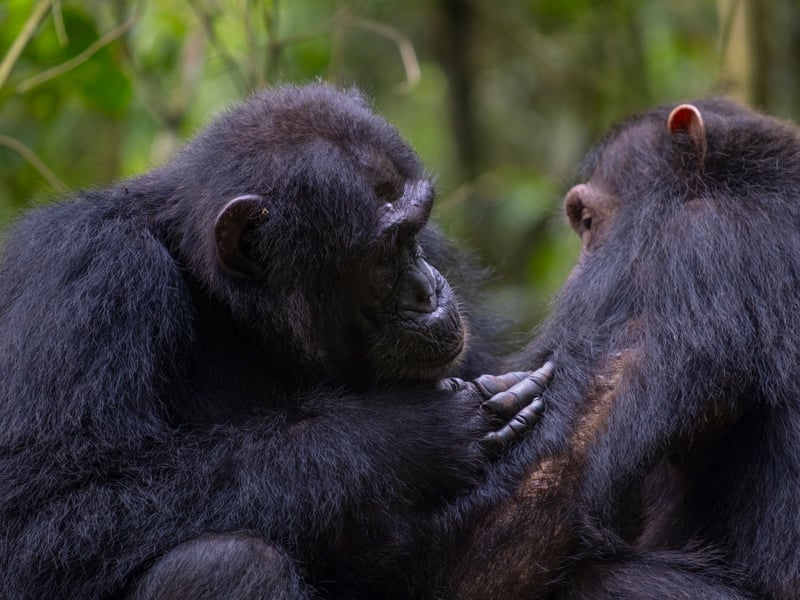
(CN) — Chimpanzees in Uganda’s Budongo Forest have been spotted treating their wounds using leaves and other plant materials — and, in some cases, helping other chimps care for injuries too.
The behavior, described in a study published Wednesday in the journal Frontiers in Ecology and Evolution, adds to growing evidence that wild chimpanzees don’t just self-medicate.
Researchers say they also provide basic first aid to one another, offering insight into how early forms of medicine and caregiving may have evolved in humans.
“Our research helps illuminate the evolutionary roots of human medicine and healthcare systems,” said first author Elodie Freymann of the University of Oxford, in a press release. “By documenting how chimpanzees identify and utilize medicinal plants and provide care to others, we gain insight into the cognitive and social foundations of human healthcare behaviors.”
The team studied two chimpanzee groups in Budongo Forest: Sonso and Waibira. Members of these groups face a high risk of injury, often from fights, accidents, or snares set by humans. In the Sonso group, researchers say about 40% of chimpanzees have been seen with snare-related injuries.
During their direct observation periods, the scientists recorded 12 injuries in Sonso, all likely caused by within-group conflicts. In Waibira, five chimpanzees were injured — one female by a snare and four males in fights.
In total, the researchers documented 41 instances of medical care. Thirty-four involved chimpanzees treating their own wounds, and seven showed care directed at others. Most involved wound treatment, but the team also saw examples of chimpanzees removing snares and assisting with hygiene.
“Chimpanzee wound care encompasses several techniques: direct wound licking, which removes debris and potentially applies antimicrobial compounds in saliva; finger licking followed by wound pressing; leaf-dabbing; and chewing plant materials and applying them directly to wounds,” Freymann said. “All chimpanzees mentioned in our tables showed recovery from wounds, though of course we don’t know what the outcome would have been had they not done anything about their injuries.”
The team identified the plants used in these behaviors, several of which have traditional medicinal uses and chemical properties that could help with healing. They also recorded other hygiene behaviors, including using leaves to wipe after defecation or mating.
According to researchers, one of the most notable findings is that chimps often helped individuals outside their immediate family.
Of the seven prosocial cases, four involved genetically unrelated chimpanzees. There was no clear pattern based on age or sex in terms of who gave or received help.
“These behaviors add to the evidence from other sites that chimpanzees appear to recognize need or suffering in others and take deliberate action to alleviate it, even when there’s no direct genetic advantage,” Freymann said.
The Sonso group showed more examples of care than Waibira, which researchers think may be linked to how accustomed the Sonso chimps are to human observation. This may have made it easier to catch subtle or rare behaviors, including medical care, they said.
Additionally, the fact that these behaviors were recorded repeatedly in one location suggests they may be more common than previously thought.
Researchers suggest the frequent threat of injury from snares could be one reason chimps in this community appear to treat each other more often. But more data is needed to test that idea.
“Our study has a few methodological limitations,” said Freymann. “The difference in habituation between the Sonso and Waibira communities creates an observation bias, particularly for rare behaviors like prosocial healthcare.While we documented plants used in healthcare contexts, further pharmacological analyses are needed to confirm their specific medicinal properties and efficacy.
Since prosocial care is relatively rare, he added, it’s difficult to understand when chimpanzees provide it and when they don’t.
“These limitations highlight directions for future research in this emerging field,” Freymann said.
Subscribe to our free newsletters
Our weekly newsletter Closing Arguments offers the latest about ongoing trials, major litigation and rulings in courthouses around the U.S. and the world, while the monthly Under the Lights dishes the legal dirt from Hollywood, sports, Big Tech and the arts.