
 Search Articles


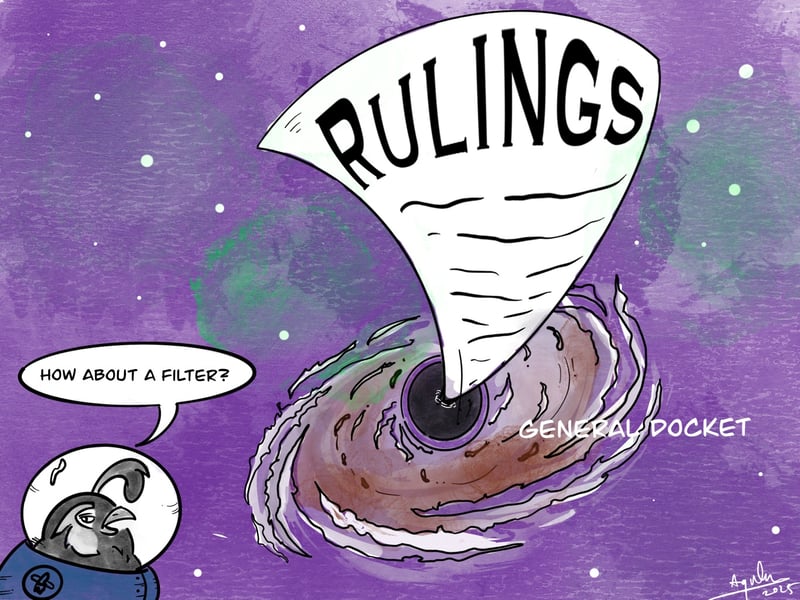
A judge in Los Angeles Superior, the biggest court in the nation, made a comment to me after a committee hearing a long time ago that I can only paraphrase: Progress in technology should not take press access backwards.
She put it so crisply that I have tried to remember it over time. It was close to that.
The court where she worked is a great example of the problem and the promise inherent in electronic record keeping.
An overwhelming volume of civil cases come into the civil courts of Los Angeles County, a great portion having little broader import, such as collection actions or name changes.
Within that massive flow of litigation are cases that do have broader import, over fires, employment, software, securities, publicity rights and plenty more. The outcomes of those cases, whether a jury’s verdict or a judge’s ruling, are just as important as the initial claim.
And yet there is no way to find those rulings short of searching through a gazillion dockets by hand or using software that would be hit and miss and is, on many court sites, verboten.
While far from complete, there was back in the day something called “the judgment drawer” in many state courts. It was the drawer where civil verdicts were placed. There were small local publications called verdict reporters that gathered and reported those judgments.
That was in the days of paper.
Now, with electronic dockets and documents widespread in state courts, the judgment drawer is long gone. And there is no way to see or track the verdicts or rulings, usually called “orders” in Los Angeles Superior.
The behemoth is clearly not a “practical obscurity” court, one where the overall zeitgeist is to reduce visibility in the name of privacy. LA Superior provides excellent access to the media as new cases and subsequent filings come into the court.
But it has not used the tremendous force of technology, which can sort through documents at extraordinary speed, to reveal the work of the court, the final results of all those cases streaming into its electronic portal.
It is useful here to compare the other judicial institution that runs alongside state courts, often across the street. The U.S. Courthouse in Los Angeles, that now sits catty corner from the massive state civil courthouse on Hill Street, used to be on Spring Street, where it stood catty corner from the massive state criminal courthouse on Temple.
So in the old federal courthouse, judgments were printed out in paper and put in a stack in a pass-through shelf between the clerk’s docketing office and the media room. Below that shelf was another that held the new civil complaints.
The two stacks embodied in paper form the work of the court, from the new work coming in as fresh complaints to the completed work wrapping up as judgments. Those two stacks are now electronically mirrored in the federal courts’ public access website, where anyone can search for the new cases as they arrive and where the judgments for each court are filtered into one online site.
So that second part, showing the outcome of litigation, is missing from all state courts. We at Courthouse News Service report from courts in every state and I don’t know of a single state court that — in the electronic age when it is easier to sort the filings than at any time in the past — has gathered the judgments and rulings onto a central site where they can be reviewed.
Our news service first started litigating against practical obscurity courts in 2008. We were focused on one stack, the new complaints. That war of access has cost us a great fortune. And we have won those battles. Yet a few states continue to decline our polite requests for timely access to new cases.
I can’t quite see another two-decade, multimillion-dollar campaign to de-obscure the second stack, the electronic judgments and rulings. So we will have to rely on the goodwill and sense of public duty of the state courts.
Subscribe to our free newsletters
Our weekly newsletter Closing Arguments offers the latest about ongoing trials, major litigation and rulings in courthouses around the U.S. and the world, while the monthly Under the Lights dishes the legal dirt from Hollywood, sports, Big Tech and the arts.