
 Search Articles


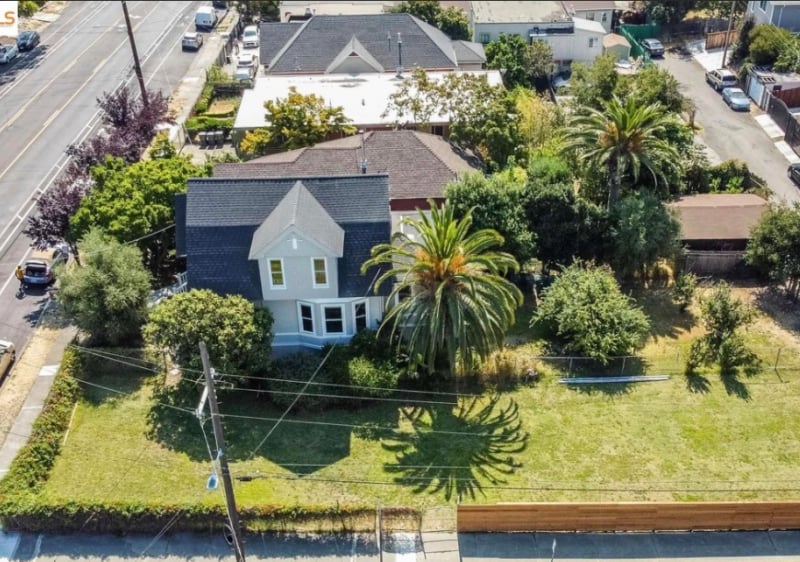
(CN) — The city of Oakland on Tuesday warned the California Supreme Court that the floodgates to “rogue” development would be opened if an appellate court decision in favor of the owner of a parcel of land in the city’s San Antonio’s district wasn’t reversed.
The plot of land, on which sits one single family home, encompasses two lots and a fraction of a third lot shown on an 1854 map of San Antonio, now part of the multicultural, low income area of East Oakland. But whereas the owner, Crescent Trust, wants to split up the lots for development, the city maintains the lots have always been one parcel of land and can’t be subdivided based only on an antiquated map.
A First Appellate District panel overturned a judge’s finding in favor of the city in 2023 and agreed with the owner that Lot 18 of the parcel is a lawfully separate piece of land under the state’s 1974 Subdivision Map Act. The panel ordered the city to issue a so-called certificate of compliance for the lot that would allow the owner to develop it separately from the part of the property on which the house sits.
The consequence would be enormous if the the appellate court’s ruling isn’t overturned, Allison Ehlert, an attorney for the city told the justices.
“Overnight you’re going to have tens of thousands, perhaps even hundreds of thousands, of legal parcels created,” Ehlert said. “The effect of that really risks leading to a kind of rogue development within the state.”
The purpose of the Subdivision Map Act, the attorney argued, is to foster orderly community development and to protect public health and safety. The thousands of newly created legal parcels for potential development would include substandard lots and lots in undeveloped areas that may require local governments to build out inefficient and expensive infrastructure to support housing there, she said.
“This could lead to significant chaos,” Ehlert said. “If all of a sudden we have all these newly created parcels scattered throughout the state, local agencies will have had no say in those subdivisions, they will have had no ability to assess whether that subdivision is consistent with their local plans for growth, whether the subdivision negatively impacts any neighboring property owners’ rights.”
Crescent Trust, the owner of the parcel in East Oakland, can still submit a subdivision application to the city, according to Ehlert, which may or may not be approved.
Aaron Shechet, a lawyer for the property owner, urged the justices to look at the intent behind the transfers of the house and the land on which it sits from one owner to the next over the years, which specify the individual lots that are part of property.
“When we look at the evidence in the deed and the language used, what did the parties there intent?” Shechet argued. “Did they intent to transfer multiple contiguous lots or they did just intent to transfer one lot?”
This line of argument, however, met with some skepticism from the justices, who observed that the language in the deeds may have referred to “lots” just as a convenient way to describe a property as a whole rather than to indicate a specific intent to transfer each enumerated lot as a separate piece of property.
“It sounds a little self-referential,” Justice Martin Jenkins observed. “We look at the specific language of the deed, we know that it reflects lots and blocks, there’s a description. I’m trying to understand, if we drill down more, what in particular about the language evidences the intent that you say we should find here.”
Moreover, Jenkins noted, the same parcel has been conveyed multiple times as a group with pretty much the same description.
Justice Leondra Kruger likewise wondered how the language of the deed could be used to elicit the intent to transfer multiple subdivided lots solely from what may have been a convenient way to describe one parcel land by reference to lot numbers.
The case before the California Supreme Court should also be viewed, one amicus said, in the context of the housing crisis in the state, where residents are choosing to leave California for other states because they can’t afford a home there.
“Because California is in the worst housing crisis in its history, public policy requires that the subdivided lots be treated as legally subdivided lots as California is much in need of lots,” Thomas Gearing, a Tustin, California, attorney wrote in support of Crescent Trust. “There are between 133,000 and 424,000 lots that the city of Oakland and the League of California Cities proclaim will be problematic and disturbing for society, but in reality, the lots will be put to good use by We the People, California residents, to help resolve the housing crisis.”
 Follow @edpettersson
Subscribe to our free newsletters
Our weekly newsletter Closing Arguments offers the latest about ongoing trials, major litigation and rulings in courthouses around the U.S. and the world, while the monthly Under the Lights dishes the legal dirt from Hollywood, sports, Big Tech and the arts.