
 Search Articles


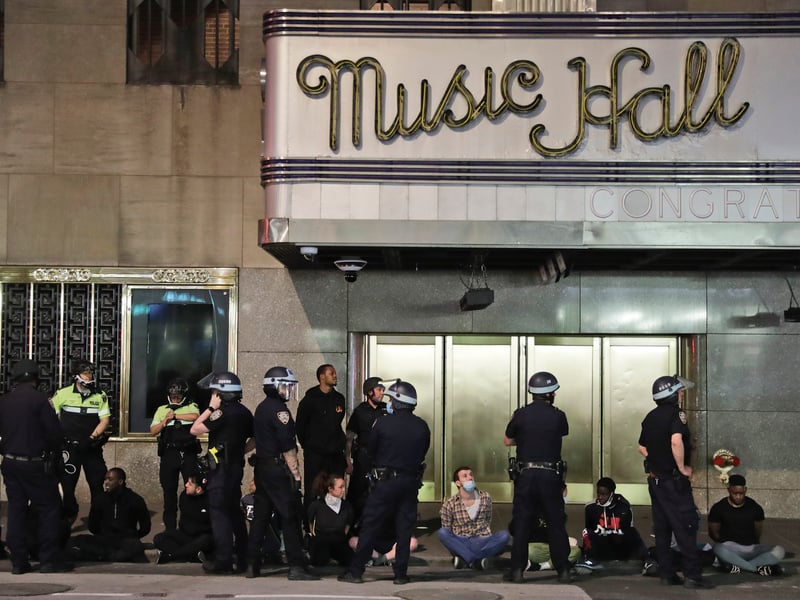
MANHATTAN (CN) — A federal appeals panel on Wednesday affirmed a record settlement resolving a federal class action over so-called “kettling” tactics used by New York City law enforcement to trap civil rights protesters.
A three-judge panel for the Second Circuit Court of Appeals ruled in a summary order that the Police Benevolent Association, the largest of New York City’s five police unions, failed to demonstrate that it would suffer “legal prejudice” from upholding a lower court’s dismissal of the union’s intervenor claims against the massive settlement agreement and overhaul of NYPD protest policing tactics.
A Manhattan federal district court judge previously rejected the Police Benevolent Association of the City of New York’s objections to the settlement as a third-party intervenor, and on appeal, the Second Circuit affirmed the lower court tossing out the union’s safety objections on a motion to dismiss.
“Nevertheless, the PBA contends that the district court was obligated to consider whether the settlement would ‘materially affect’ the PBA’s interest in officer safety before ruling on the Rule 41(a)(2) motion,” the panel wrote, referring to the provision for dismissal under the Federal Rules of Civil Procedure. “Not so. Under Rule 41(a)(2), the district court’s analysis is limited to analyzing whether the non-settling defendant would suffer ‘legal prejudice’.”
Molly Biklen, interim legal director at the New York Civil Liberties Union (NYCLU), called the appeals ruling “a decisive rejection of the PBA’s baseless objections and a critical step towards realizing the promise of this settlement.”
“The decision makes it abundantly clear that the NYPD must reform its response to protest in accordance with the tiered protest response framework it agreed to,” she wrote in a statement Wednesday. “It is past time for the city to fully implement this settlement and we will hold the department accountable if the NYPD fails to do so.”
The New York City Police Department was criticized for encircling protesters and forcing their arrests in a Bronx neighborhood called Mott Haven on June 4, 2020, using a technique known as “kettling,” essentially corralling them and giving them no choice but to break a curfew the city implemented to stifle fiery public unrest in the wake of George Floyd’s death at the hands of the Minneapolis Police Department.
Under the landmark agreement reached with the NYCLU, The Legal Aid Society, the New York Attorney General’s Office, and the New York City Police Department, members of the class who were given tickets to appear in court during the 2020 civil rights protests were eligible for $21,500 each plus an extra $2,500, meaning total payout from the lawsuit could cost New York taxpayers up to $10 million or more.
Patrick Hendry — president of the PBA, the largest municipal police union in the nation, representing nearly 50,000 active and retired New York City police officers — said the ruling ignores “very real dangers we face when policing these demonstrations.”
“The next time a mass protest spirals into violence and police officers are being assaulted with bricks and bottles, New Yorkers must realize that this is what the broken justice system and their city leaders have chosen,” he wrote in a statement on Wednesday. “This ruling will drive even more talented cops out of the NYPD to other police departments, where they aren’t abandoned and needlessly endangered by their leadership.”
The panel included U.S. Circuit Judge Reena Raggi, a George W. Bush appointee; U.S. Circuit Judge William J. Nardini, a Donald Trump appointee; and U.S. Circuit Judge Debra A. Livingston, also a Bush appointee.
The union claimed in court filings the rules the settlement imposes would bind police officers to “a set of radical, laissez-faire policing methods for years to come.”
“Officers will be barred from arresting rioters and others who destroy property — even for crimes witnessed in the officers’ presence — unless they first obtain the approval of senior officers in the streets,” the PBA said in its appeals brief. “And they must navigate a host of other procedural hurdles that will impair real-time response efforts and place the officers themselves at risk.”
Rigodis Appling, staff attorney at the Legal Aid Society, said the NYPD has been formally notified that the settlement agreement is now in effect, and Legal Aid Society “will diligently monitor the implementation process to ensure the Department fully complies with the spirit and intent of this historic court settlement.”
During the first phase, the NYPD must begin changing its training and policies to comply with the terms of the agreement, including the four-tiered response system, arrest policies, use of force at public demonstrations, and treatment of press members.
In the second phase of the oversight period, the committee will meet regularly to review and evaluate the NYPD’s response to protests. Every six months, the New York City Department of Investigation will conduct an in-depth review of two protests and make recommendations to the NYPD.
In phase three, the Southern District of New York will retain jurisdiction over the agreement for an additional year. If, at any time during phase three, the NYPD violates the terms of the agreement, the attorney general or the other plaintiffs may take action to bring the matter back to the federal court.
The oversight committee will be comprised of the Office of the New York State Attorney General, the commissioner of the New York City Department of Investigation, the New York City Office of Corporation Counsel, the new First Amendment Activity senior executive, and two representatives from Legal Aid Society, NYCLU, and the private plaintiffs.
 Follow @jruss_jruss
Subscribe to our free newsletters
Our weekly newsletter Closing Arguments offers the latest about ongoing trials, major litigation and rulings in courthouses around the U.S. and the world, while the monthly Under the Lights dishes the legal dirt from Hollywood, sports, Big Tech and the arts.