Search Articles


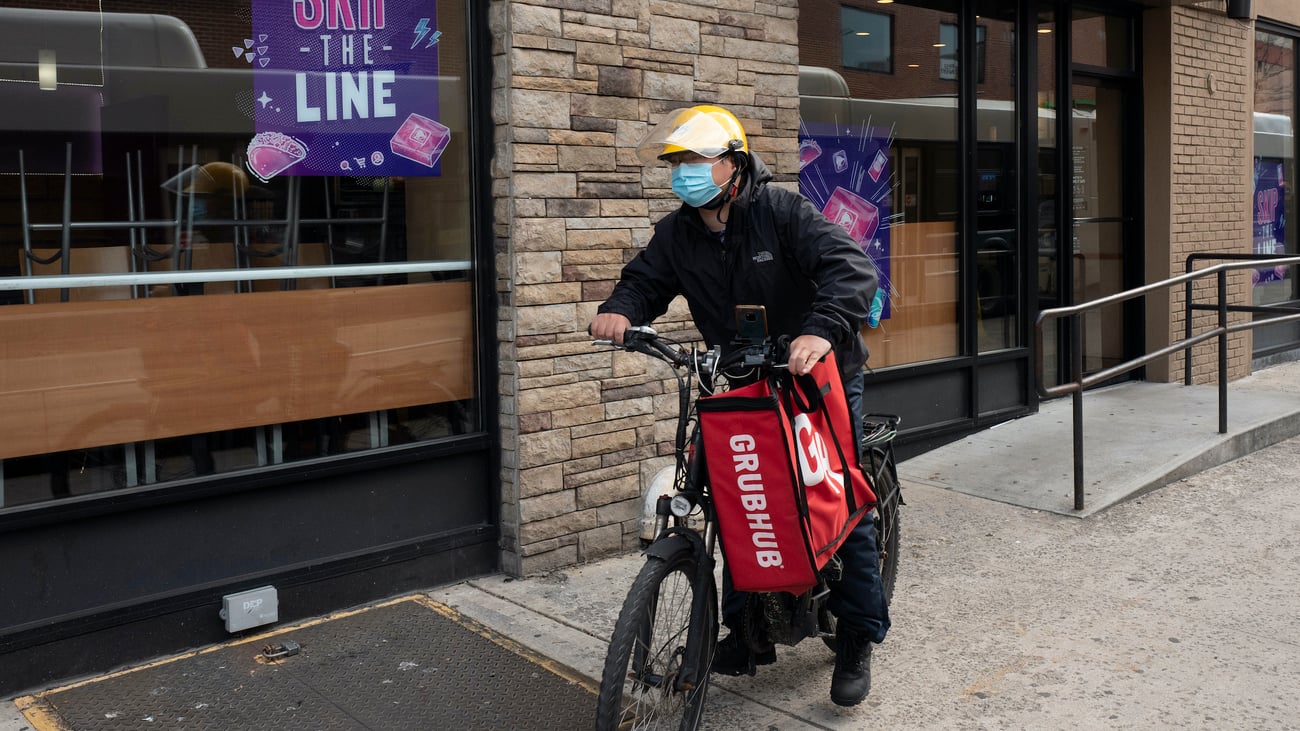
MANHATTAN (CN) — New York City urged a Second Circuit panel Wednesday morning to resuscitate a Covid-era law requiring third-party food delivery apps to turn over private customer data to city restaurants that partner with the apps.
New York City enacted the law in the summer 2021 as one of many measures to help restaurants recover from the Covid-19 pandemic by better connecting them to customers, but U.S. District Judge Analisa Torres concluded in September 2024 that the law illicitly regulated commercial speech and could violate customers’ privacy.
The Barack Obama appointee’s ruling blocked enforcement of the provision, which required apps like DoorDash, GrubHub and Uber Eats to share diners’ full names, email addresses, phone numbers, delivery addresses and order contents with restaurants after an order is placed.
Typically, only the diners’ first name, first initial of their surname and the order’s contents are shared.
The city appealed Torres’ summary judgment ruling to the Second Circuit, arguing that the lower court had applied the wrong standard of review in concluding violations of the First Amendment.
“The Customer Data Law was thus sufficiently tailored to address the harms from third-party delivery companies’ business practices, and by placing more information in the hands of restaurants, the law satisfied the First Amendment,” the city wrote in an appeals brief.
During oral arguments on Wednesday, U.S. Circuit Judge Richard Wesley questioned the city as to how the law can be aimed at preserving New York City’s small restaurants, while large global chains like Chick-fil-A would also benefit from the customer data law disclosures.
“Your argument says you’re trying to level the playing field in here — you’re talking about making requiring the information remain available to multinational corporations also,” the George W. Bush appointee pointed out.
“That may be true,” New York City Law Department attorney Jonathan Schoepp-Wong responded. “But I think that it’s important to remember the First Amendment is not about protecting competition or competitive status: It’s about providing in the commercial context. It’s about ensuring the robust and free flow of information,” he said.
Schoepp-Wong called the top three food delivery app companies “peculiar representatives to be pressing privacy concerns of” the actual restaurant patrons, who he emphasized are not part of the case.
“In that regard, given the amount of information that these plaintiffs collect and distribute on their own, you know, I think that they can’t really bring a privacy claim,” the New York City lawyer said.
The delivery apps, meanwhile, urged the federal appeals panel to affirm the lower court’s judgment, arguing that the First Amendment claim was adjudicated under the proper standard of review.
In their appellee brief, the app companies assert that the law advances no legitimate government interest and is not sufficiently tailored to protect the privacy of city residents’ personal information.
“It doesn’t require any type of disclosure to consumers,” said Michael Holecek, from Gibson, Dunn & Crutcher. “It’s not aimed at preventing any type of deception or misleading conduct. It’s not information about the terms under which we offer our products and services.”
U.S. Circuit Judge Susan Carney, an Obama appointee, asked Holecek if the delivery app companies were competitors of the restaurants.
“There are competitive aspects where we’re contracting partners, and in some respects, there’s a partnership, and we’re both trying to get more consumers to the platform,” he responded. But this is one area where there is competition, some restaurants would rather market to a customer themselves and have that customer order directly through them. And this law would exacerbate that,” the plaintiffs’ attorney said.
Wesley and Carney were joined on the panel by U.S. Circuit Judge Michael Park, a Donald Trump appointee.
The three-judge panel did not immediately rule from the bench on the appeal.
DoorDash, GrubHub and Uber Eats sued the city in 2021, during a massive period of industry growth due to the Covid-19 pandemic and its impact on indoor dining, complaining that the law violated their First Amendment rights to commercial speech because it demanded they share information that they wouldn’t have given up otherwise.
DoorDash, Grubhub and Uber Eats argued in court filings that the law could also raise privacy concerns since the ordinance “imposes virtually no restrictions” on what eateries can do with the data, nor does it require the restaurants to secure that information once they receive it. They noted that customers have a better reason to entrust their data to “established, respected technology companies” like themselves, as opposed to the mom-and-pop eateries that “do not have similar robust data safety and security protocols.”
The city agreed not to enforce the law while the delivery companies challenged it in court, even as its sponsors continued to tout its necessity.
 Follow @jruss_jruss
Subscribe to our free newsletters
Our weekly newsletter Closing Arguments offers the latest about ongoing trials, major litigation and rulings in courthouses around the U.S. and the world, while the monthly Under the Lights dishes the legal dirt from Hollywood, sports, Big Tech and the arts.